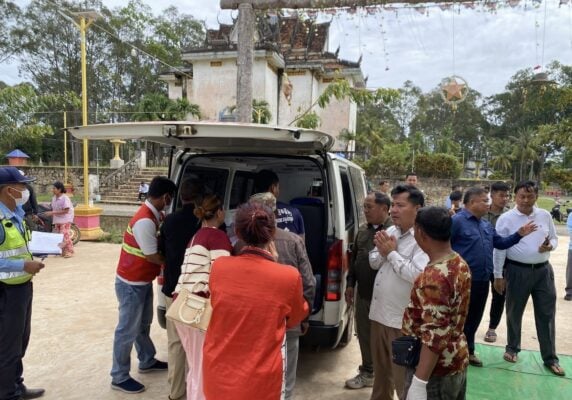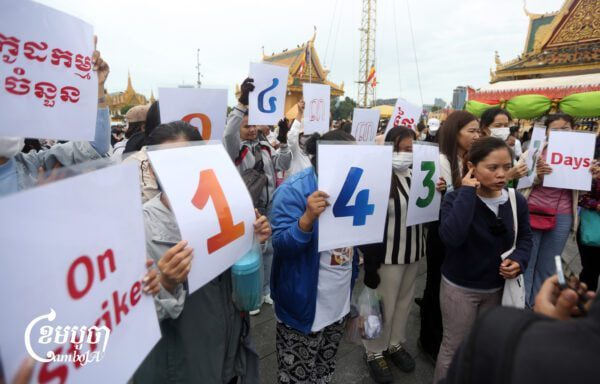
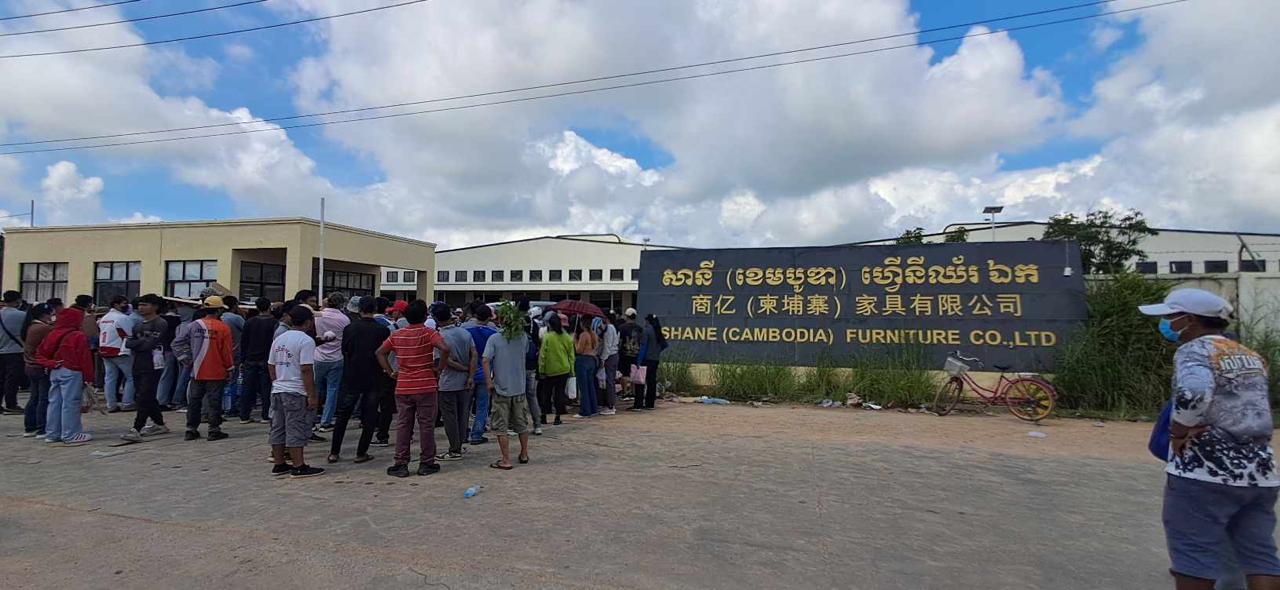
More than 1,000 workers of Shane (Cambodia) Furniture Co., Ltd in Chantrea district, Svay Rieng province, who protested for three days from October 11 over the company’s failure to correctly calculate their wages, have returned to work after the Labor Ministry intervened.
The factory, set up in 2020, produced sofas, leisure chairs, beds, dining tables and chairs, coffee tables, side tables, console tables and cabinets.
Phin Sreymom, 25, said workers protested due to mismanagement, including salary miscalculations, delayed payments, and the use of inappropriate language by Chinese accounting staff. Given that their wages are already low, any mistake in calculation further reduces their income and makes their life more difficult, she added.
During the dialogue between the company, workers and ministry representatives, Shane said they will review and provide accurate salary and other benefits during working hours, up to four hours per month. At the same time, the company is reviewing to make sure they provide the correct salary to 220 workers whose wages were wrongly calculated.
Sreymom, who has worked there for two years, said the employees also asked the management to provide adequate restroom and medical supplies, particularly pain relief pills.
“Since the new account came into operation almost a year ago, workers’ money has been calculated incorrectly. At first, only a little was lost, but over time, more was lost, including incentive money. We were not happy. The workers did not receive any bonus or incentives,” Sreymom said.
Under the ministry’s coordination, the factory agreed to accept the workers’ request, with the workers later agreeing to return to their work stations.
Another worker, Neath, said that she has worked in the factory for three years as a packing assistant, earning about $280 per month. The workers joined the protest to get the factory owner and administration to pay them regularly and in full.
“We need money and are under pressure. This is the reason for the protest. We want the factory to change,” Neath said.
Labor protests regarding wage issues and layoffs without proper reason are common among industrial workers amid rising hardship faced by them.
At least 2,700 workers, including unionists, at a garment and shoe factory in Kampong Cham province might lose their jobs in December after the company cited falling orders from U.S. buyers.
The outlook for Cambodia’s garment, footwear and travel goods (GFT) sector remains slightly uncertain but stable. The country was initially hit by U.S. tariffs of 49% and 36% at the onset of U.S. President Donald Trump’s imposition of retaliatory taxes, but was eventually cut to a regionally competitive rate of 19%.
Labor ministry spokesperson Sun Mesa confirmed that the protest stemmed from the miscalculation of workers’ salaries, but was resolved after mediation by labor officials.
“The factory agreed to the negotiations and also recognized that there were gaps in the salary calculation, which caused unfairness and made the workers unhappy. Therefore, the factory promised to strengthen the payment of wages more accurately,” said Mesa.
He said the management and employees agreed on proper payment of maternity leave, performance bonuses, and appointing Cambodian staff for administrative and accounting roles.
The corporation committed to provide postnatal employees full earnings during maternity leave, 50% of their net wage prior to the maternity leave, and other benefits for three months, according to the meeting minutes seen by CamboJA News.
AI Garment Workers’ Union president Ek Sopheakdey observed that the workers lacked independent representatives in the workplace, so workers were forced to protest, while the factory did not have much work to do.
“Goods are not as plentiful as before, according to some information I have received. Since the tax issues with the US and the EU, workers have not had much material to work with,” Sopheakdey said.
To offset the effect arising from name changing, and factories closing and reopening as seen in the past, Sopheakdey said the government must conduct inspections, render justice to workers, including ending all forms of harassment, and look into officials who conspired with factory owners.
(Additional reporting by Lon Saoda)