Listen to the audio version of this article (generated by AI).
About 200,000 smallholder farmers in seven Cambodian provinces are expected to benefit from a $112 million development project aimed at improving agricultural infrastructure and helping rural communities cope with heatwaves, droughts and floods.
According to an Asian Development Bank (ADB) press release on Monday, the project’s funding includes a $57 million concessional loan and a $15 million grant from the Asian Development Fund. Additional funding comprises $23 million from the Association Of Southeast Asian Nations Infrastructure Fund, $10 million from the Green Climate Fund, $3 million from a Japan-funded ADB initiative and $4.3 million from the Cambodian government, bringing total financing and contributions to $112.3 million.
“Investing in smallholder farmers, particularly women, is essential for boosting the rural economy and supporting poor communities that are most vulnerable to extreme weather events,” said ADB Country Director for Cambodia Yasmin Siddiqi.
“By helping women lead and participate in local decision-making and development programs, this project will scale up inclusive agricultural value chains and strengthen food systems, while driving women-led businesses and supporting families to build healthier, more secure, and resilient futures.”
The Smallholder Resilient Economic Development Sector Project will cover 186 communes across seven provinces such as Pursat, Battambang, Prey Veng, Siem Reap, Kampong Thom, Kampong Cham and Banteay Meanchey, areas considered highly vulnerable to natural hazards.
The project will expand irrigation services to an additional 7,000 hectares of farmland and rehabilitate 190 kilometers of rural access roads to improve farmers’ access to markets.
The funding comes as Cambodian farmers face repeated climate-related challenges. The drought intensified in July 2026, affecting nearly 290,000 hectares of rice fields across eight provinces, according to the National Committee for Disaster Management (NCDM).
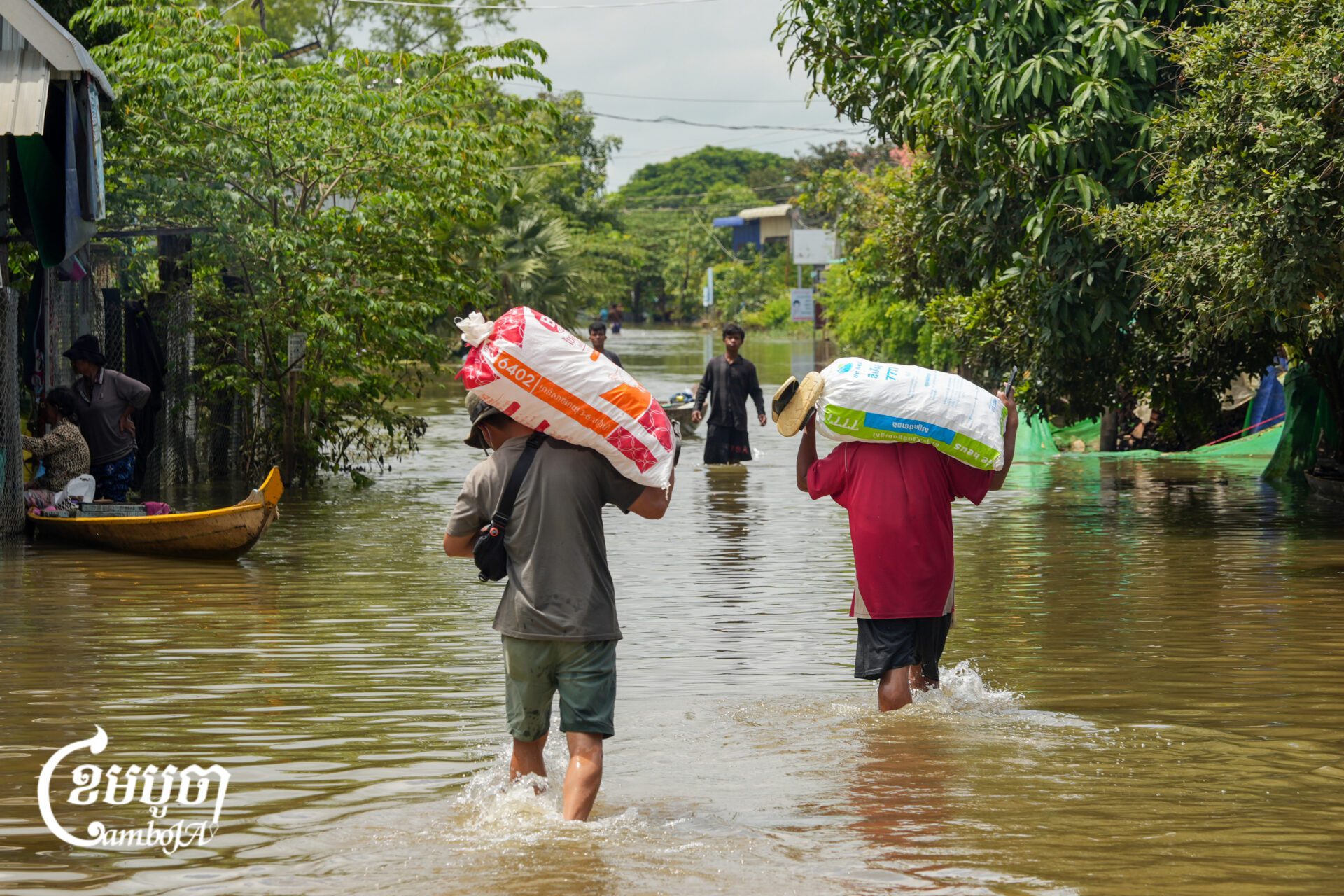
Two months later, severe flood inundated 150,000 hectares of rice fields, equivalent to about 5% of the country’s three million hectares of wet-season rice cultivation. More than 57,000 affected families in 10 provinces were evacuated, with Battambang, Banteay Meanchey and Siem Reap among the hardest-hit areas, NCDM figures showed.
In October, the Ministry of Water Resources and Meteorology said the rainy season was expected to end in the third week of the month and forecast a 100% probability of El Niño conditions persisting through February 2027.
ADB said the overlapping natural hazards threaten Cambodia’s agricultural and food systems by damaging infrastructure, restricting market access and worsening food insecurity. The risks are particularly significant in rural areas, where 59% of the population lives while women, who account for 51% of Cambodia’s agricultural workforce.
Sum Phoan, 60, a farmer in Thmar Koul district, Battambang province, told CamboJA News he hoped the funding would reach his community and help address problems with water management.
His rice fields are still flooded since late September, with the water yet to recede. He planted eight hectares of rice this year, but only two hectares were undamaged. He plans to keep seeds for next year’s crop.
Before the flooding, his fields also suffered from water shortages in August.
“During the drought, we tried our best to pump water and apply fertilizer. But right after applying the fertilizer, the fields were completely flooded,” he said.
Phoan’s expenditure for the planting is estimated at $3,700 for machinery, fuel and fertilizer, with some fertilizer costs still unpaid.
He alleged that no officials visited to address the farmers’ situation or called for better water management during dry and wet seasons to prevent similar losses.
“This year, during the drought, there was no water to use, and when the rainy season arrived, the dam gates were opened, causing the farmers’ fields to be completely flooded,” he said.
Spokesperson for the Ministry of Agriculture, Forestry and Fisheries, Khim Finan, did not respond to CamboJA News request for comment.