Listen to the audio version of this article (generated by AI).
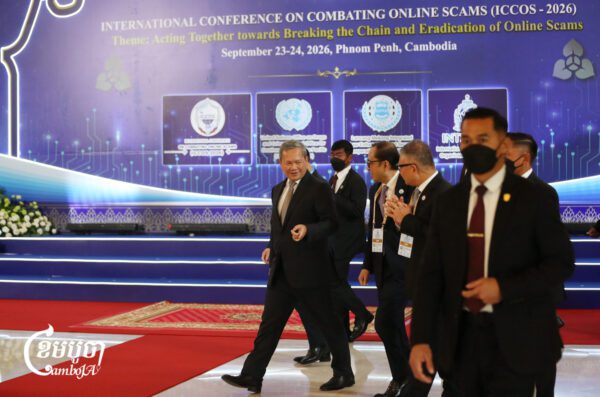
Cambodia and Thailand reaffirmed their commitment to a ceasefire and peaceful resolution to the border dispute during a bilateral meeting between senior officials on the sidelines of the 25th ASEAN–EU Ministerial Meeting in Brunei.
The Foreign Affairs and International Cooperation Ministry said Tuesday that Minister Prak Sokhonn and his Thai counterpart Sihasak Phuangketkeow had a “candid discussion” on the border situation, including confidence-building measures and broader aspects of diplomatic relations between the two countries.
Both parties agreed to a ceasefire last December, ending weeks of clashes along much of the countries’ shared border that killed more than 100 people and displaced nearly a million people on either side of the border. Phnom Penh has numerous times accused Thai forces of occupying Cambodian territory in several border areas.
Thousands of Cambodians from frontier villages remain displaced, with authorities now building temporary housing for those affected.
Despite efforts by Cambodia to resolve the border dispute amid continued occupation, Cambodian civil society groups have raised concerns about the alleged impact on freedom of expression as dozens of Cambodians have been arrested after commenting or sharing information on social media about this issue.
Licadho published new information on April 23 and 24 about three arrests in February this year.
Deputy primary school director Ma Chandara, 45, factory worker In Sokharath, 31, and 23-year-old Sim Seat, a migrant worker, were eventually charged with incitement at the Phnom Penh Municipal Court for comments about the border dispute.
Chandara’s wife, Sok Sopheak, called on relevant authorities and the court to release her husband. “Right now, I don’t dare to speak much […] I’m afraid of further problems,” she said.
“They should [have just] educated him about his wrongdoing and allowed him to attend our daughter’s wedding. He cannot run anywhere as this is his hometown,” Sopheak said.
She was disappointed that her husband, who was arrested around 8:00 p.m. at their home in Pouk district in Siem Reap province on February 21, could not attend their daughter’s wedding party two days later.
Am Sam Ath, operations director of Licadho, said many who spoke about the border dispute have been arrested, imprisoned, and convicted. “We are concerned whether the authorities and courts have properly considered what constitutes freedom of expression and what constitutes an offense.”
When people who share their views face legal action “without reasonable evidence”, it could undermine freedom of speech and discourage others from speaking up, Sam Ath said.
Licadho recorded 101 Prisoners of Interest in Cambodia who it says are currently detained for activism or expressing their views.
Senator Kong Monika from Khmer Will Party, and its secretary-general, said that territorial sovereignty is an issue that concerns every Khmer citizen, especially amid fears of losing land to neighboring countries.
“When citizens express their opinions and are subsequently arrested, it discourages them from showing patriotism and participating in the protection of territorial sovereignty. Therefore, it is important to clearly assess the government’s efforts to address the current situation while also safeguarding people’s freedom of expression,” he said.
He added that the government “should not silence the voices of citizens on matters of territorial sovereignty”.
Meanwhile, rights group Adhoc president Ny Sokha urged authorities and the courts to carefully consider the cases and uphold citizens’ right to freedom of expression so they can participate in the development of society.
“I think people have the right to express their opinion by showing support or via constructive criticism which is in line with the Constitution.”