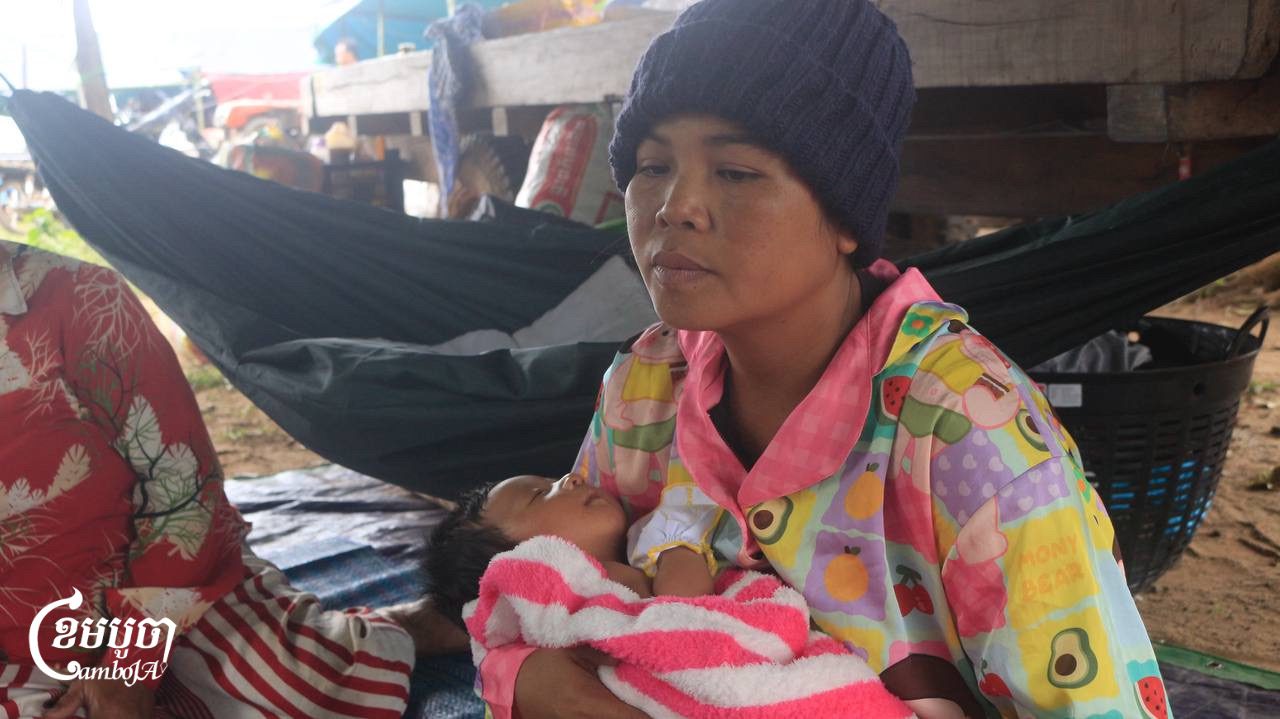
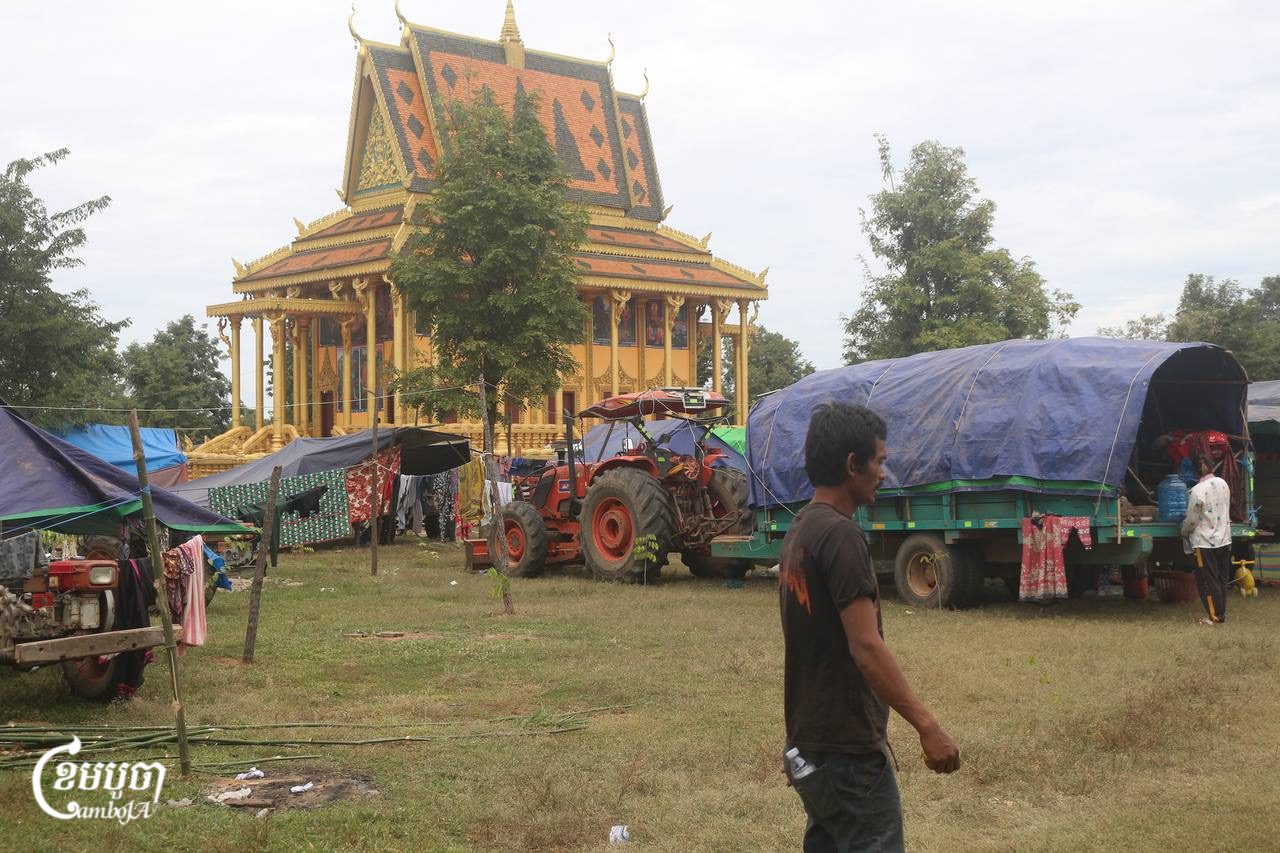
Preah Vihear – Chuon Lina breastfed her one-month-old daughter as displaced children and families scurried through a dusty makeshift camp at a pagoda about 100 kilometers from the blast smoke rising along the Preah Vihear border, where battles with Thai forces have raged for nearly five days.
“It’s hard for me because my baby is always crying,” said the 36-year-old, who has two other children and worries about her husband, a soldier fighting in a disputed area near their home. “I feel sick, I don’t get enough sleep, I don’t eat enough.”
Like many frontier residents, this is Lina’s third time fleeing from clashes this year since deadly border battles over disputed land erupted in July, leaving dozens dead and hundreds of thousands displaced on both sides before a ceasefire was brokered by U.S. President Donald Trump.
That fragile ceasefire, often touted by Trump as a peace solution, has collapsed. The renewed fighting, which began Sunday with each side trading blame, is on track to outlast the July skirmishes and has already spread well beyond earlier flashpoints, with more than a dozen fronts active along the 817 km (508 miles) shared border. Clashes remained fierce on Thursday.
With at least 11 Cambodian civilians, including an infant, reportedly killed and likely a hundred of military casualties – figures that authorities have released sparingly – anticipation is rising ahead of Trump’s planned call with both leaders in an effort to halt the fighting.
For the hundreds of thousands of evacuees, the crisis has become routine.
Evacuees Grapple with More than Fleeing Bombs
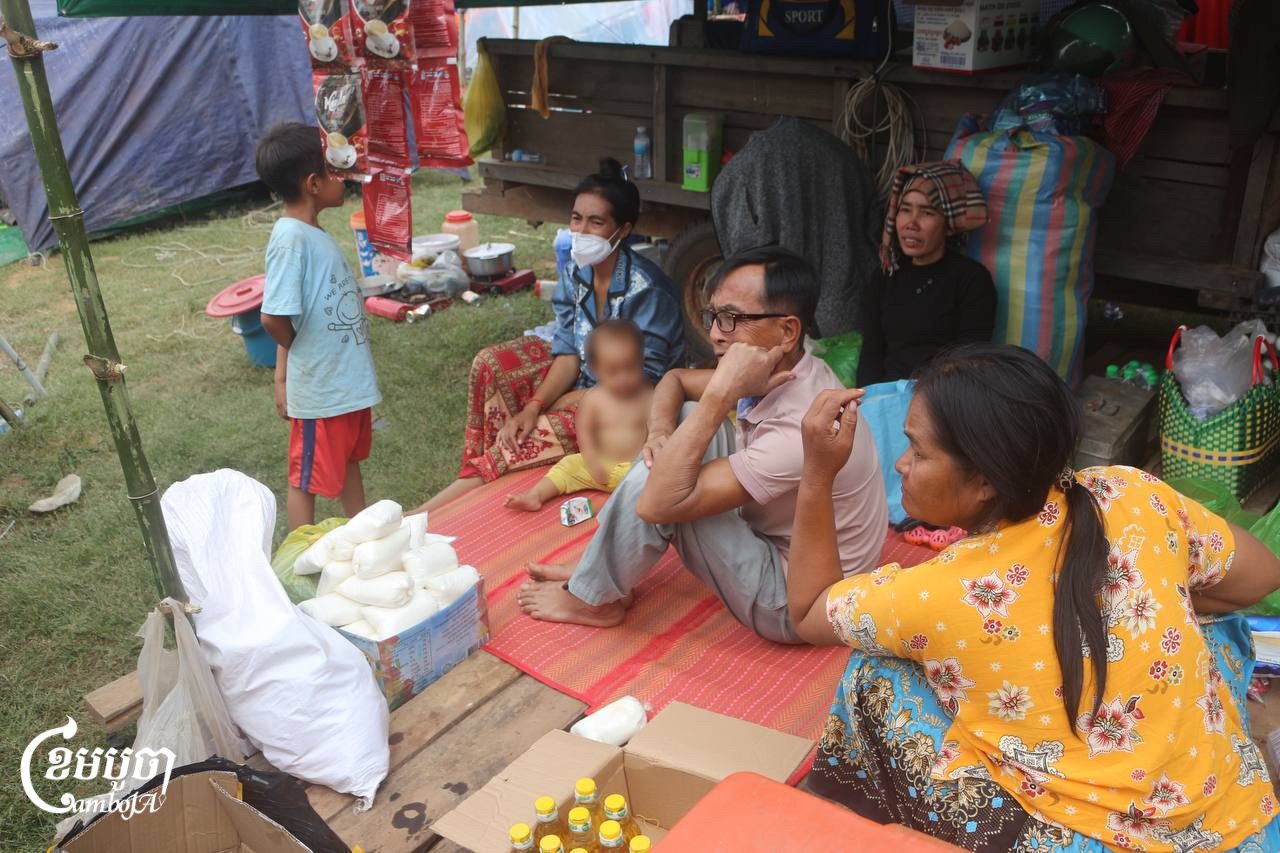
Several displaced families CamboJA News spoke with across eight shelters in Preah Vihear, which authorities say are housing more than 22,000 people, described hardships beyond the terror of fleeing bombs and artillery shells that are once again raining down along the border.
Chhan Sreymao, 38, sheltering with her four children at a packed pagoda, said she missed her 250,000 riel (about $63) payment on a $2,500 loan the day the clashes reignited. Microfinance firms had restarted collections in November after a nationwide pause for impacted citizens during the July fighting.
Lina’s family also owes a local bank $7,500, relying on her husband’s military salary to service the debt.
The National Bank of Cambodia on Wednesday ordered lenders to extend debt relief for affected residents through March and for frontline soldiers through May, with loan forgiveness in some cases for disabled or fallen troops.
Still, families in these agrarian border villages, where farms are often their main source of income, say the uncertainty and risk to their livelihoods weigh heavily as they scramble for food, supplies and to keep their children in school.
The precarity highlights the overlap of conflict and household debt in Cambodia, where local banks and microfinance institutions have faced accusations of predatory lending, leaving the country with the highest microcredit debt per capita in the world.
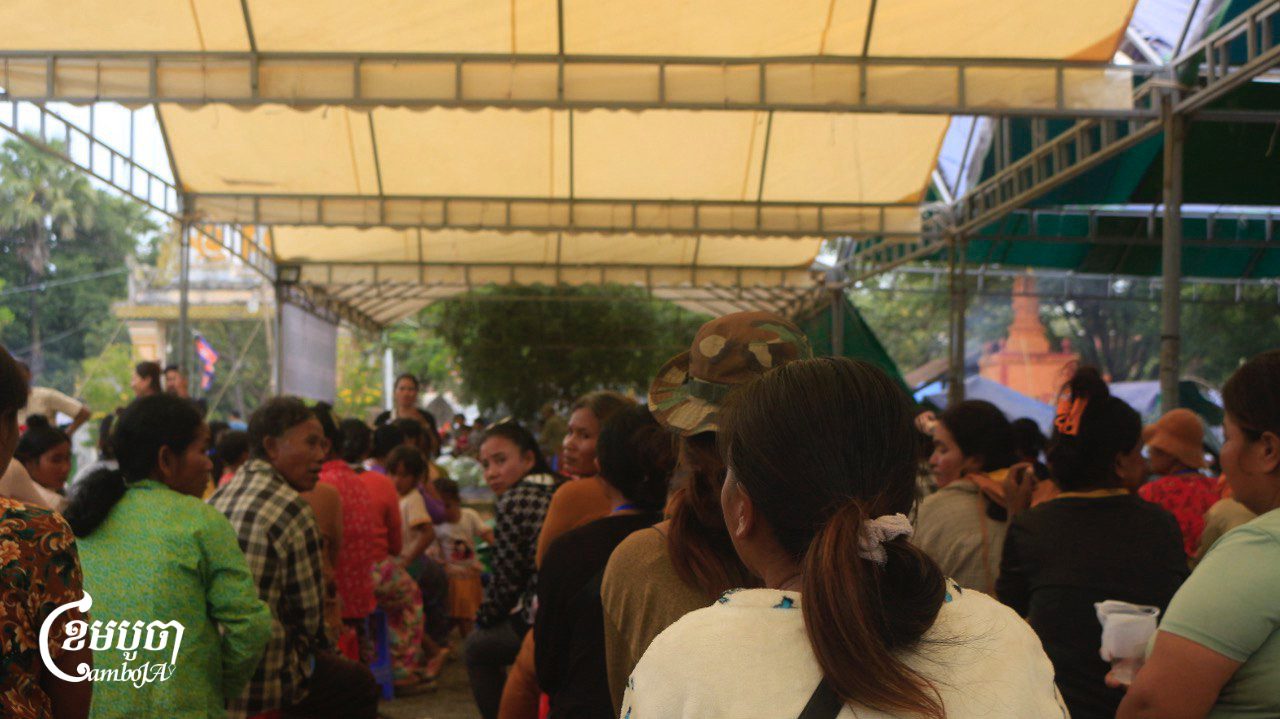
CamboJA News reporters also observed authorities providing medical treatment, rice and clothing to evacuees, and informal markets have emerged in many camps. Most shelters appeared to house as many children as adults.
Border Fighting and Blame Trade On, Civilians Always in the Fray
Nearly 200,000 people have been displaced in Cambodia since the fighting reignited. Combined with the Thai defense ministry’s Wednesday record of 400,000 Thai civilians evacuated from border regions, the renewed clashes have uprooted more than half a million people.
In Oddar Meanchey province, where Thai F-16 bombing runs have reportedly reached as far as the provincial capital, Samrong, the province’s largest displacement camp, housing nearly 40,000 people, was being relocated further from the border Wednesday evening, according to provincial governor Mean Chanyada.
On the battlefield, which Thailand’s army said saw activity on 16 fronts along both ends of the border, fighter jets, tanks, drones and BM-21 rockets have been deployed.
Both sides have accused the other of targeting civilians. Cambodia has said Thailand fired artillery, armed drones and multiple rockets into homes, while F-16 fighter jets entered Cambodian airspace on several occasions, dropping bombs near populated areas.
Thailand reported a barrage of Cambodian BM-21 rockets Wednesday, saying that some landed near a hospital in Surin province, forcing the evacuation of patients and staff.
Cambodia’s Defense Ministry also repeatedly accused Thai forces of firing into its territory on Thursday, while the Culture Ministry said Thai fire destroyed the contested 11th-century Ta Krabey Temple.
Outside civilian casualties, which Cambodia reported as 11 dead and 74 injured as of Thursday and Thailand said included 68 wounded, at least five Thai soldiers have been confirmed killed.
Figures from a provincial health official showed more than a hundred Cambodian soldiers and border police were injured in clashes in Preah Vihear since Monday. At least one soldier and one border police officer were killed by Wednesday, according to mourners at funerals held in the province.
The Southeast Asian Games, currently taking place in Thailand, have also been affected after Cambodia withdrew its athletes Wednesday, citing safety concerns for the athletes and their families.
Despite Donald Trump’s claims that a phone call scheduled Thursday evening could halt the fighting, Thailand’s army has made clear it wants to cripple Cambodia’s military capabilities.
“Other national leaders may have good intentions in wanting peace,” Anutin told local media. “It cannot be as simple as picking up the phone and calling. There must be a proper appointment and agreed talking points. We still have time to prepare these issues if such discussions are to take place.”
When asked what she needs most, Lina, part of a group of villagers living along the border whose families include soldiers, said she wants peace and the safe return of her husband from the frontlines, even as she and her children skip meals to stretch food rations.