Listen to the audio version of this article (generated by AI).
The Land Management Ministry warned on Thursday it could take legal action against tycoon Leng Navatra, his brother and a business associate over social media posts related to the freezing of Navatra’s assets in a dispute over a stalled borey project.
Ton Chanseyma, a singer and associate in Navatra’s music venture, wrote a series of Facebook posts accusing the ministry of “cutting off the lifeline” and “strangling” employees of Galaxy Navatra Group, which began developing Borey Leng Navatra 6A – a gated community on the outskirts of Phnom Penh – in 2021 but failed to complete it for hundreds of buyers.
In posts that have since been deleted, Navatra’s brother, Leng Nimol, questioned the effectiveness of freezing and selling Navatra’s assets to finish the project, which the ministry has since taken over.
“Up to now, the freezing of assets has not only frozen all of my siblings’ real estate, but has also investigated and frozen the assets of customers who purchased properties from 2018 until the present,” Nimol wrote in one deleted post.
The Ministry of Land Management, Urban Planning and Construction said in Thursday’s statement that the posts were “violations of both the law and professional ethics.” It warned that Chanseyma, Nimol, and Navatra himself – who had posted the ministry’s order publicly – could face defamation and incitement charges.
Navatra said in a Facebook post Tuesday that he had offered his family’s assets, including land, vehicles and properties, to authorities to help complete the project, though he acknowledged some are tied up in debt and may not be sellable.
The fallout comes despite Navatra’s reputation as a politically connected tycoon who has donated millions of dollars to the government for COVID-19 vaccines and disaster relief. He and his siblings hold the honorific titles of Oknha and Neak Oknha, bestowed on individuals who donate at least $500,000 to the government, which Navatra requested be revoked in the same post.
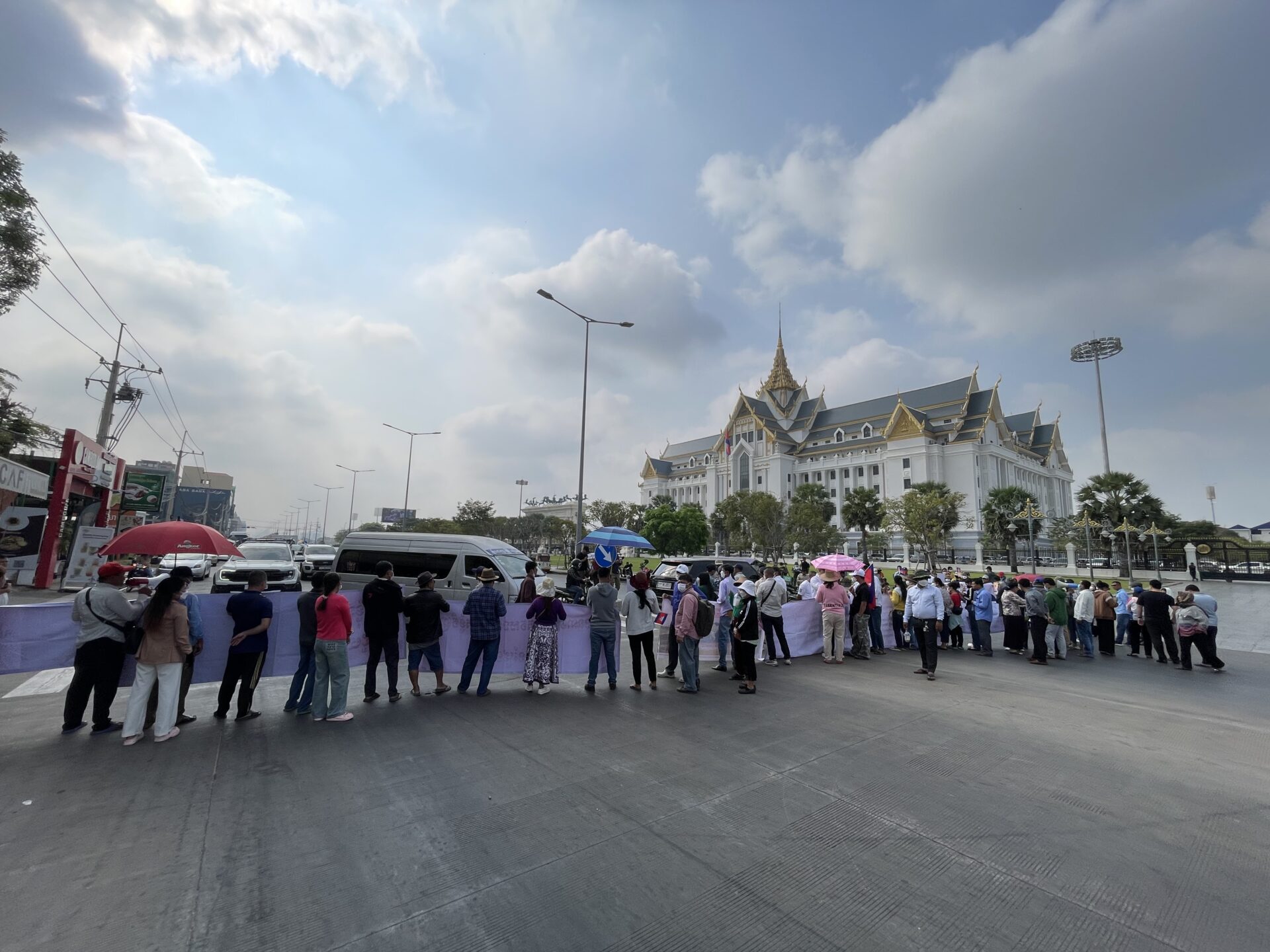
The public episode comes after around 1,500 houses in the project remained unfinished as of January, when buyers demonstrated urging the ministry to intervene after more than five years of construction delays.
One customer, who asked not to be named, said that she bought a house in the project for nearly $30,000 in 2021 with a bank loan.
“I have to pay the bank $300 a month. We are facing financial problems because I hoped to buy a house and wait only a year to have a house, but in the end, I ran out of money and didn’t have a house,” she said, adding that she expects the ministry to help complete the home soon. Other residents have already received their homes this year.
Vann Sophat, business and human rights project coordinator at the Cambodian Center for Human Rights, said the dispute highlights the need for the government to establish a system to safeguard customers’ money in private housing projects.
“The flow of money and resources held by companies is not properly monitored to determine how much capital they have invested in a development project and whether they have the capacity to complete it,” he said. “This is a problem because many companies tend to sell projects before they are built.”
“Without a proper, transparent and inclusive management system that takes human rights into account, such problems will continue to occur,” Sophat added.