Listen to the audio version of this article (generated by AI).
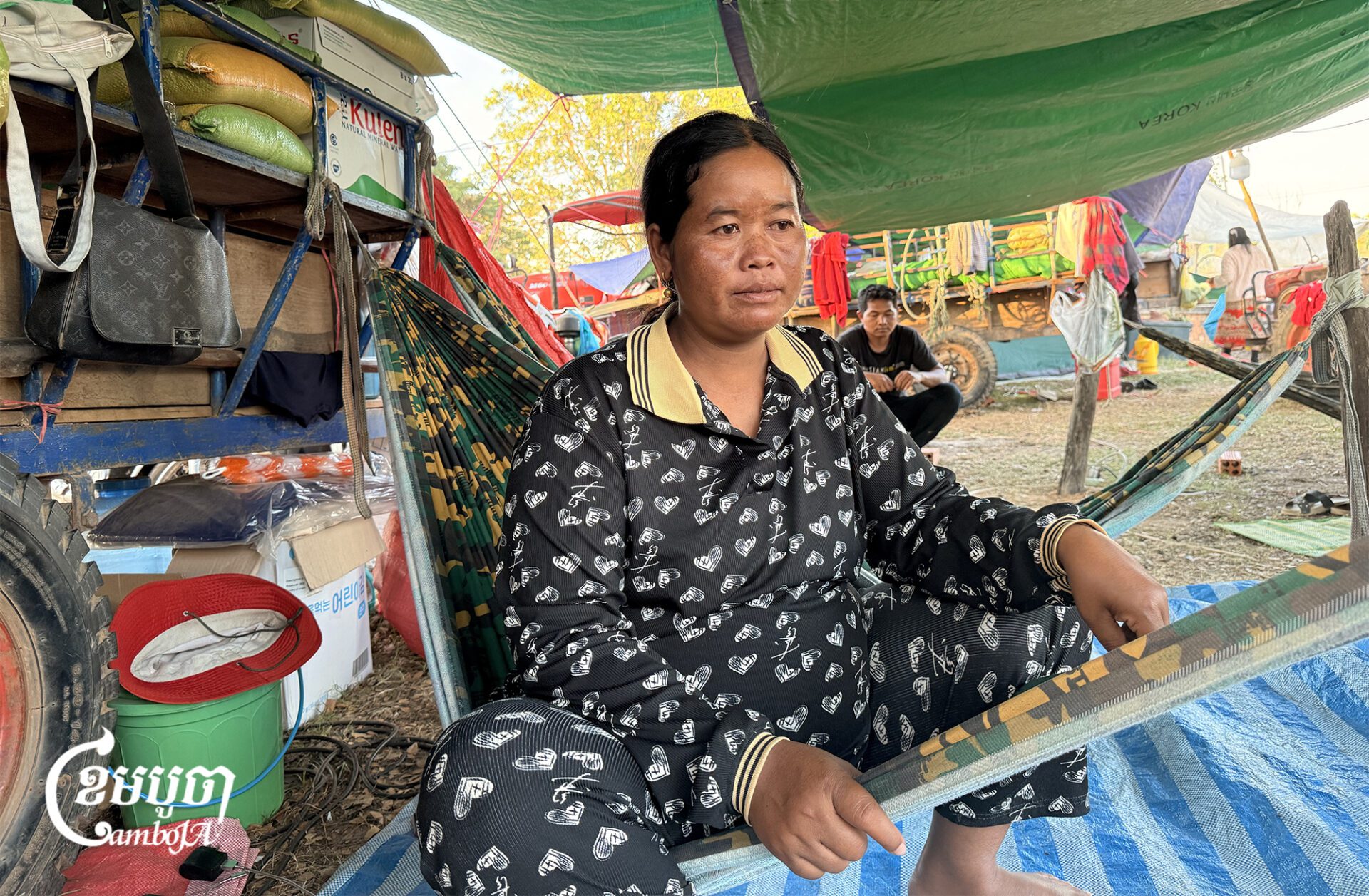
Siem Reap — Sitting in a hammock under a tree near a pond at Wat Prasat Khnar in Srey Snam district, 35-year-old Sek Theary rubs her swollen belly on a warm December evening. Nine months pregnant and displaced from Oddar Meanchey province, she is expected to deliver early January 2026. It is the second time Theary fled home since the July border conflict in 2025.
“I do not know when I will be able to return home and rebuild my life,” she said, her voice laced with worry. “Every day is hard. My belly is heavy, and I struggle to walk, sit, and sleep. I am constantly afraid of bombs. I feel sad that my children have to endure this. I just want to go home—I fled with nothing.”
Life in the refugee camp is difficult. Theary talked about poor hygiene, and limited access to clean water and nutritious food there. She is particularly anxious about not getting enough nourishment, which could impact breastfeeding efforts when her baby is born. “I don’t know how long I can endure this. All the rice from our fields is gone,” she said.
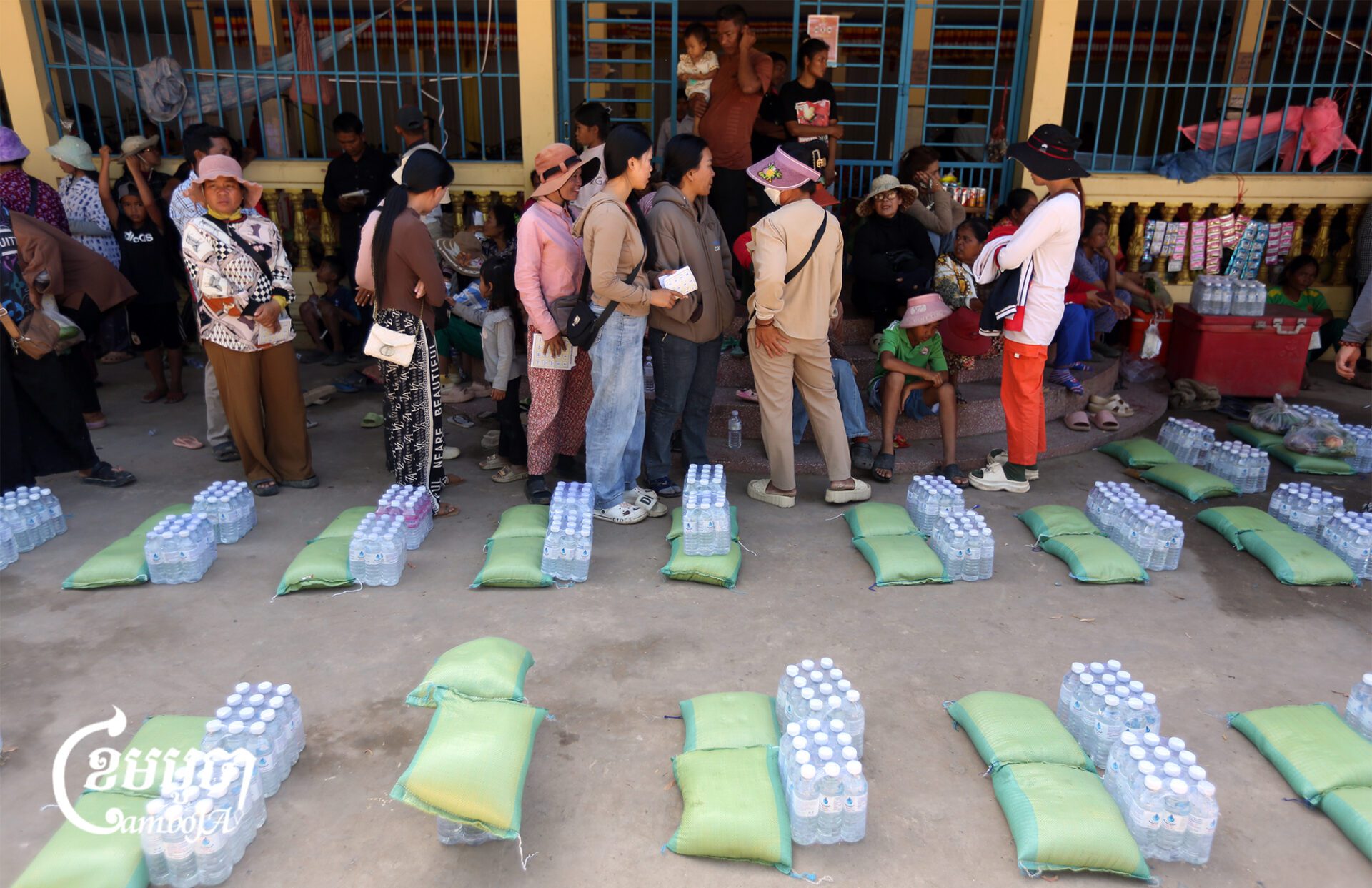
Chhorn Phloy, who manages the Wat Khnar refugee center, said as of December 30, 2025, about 520 families were sheltering at the site, mostly from frontline areas such as O’Smach, Ta Krabei, and Prasat Khnar. Among them are 11 pregnant women and three who gave birth recently.
“Additional support is urgently needed for pregnant and postpartum women, including essential supplies and nutritious food,” Phloy said. “If more assistance is provided, it would be of great help as people here still cannot return safely to their homes yet.”
Giving birth while fleeing
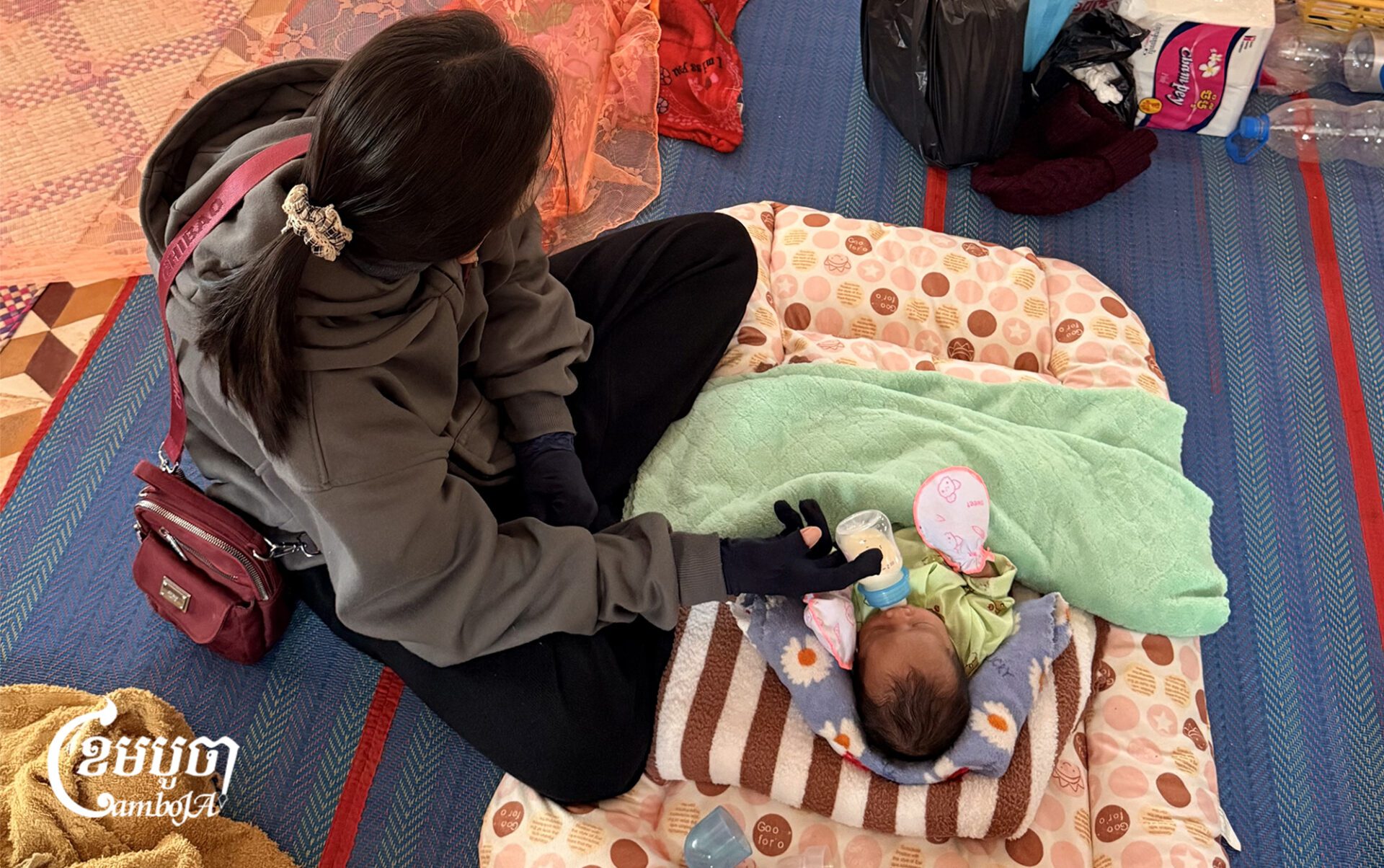
At Wat Run in Run Ta Ek commune, Chuon Sophy from Trapaing Prasat district, Oddar Meanchey province, has fled three times since the conflict began. She recounted the strain of the first evacuation while eight-and-a-half- months pregnant. The journey by motorbike, combined with fear for her safety, caused her to give birth before her due date.
“I gave birth prematurely. I think it was because of the constant fleeing. I had pain in my belly, I felt weak, and didn’t have much time to rest while running from shelling,” Sophy said while breastfeeding her baby. “I told myself to stay calm and strong, and in the end, I was able to give birth naturally.”
Sophy said life in the refugee camp was gruelling. Overcrowding, limited food, and poor nutrition made daily survival difficult. Her only hope was to return home and provide a stable environment for her newborn. But despite the ceasefire, she and her family have not been able to return as they wait for the government to confirm it is safe.
Cheng Changkeus, a farmer from Banteay Meanchey, fled on December 8, also while pregnant. After a two-week stay at the Wat Sampov Loun refugee camp, she gave birth on December 20 at a nearby health center.
“I can’t run anywhere, and I don’t feel like doing anything. I pity my children, but I tell myself that no matter how hard it is, I must endure,” she said. Sitting in a rubber tent with her newborn, she said their daily meals consisted of instant noodles, fish, and rice.
Waiting to go home
Tit Vun, 22, from Oddar Meanchey province, said that she escaped to Kralanh district on December 8. She has a baby, who is only three and a half months old. Fleeing from home without basic supplies and a proper place to rest caused severe hardship—especially for her infant, who has developed a rash on the body.
Vun said her baby gets high fever and skin rash often, which she believes is caused by poor hygiene and unclean water.
“It is hard to see my child sick. As soon as we arrive at the displacement camp, my baby gets ill. Living here is very different from home. Some days there isn’t enough water, and when we use unclean water, my child gets sick. My child is also vulnerable to illness when there is not enough nutritious food,” said Vun.
She has no option of food because she did not bring any money when she fled, she said. “I was only thinking about safety and surviving.”
As a result, their food at the displacement camp is dependent on aid, such as instant noodles, rice, canned fish, and duck eggs.
“I eat only instant noodles and canned fish because I don’t have money to buy food from outside like others. All I want is to be able to go back home when peace returns,” Vun said.

Around 10 am, Changkeus was seen sitting in a rubber tent tied to a tree, breastfeeding her baby, while her husband prepared lunch nearby. Next to her, several items, including sacks of rice, a rice cooker, fish sauce, papaya, and cooking pots, were seen.
Asked about her food, she sighed, saying that her choices in the refugee camp were so limited, made up mostly of instant noodles, fish, fish sauce, and other dry food.
“This is not our home, so it is very hard as I have a small child. At home, cooking, bathing, and sleeping are easy. I fled here without bringing any supplies for childbirth—everything was donated. The food is never enough; I eat a little of whatever is available,” she said.
Despite the ceasefire, Changkeus said her family does not dare to return home and will wait until the situation along the border, especially in her hometown, is calm and safe.
“I don’t want anything else. I just want the ceasefire [to last] and peace, so I can bring my child [newborn] home. Every time I think about my children, I feel sad and cry for them,” she said.
Aid under strain
According to UNICEF, a healthy pregnancy requires women to rest, a clean environment, regular prenatal care, and nutritious diet. During pregnancy, their body requires extra nutrients to support the mother’s health and baby’s growth. Without sufficient nutrition, the baby could become malnourished, which can affect long-term health and development.
Chamroeun Chamrong, manager of Wat Sampov Loun refugee center, said about 900 families remain at the site despite the ceasefire. Pregnant and postpartum women are among the most affected by food shortages and lack of daily essentials.
“Prolonged displacement could lead to health problems for mothers and newborns due to inadequate care, poor nutrition, and an unsuitable living environment,” he said.
Taing Sopheap, deputy director of the Transcultural Psychosocial Organization (TPO), highlighted the psychological toll on displaced women.
“Mental well-being during pregnancy is critical for a child’s development. Stress can affect breastfeeding and mother–child bonding,” she said.
Sopheap emphasized that psychological distress among pregnant women is critical but often overlooked.
“Pregnant women are deeply worried about food and basic needs,” she said. “Mental health affects the baby’s development, especially in the first 1,000 days.”
Stress, fear, and hormonal imbalance can reduce milk production and weaken mother-child bonding, she explained.
“TPO works on psychological support, but emergency response must be multi-sectoral,” Sopheap said. “No organization can do this alone.”
She called on authorities, civil society, and the public to continue supporting displaced families.
“The situation may seem calm, but people are still living in camps,” she said. “We ask Cambodians to continue the spirit of Khmer helping Khmer.”
The Ministry of Interior said as of December 30, 2025, about 574,000 people remained displaced, including over 300,000 women and 184,083 children. The conflict damaged houses, public infrastructure, and health facilities, causing communities to struggle.
Efforts to end the conflict have involved international mediation and a ceasefire agreement in July, followed by a joint declaration in Kuala Lumpur with the support of ASEAN and the U.S.
Despite the efforts, clashes flared again on December 7, extending 21 days, before a ceasefire was implemented in late December 2025 to freeze troop positions and enable civilians to return home safely.
For displaced mothers, the daily reality is a delicate balance of survival, motherhood, and hope. “I don’t want anything else,” Changkeus said, adding that she only wants a long-lasting ceasefire so that she can bring her baby home.