Listen to the audio version of this article (generated by AI).
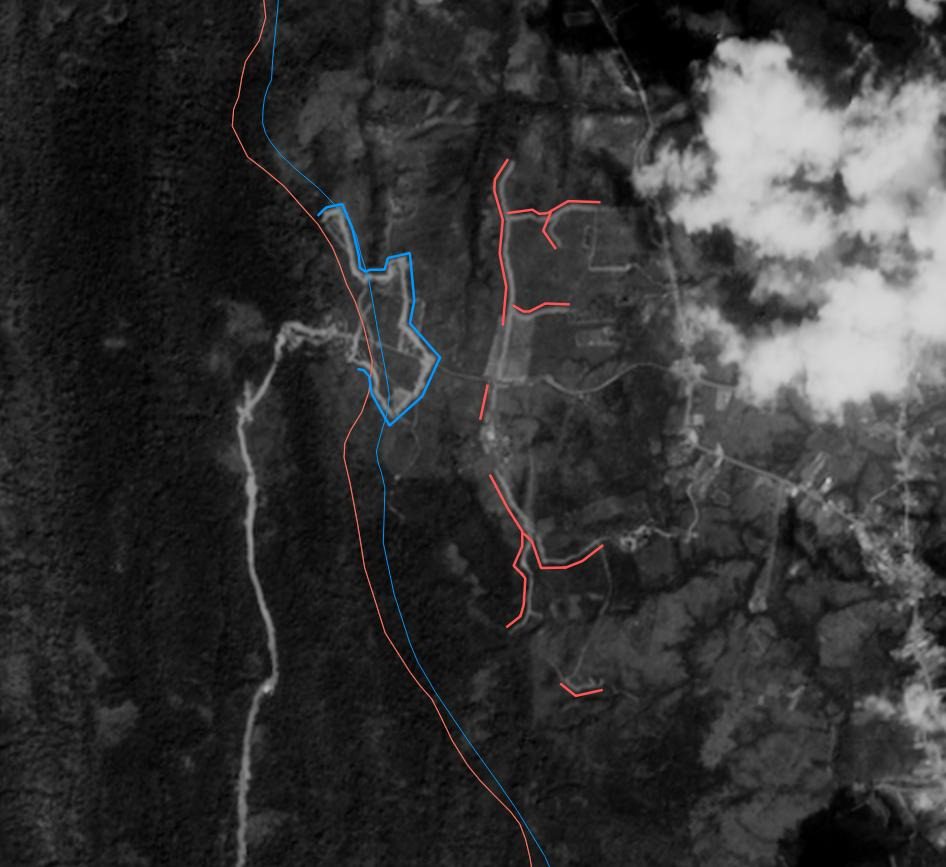
Thai and Cambodian forces appear to have dug in along a disputed stretch of Thmor Da commune in Pursat province, which Thailand says is not yet demarcated, carving out several kilometers of trenches despite a ceasefire reached last month, a CamboJA News analysis of satellite imagery and border surveys suggests.
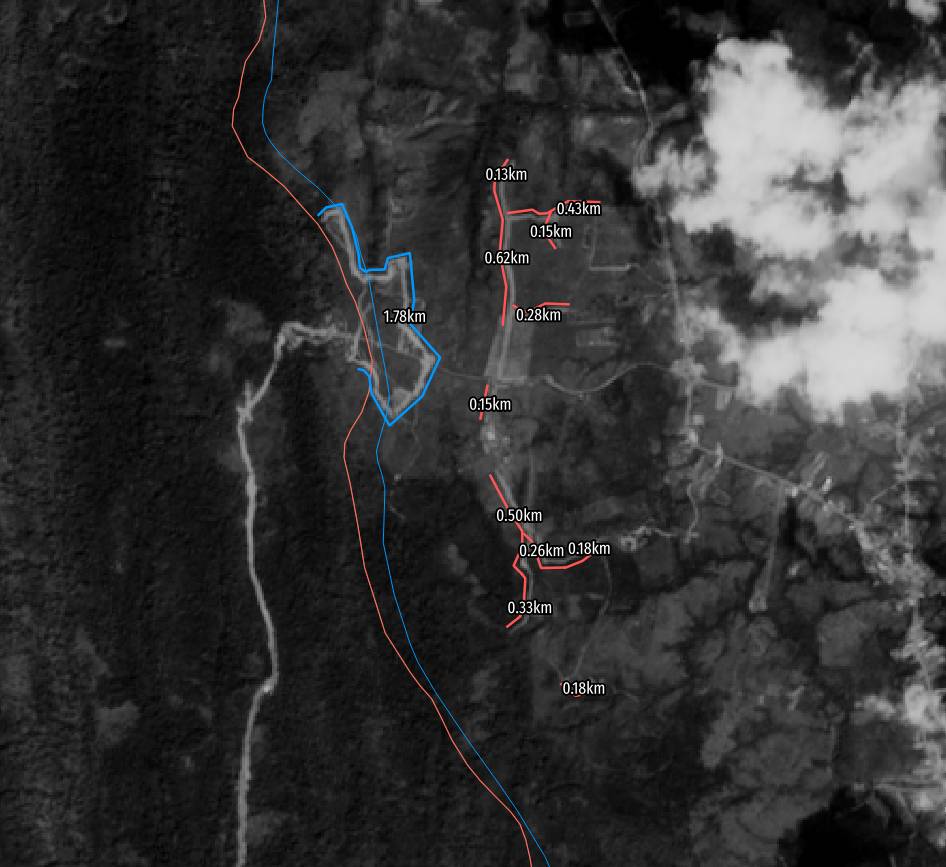
During weeks of deadly clashes along the neighbors’ roughly 800 km (about 500 miles) shared border late last year that killed nearly 100 people and displaced almost a million on both sides, Thai forces appear to have extended about 2 km of trenches toward a former Cambodian military outpost, pushing roughly 200 meters into Pursat, according to the analysis.
Border surveys from both governments, listed on the Humanitarian Data Exchange platform hosted by the U.N. Office for the Coordination of Humanitarian Affairs (OCHA), place all positions inside Pursat.
The front-facing cluster, linking to a rutted road from Thailand’s Trat province, matches the characteristics of frontline military trenches and has not expanded since at least Dec. 28, the day after the ceasefire.

Cambodian forces meanwhile appear to have steadily dug a multi-kilometer network of defensive positions a few hundred meters from the Thai trenches during January, in the weeks after the ceasefire, satellite imagery from the Copernicus Programme shows.
Asked about the suspected trenches and presented a photo on Wednesday, Thai Defense Ministry spokesperson Surasant Kongsiri said the area in question has not yet been demarcated.
“[…] The action taken is in strict adherence to paragraph 2 of the Joint Statement signed on 27 Dec referred to as Troop Deployment Line,” Kongsiri said, referring to the ceasefire reached last month after a U.S.-brokered truce following clashes in July 2025 collapsed.
He said any future settlement on border demarcation could be discussed by the countries’ Joint Boundary Commission, whose meeting has been repeatedly postponed by Thailand this month, citing the formation of a new cabinet after a general election in February.
Under the terms set by the neighbors’ General Border Committee, which established the ceasefire, both sides agreed to maintain current troop deployments and refrain from further movement or patrols toward the other side’s positions.
Cambodia has since accused Thailand of encroaching on villages in Banteay Meanchey province, demolishing homes and civilian infrastructure and preventing thousands of villagers from returning.
Kongsiri referred a reporter to a Thai government statement that “categorically denies” seizing Cambodian territory, saying Thai troops remain along the “deployment line” to maintain “security in the area” in line with the ceasefire agreement.
Cambodia’s Ministry of National Defense spokesperson Malay Socheata did not immediately respond to a request for comment sent via Telegram about the apparent expansion of trenches in Thmor Da commune, though the message was marked as read on Wednesday.
Local Thai media on Monday cited a Thai naval source as saying Cambodian forces had dug trenches near Thailand’s Trat province but within Cambodian territory. The outlet also quoted Thai authorities as saying Cambodian drones had conducted reconnaissance of Thai positions, prompting Bangkok to lodge a formal protest.

Theang Leng, district governor of Veal Veang in Thmor Da commune, where the defense lines are located, said he was aware of Thai trenches in the area and referred questions on Cambodian trench networks to military authorities. He added that around 94 families from Pursat province remain displaced due to Thai fortifications on the border.
Expanding military fortifications and reinforcements along contested border regions have previously been seen by independent observers as a precursor to tensions, which flared in May 2025 when a Cambodian soldier was killed and multiple Thai troops were later wounded by landmines.
Analysts such as Nathan Ruser, a satellite data expert at the Australian Strategic Policy Institute and a defense analyst at Janes Information Services, said they observed additional Cambodian fortifications ahead of the fighting in July 2025.
Both sides have traded blame for initiating hostilities before each bout of fighting, with Phnom Penh calling Thailand the “aggressor,” a claim Bangkok repeatedly denies.