Listen to the audio version of this article (generated by AI).
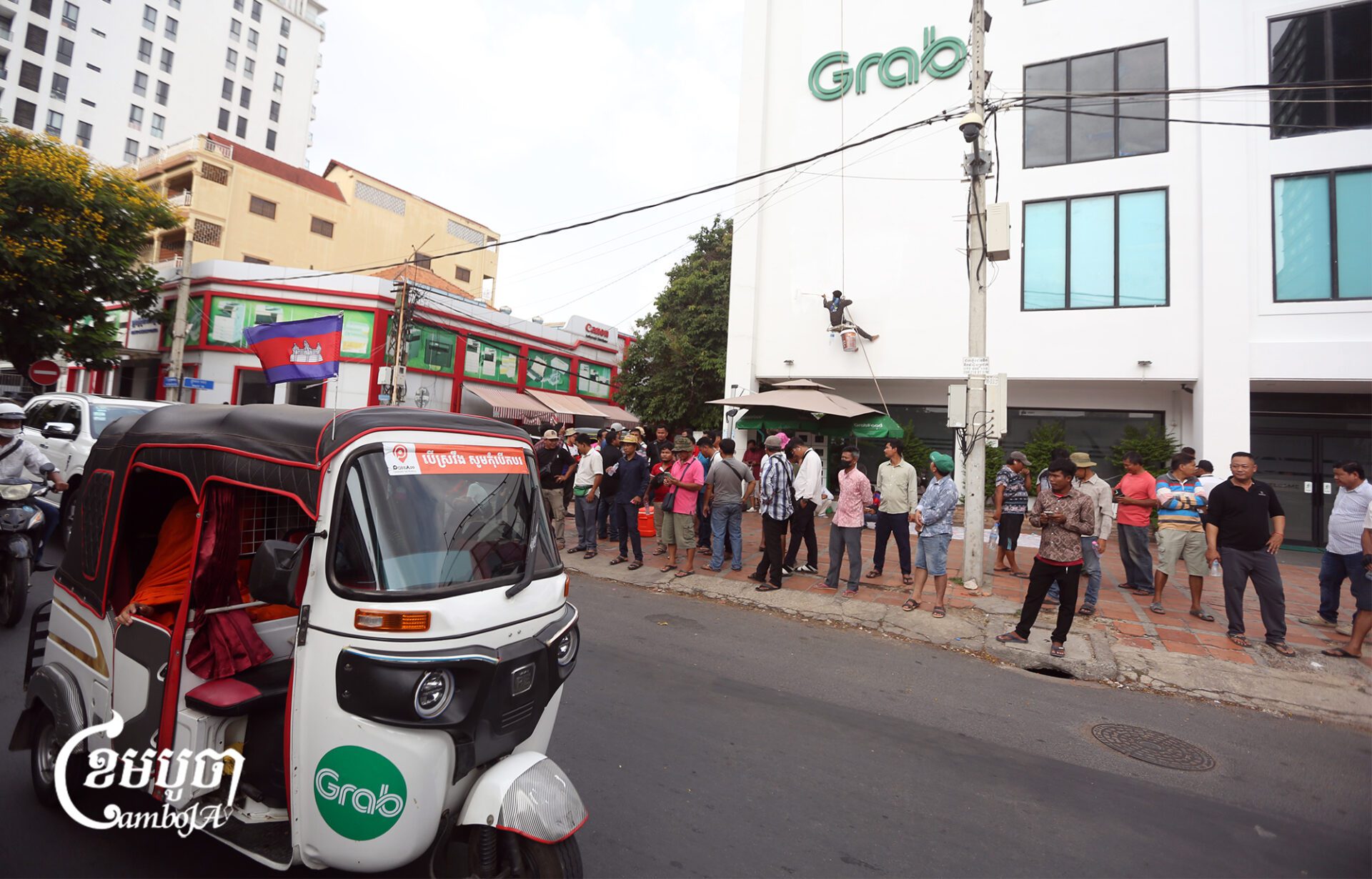
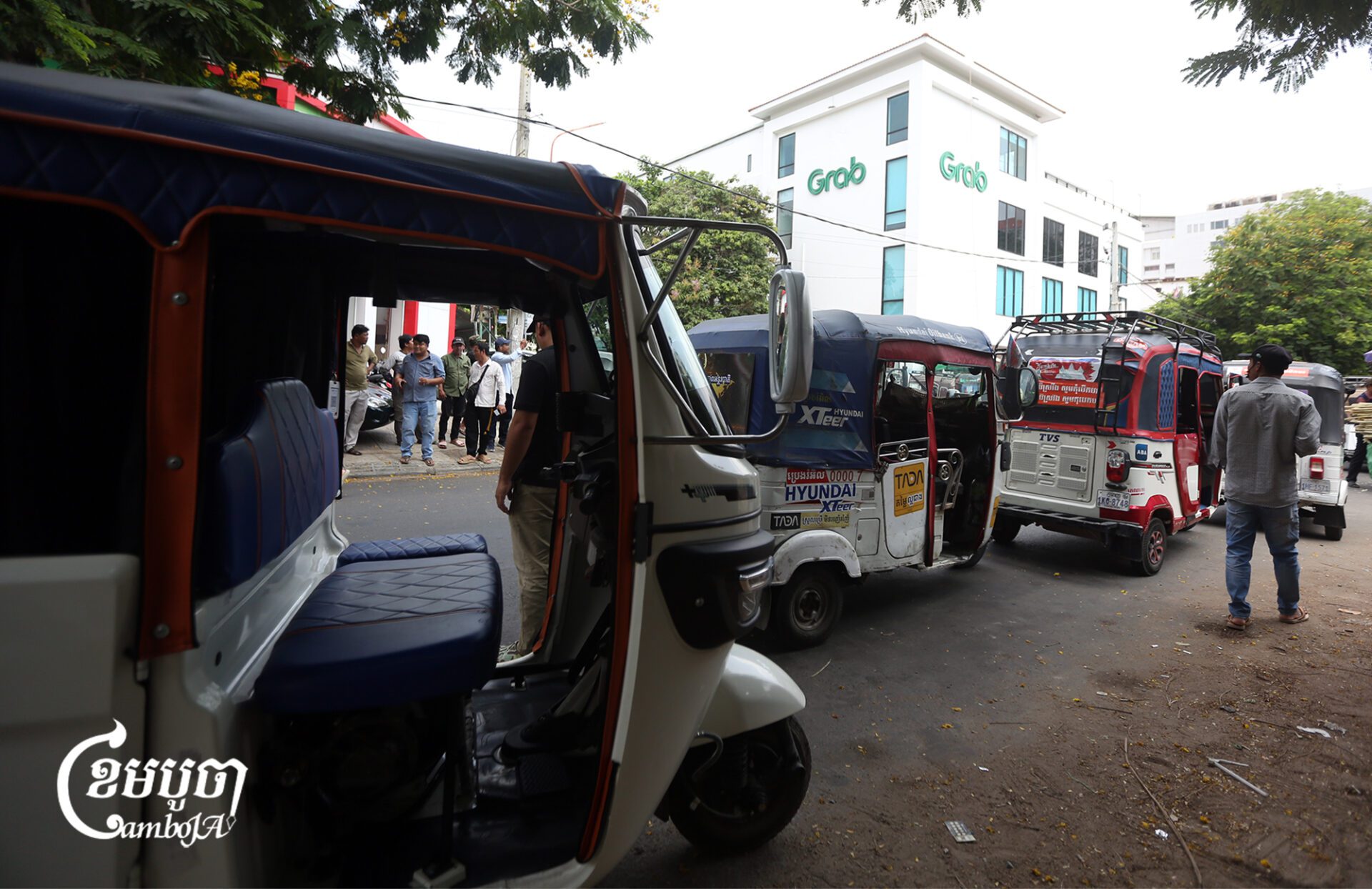
Over 100 tuk-tuk drivers gathered at Grab’s Phnom Penh office to protest low fares, raising concerns over the company’s implementation of previously discussed pricing adjustments, amid higher LPG prices.
In a previous protest in early April, the drivers demanded an increase in the base rate of 1,200 riel per kilometer from current rates, and a reduction of 12 to 15 percent in commission fees. Grab agreed to a temporary fare increase of $0.30 per kilometer and reduced its commission to 15 percent.
This morning (April 27), the drivers did not reach an agreement but proceeded to submit a petition to the Labor Ministry, calling on them to urge ride-hailing companies to set a common base fare across platforms.
However, Grab maintained its policy, noting that an agreement was reached with drivers during the protest early this month.
“Today, the company violated that agreement, especially on the base fare, which all apps had set at 3,000 riel, including additional 200 riel [as service commission],” said Sok Pheaktra, a tuk-tuk driver who joined the protest.
“During our previous protest, we agreed on 12,000 riel per kilometre, but now we are losing out on the 3,000 riel base fare across all apps. Grab reduced the price to 2,000 riel. That is why we will continue protesting,” he said.
He alleged that Grab removed 1,000 riel for each trip. “So, we have lost a lot of money, and we can’t accept it,” Pheaktra said. “Sometimes, Grab’scalculation reduces from 1,200 riel to 1,000 or 1,100 riel. This isn’t stable pricing.”
Amid unstable fares, tuk-tuk drivers have also raised concerns over rising LPG prices, now at around 3,700 riel per liter, which they say reduces their daily income.
Fuel prices in Cambodia and globally spiked following strikes by the United States and Israel on Iran, triggering retaliatory attacks and disrupting traffic through the Strait of Hormuz, a key shipping route for about a fifth of the world’s oil supply.
“We have been impacted since gas prices increased. Our income is now between 60,000 and 70,000 riel per day,” said driver Pheakdey, noting that earnings were double that before the gas price rise.
Another driver, Sam Nak, echoed similar concerns and called on Grab to hold a meeting.
“It is affecting our livelihood as gas prices have increased. We are asking the company to restore the previous base fare of 3,000 riel. Sometimes, we have to spend extra money on repairs when our tuk-tuk breaks down,” he said.
“We came here to protest because of this heavy burden. We could face challenges, as appearing on camera could lead the company to suspend our app accounts,” Nak said, referring to pictures of them being taken by the media.
Kan Chhunnat, Public Affairs and Policy Manager of Grab Cambodia, said that they have fulfilled the demand of the tuk-tuk drivers from the last meeting.
“We have implemented [requests] from the meeting offering 15 percent. If there is any excess, we will refund them the money the next day,” he said.
“The rate for the first kilometer is 3,200 riel [even if a] passenger travels only one kilometer [500 or 600 meters]. If the passenger travels more than two kilometers, our rate is 2,000 riel per kilometer,” Chhunat said.
“It is nothing new, this is the formula that we have implemented since 2022 […] Grab [price] can go up and down according to timing,” he said.
Chhunat explained that as for the kilometer rate of 1,200 riel, it can be slightly over or under because for grab (ride-hailing), the system calculates based on traffic hours and when it rains.
“Our partner drivers have misunderstood. In fact, we already explained that the prices we implemented have not changed — meaning the rate of 2,000 riel per kilometer has been in place since 2022,” he added.
Labor Ministry spokesperson Sun Mesa said they have received the petition and are reviewing it before addressing the issue.