Listen to the audio version of this article (generated by AI).
UPDATES:
Cambodia’s Ministry of Culture Says Preah Vihear Temple Badly Damaged by Thai Military, Calls for Urgent Action
The Ministry of Culture and Fine Arts called on the international community to support urgent measures to protect the Preah Vihear temple as a World Heritage Site following extensive damage from Thai artillery attacks from July 24 to 28, 2025 and December 7 to 27, 2025, according to a statement posted on Monday.
The ministry has submitted assessment reports to UNESCO, the World Heritage Committee, ICC-Preah Vihear Member States, and the international community to help protect the temple from further attacks, support emergency conservation and restoration works.
UNESCO had not responded to questions via email at the time of publication.
Between July 24 and 28, the attack damaged 142 locations within the Preah Vihear Temple complex and 42 locations in the surrounding areas, including Keo Sikha Svara pagoda, public infrastructure, and the conservation office building of the National Authority for Preah Vihear.
In December, renewed attacks resulted in damage of magnitude exceeding that recorded in July 2025. Almost all major architectural structures of the temple suffered severe damage, the ministry said, adding that the damage was caused by repeated heavy artillery shelling and aerial bombardment carried out by unmanned aerial vehicles and fighter jets directly targeting the temple.
The United States remains firmly committed to the Kuala Lumpur Peace Accord, while urging full compliance with the ceasefire, as well as further de-escalation along the Cambodia –Thailand border.
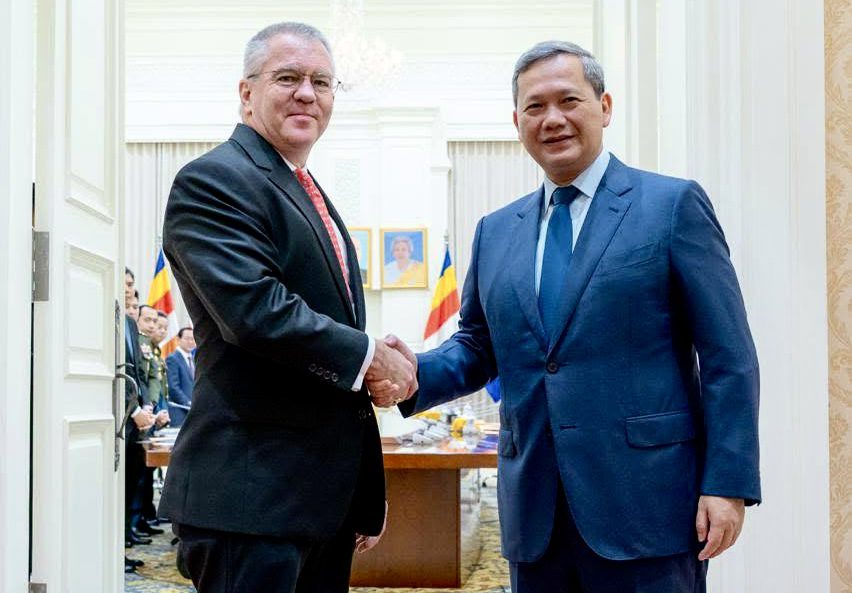
U.S. Assistant Secretary of State for East Asian and Pacific Affairs Michael George DeSombre met with Foreign Affairs Minister Prak Sokhonn and Prime Minister Hun Manet over the weekend.
DeSombre conveyed that U.S. President Donald Trump remains committed to ensuring full compliance with the ceasefire, de-escalation and resumption of the border demarcation process to achieve lasting peace and stability between Cambodia and Thailand, according to Cambodia’s Foreign Affairs Ministry.
The U.S. also allocated $15 million to help stabilize the livelihoods of displaced border communities in Cambodia and Thailand, and an additional $10 million to support humanitarian deming efforts in Cambodia.
“I welcome Cambodia’s continued support for lasting peace with Thailand under the Kuala Lumpur Peace Accords [with] new U.S. assistance for communities displaced by the conflict,” DeSombre wrote on X.
Prime Minister Hun Manet thanked Trump and the U.S. government for facilitating the ceasefire, joint declaration signed on October 26, 2025, and to continue paying attention to peacebuilding efforts between Cambodia and Thailand, as well as providing aid to restore displaced people’s livelihoods and support humanitarian demining efforts.
He stressed that Cambodia values peace and adheres to the peaceful resolution of border issues in accordance with international law, treaties, conventions, and agreements, including the Joint Declaration and Joint Statement signed after the General Border Committee meeting, the safe return of civilians and the resumption of joint border demarcation as a basis for lasting peace with Thailand.
In a special message on January 10, Hun Manet announced measures to address the impacts of the conflict and recovery efforts, while calling on international partners to support Cambodia’s recovery.
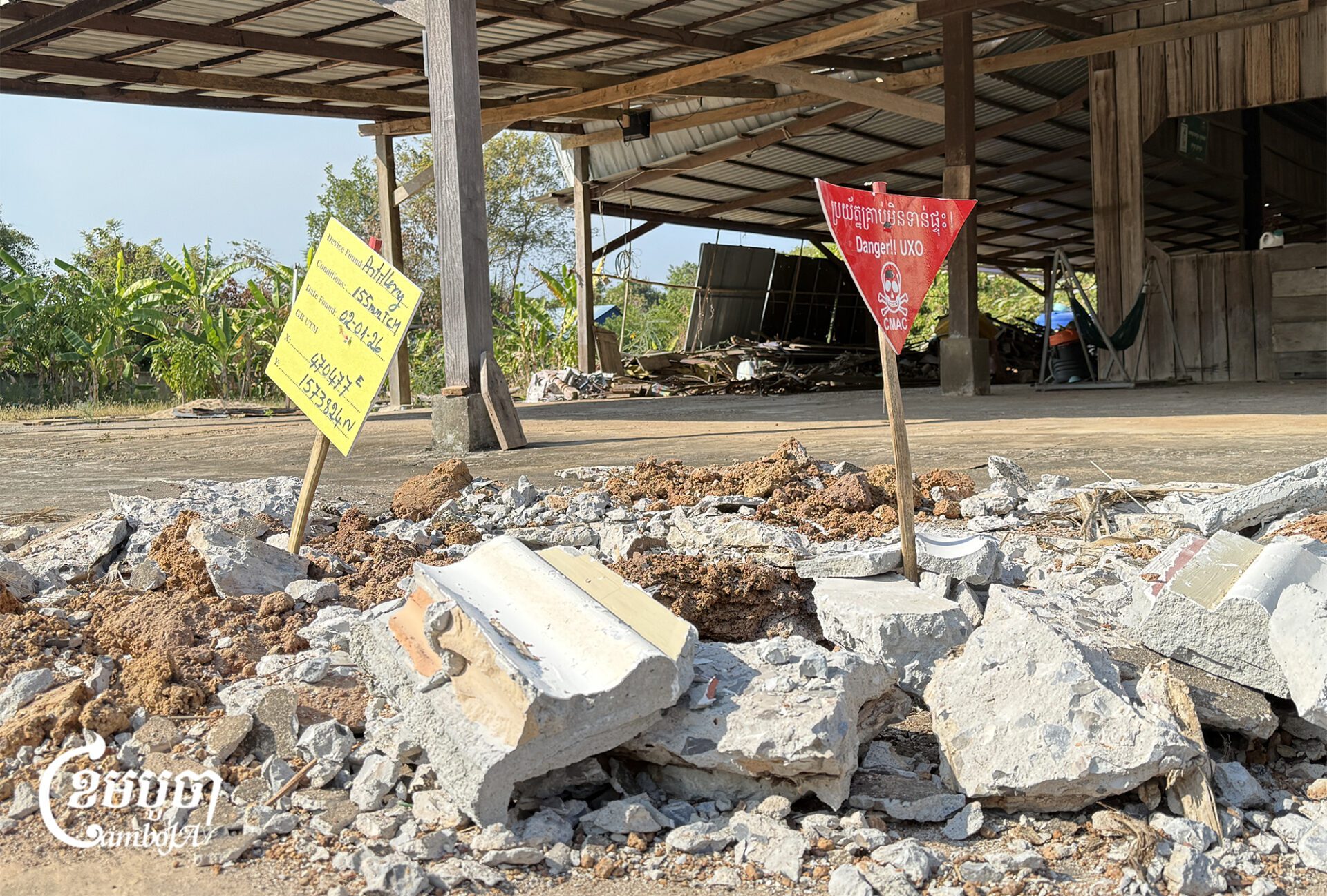
He said authorities are facilitating the return of displaced people, with a priority on clearing unexploded ordnance to ensure safety. For those unable to return immediately, Hun Manet said the government is strengthening temporary shelters, as displaced families may need to stay longer.
A working group is currently conducting damage assessments, he mentioned, adding that the national budget and funds from development partners would be used to restore damaged infrastructure as soon as possible.
Hun Manet urged financial institutions to continue easing loan burdens for soldiers and displaced civilians. Measures such as fee waivers, interest relief, repayment deferrals and loan restructuring have also been introduced.
The government has approved loan cancellations of up to 10 million riel for disabled soldiers who were injured in the battlefield and up to 80 million riel for fallen soldiers, and is prioritizing the reconstruction of damaged infrastructures, including roads, schools, markets and hospitals.
As of today, approximately 480,000 displaced persons out of 640,000 people have returned home, with 161,472 displaced persons remaining in displacement camps, the Interior Ministry posted.