Listen to the audio version of this article (generated by AI).
Voter registration for thousands of Cambodians displaced by the border conflict with Thailand has been disrupted ahead of registration opening in October for next year’s commune elections, the National Election Committee (NEC) said Thursday.
About 10,000 of 27,000 eligible displaced voters cannot return to their home villages to register because the areas are occupied by Thai forces, NEC spokesperson Hang Puthea said. He said 44 polling stations in border provinces have been affected, spanning 18 villages across 11 communes in six districts, including in Banteay Meanchey, Preah Vihear, Pursat, Siem Reap and Oddar Meanchey provinces.
Puthea said the disruption does not affect entire communes along the border, and that registration will continue. Displaced residents can register either in their home commune or in the commune where they currently live, he said.
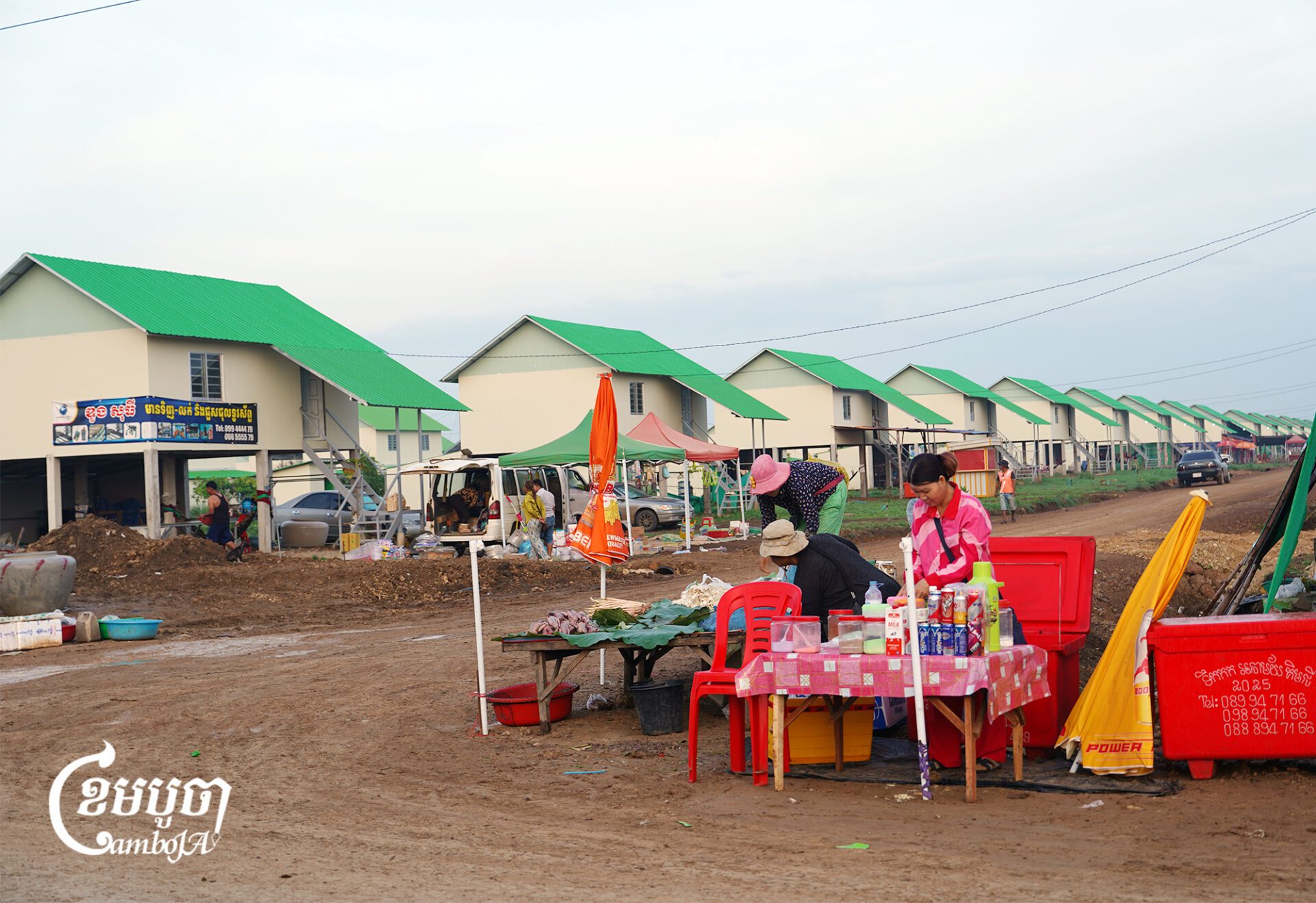
He added that NEC will consider setting up polling stations closer to temporary housing sites, particularly where large numbers of displaced voters are concentrated.
But some displaced persons say they are still in the dark.
Doeu Raksa, a displaced resident of Samaki village in Kork Romiet commune, Thmar Pouk district, Banteay Meanchey province, said she has yet to receive information from authorities about registration or her designated polling station.
“We will vote in Rong Cham village, [displaced site] where we are currently staying, because we can’t return to our previous village,” she said.
Kim Chanpanha, deputy governor and spokesperson for Preah Vihear province, said local authorities are working to organize registration for displaced families unable to return to their villages.
“There are villagers who have been affected, and some were entirely affected,” he said, adding that about 700 families in the province cannot return to register. He did not say how many of those residents are eligible to vote.
Korng Savang, policy and advocacy coordinator for the Committee for Free and Fair Elections in Cambodia (COMFREL), called on the NEC and other authorities to ensure polling stations are properly organized so displaced people are not disenfranchised.
“If there is a lack of arrangement, the main challenge for them is losing the right to exercise their right to vote,” he said.
Savang urged authorities to compile figures on displaced people, affected villages and polling stations to identify voters unable to reach their original stations, and to ensure displaced residents receive clear, timely information about their new designated polling locations.
Thailand, meanwhile, has said some of the Cambodians who remain displaced from the conflict should not be classified as internally displaced persons, arguing they settled decades ago in areas Thailand opened for humanitarian shelter and never returned to Cambodia. Cambodia disputes this, saying the villages — now occupied and reportedly razed since border hostilities halted in December — are its territory.