After five-days of border clashes last month that left at least 40 dead, mostly civilians according to official figures, Cambodia and Thailand are still trading accusations of first aggression and violations of international law, as investigators work to verify the claims.
A fragile ceasefire is in place, and direct military talks are wrapping up in neutral Malaysia, but tensions remain barely contained.
Beyond mutual recriminations over who fired first near the disputed Ta Moan temple that set off clashes in several border areas on July 24 and who broke the July 28 ceasefire, Thailand faces accusations of using cluster munitions and violating the Geneva Conventions while continuing to hold 18 Cambodian troops despite a halt in fighting.
Cambodia, in turn, is accused of bombing civilian areas and killing non-combatants. Thai bombs also reportedly hit civilian infrastructure causing casualties, while the Thai military doubled down on its claim that Cambodian forces broke the truce.
International law experts and investigators are now examining which legal provisions each country is bound by – and whether Thailand used cluster munitions in civilian and heritage areas. Bangkok, which has insisted on keeping negotiations bilateral while Phnom Penh pushes for international intervention, is now hamstrung by its lack of commitments to international treaties and courts, where most states typically file accusations of legal violations, one expert said.
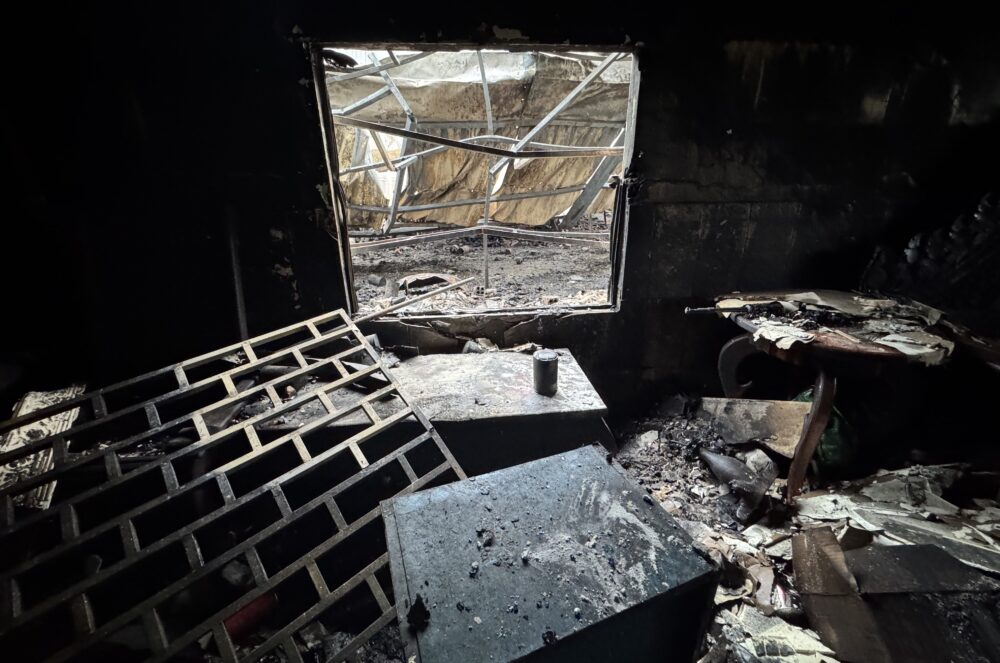
During fighting in late July, the deadliest border clashes between the neighbors in over a decade, Thai forces deployed F-16 fighter jets for bombing runs near flashpoints. Cambodian officials later accused the strikes of hitting civilian areas, including pagodas, schools and homes.
A Cambodian Defense Ministry spokesperson also accused Thailand of using cluster munitions – banned by many countries for leaving behind unexploded bomblets that pose long-term risks to civilians.

Thailand initially denied the allegation. But a military spokesman later said such weapons “can be utilized when necessary,” drawing swift condemnation from rights groups.
“Thailand has not signed the Cluster Munitions Convention, but it is still bound by international humanitarian law,” said Nathan Paul Southern, operations director at the EyeWitness Project, which investigates conflict, corruption and war crimes globally.
Neither country has signed the Convention on Cluster Munitions, which bans the use, stockpiling and transfer of the weapons, though both are bound by broader obligations under the Geneva Conventions.
“If cluster munitions were used in populated areas, causing harm clearly excessive to any military gain, that would likely breach the principle of proportionality under customary international law,” he said.
Southern said his team is gathering evidence of possible war crimes and violations of international humanitarian law. Investigators have visited suspected strike sites in Cambodia, interviewed witnesses and consulted weapons experts to assess whether cluster munitions were used. No final conclusions have been reached.
During the last border conflict between the neighbors in 2011, Thailand also reportedly used the munitions, marking the first such use worldwide since the convention came into force.
“We’ve shared our initial findings with relevant authorities to alert them to the potential presence of unexploded ordnance,” Southern said. “In at least one location, families were still living nearby. That makes clearing the area all the more urgent.”
Southern urged Thai and Cambodia authorities to grant full access to investigators, as his team works to verify suspected violations by both sides.
Amid the legal wrangling, the civilian impact remains severe.
The death toll from the clashes was mostly civilian. Cambodian officials said eight citizens were killed and 50 injured, while Thai authorities reported 14 civilians – including children – killed and 39 wounded in Cambodian attacks.
More than 300,000 people have been displaced on both sides, though some have started returning home.

Fortify Rights and Human Rights Watch have accused both sides of possible violations of international humanitarian law.
On both sides, civilian areas were hit by rockets and artillery. Fortify Rights last week said that Cambodia appeared to have “indiscriminately attacked” civilians.
Some claims remain unverified. Thailand accused Cambodia of laying anti-personnel mines that maimed several soldiers along the Preah Vihear border before fighting reignited. Cambodia, in turn, alleged Thai jets deployed chemical weapons – an accusation widely circulated on Cambodian social media with images later proven to be false.
The most immediate concern for local rights groups is Thailand’s continued detention of 18 Cambodian soldiers captured after a post-ceasefire skirmish on July 30.
Both governments blamed each other for violating the truce that led to the clash. Cambodian officials accused Thai forces of staging a choreographed ambush to capture the troops.
Thai authorities returned the body of a deceased Cambodian soldier the following day. The day after, they sent back two more troops, one with injuries and the other reportedly suffering from a serious mental health condition. The number of detainees has since dropped from 20 to 18.
Lim Chhay, deputy director at the Phnom Penh-based Center for Southeast Asian Studies, said the capture and ongoing detention of Cambodian soldiers after the ceasefire violates international humanitarian law.
He argued that peacefully luring troops before detaining them constitutes perfidy, which is legally prohibited. He also said prisoners of war must be treated humanely and released promptly once active hostilities have ended.
Thai forces say the 18 remaining soldiers in their custody are being properly cared for and have been designated prisoners of war. They justify their continued detention by accusing Cambodia of violating the ceasefire. Thai authorities have allowed the International Committee of the Red Cross to visit the detainees.
The Cambodian Human Rights Committee has lodged a complaint with the UN High Commissioner for Human Rights, accusing Thailand of torture, denying medical care and blocking communication during the soldiers’ detention.
Chhay also criticized alleged Thai airstrikes on the Preah Vihear temple, a UNESCO World Heritage site granted to Cambodia by the International Court of Justice in 1962 but still disputed by Thailand.
Cambodia’s Culture Ministry said the temple suffered significant damage from Thai airstrikes on the first day of renewed clashes.
The claim has not been independently verified by CamboJA News. UNESCO said the recent hostilities may have damaged cultural heritage in both countries, including sites on the World Heritage list.

Asked about allegations that Cambodian forces targeted Thai civilians or laid landmines – including a strike on a gas station in Thailand’s Sisaket province that killed eight civilians, among them two children – Chhay said the accusations remain unverified and should be investigated through a neutral, independent inquiry.
Both governments have pledged not to use landmines. Cambodia denies recent use, saying Thai troops stepped on old minefields from past wars.
Thai officials meanwhile are preparing war crime cases against Cambodia.
Acting Prime Minister Phumtham Wechayachai has ordered his cabinet to pursue civil and criminal lawsuits at home and abroad, accusing Cambodia of launching the attacks and vowing to seek justice and compensation.
Phumtham said the move does not include filing a case with the International Court of Justice (ICJ), which Thailand does not recognize.
The lack of recognition of world courts may limit Thailand’s ability to hold Cambodia legally accountable on the world stage, but not entirely.
“Thailand cannot sue Cambodia at the International Criminal Court (ICC) unless it joins the Rome Statute,” said Sar Mory, a Khmer international law scholar, noting that Cambodia brought a case against Thailand to the ICJ in the past.
However, he said Cambodia could still bring a case to the ICC, even though Thailand is not a party to the treaty.
“The International Criminal Court has jurisdiction if the crime was committed on the territory of a State Party, which Cambodia is,” Mory said.
Pen Bona, a Cambodian government spokesperson, did not immediately respond to questions about whether Cambodia would pursue legal action against Thailand over alleged breaches of the Geneva Conventions.
As the ceasefire continues to hold, tensions and negotiations remain taut. In the interim, pursuing criminal cases at international courts may risk escalating a dispute that has reached a fragile calamity.