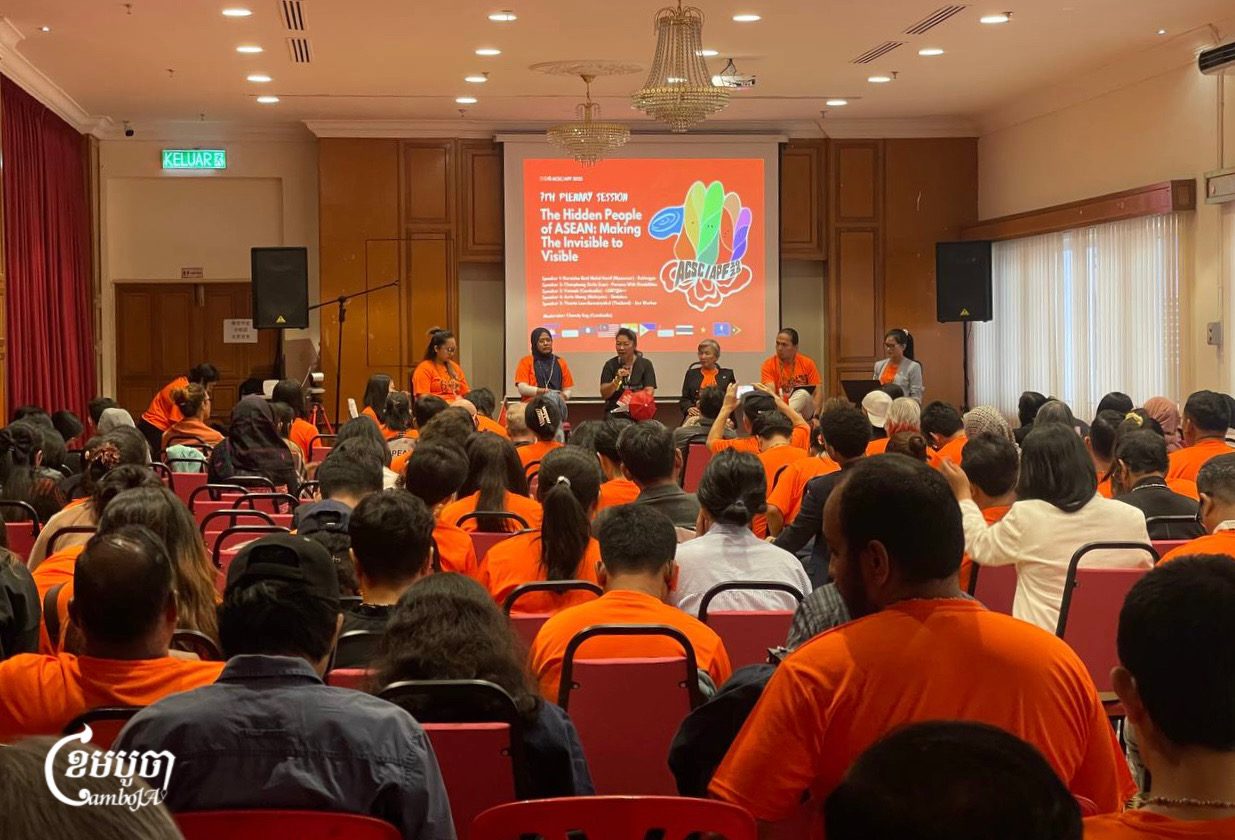
Kuala Lumpur – Hundreds of Southeast Asian civil society groups on Wednesday called for stronger regional unity to defend democracy, human rights and freedoms, warning of rising authoritarianism across the region.
More than 200 groups from across ASEAN member states, including Myanmar, Cambodia, Thailand, Malaysia, Philippines, Indonesia and soon-to-be member Timor-Leste, gathered in the Malaysian capital ahead of next week’s ASEAN Summit for two days of talks and events under the ASEAN Civil Society Conference, also known as the ASEAN People’s Forum.
Activists and community representatives pointed to shrinking civic space and widespread rights abuses, citing jailed protesters in Indonesia, indiscriminate airstrikes by Myanmar’s military amid a civil war and the ongoing plight of the Rohingya, along with weak judicial independence in Cambodia and Thailand.
During the forum’s Solidarity Night on Oct. 14, exiled Myanmar activists highlighted alleged atrocities by the country’s military junta, unfurling a flag symbolizing peace and freedom as they urged ASEAN citizens to back Myanmar’s pro-democracy movement.
The military, which seized power in a 2021 coup, plans to hold elections starting in December but will exclude dozens of townships. International observers have called the vote a sham.
Noor Azizah, co-founder of the Rohingya Maiyafunior Collaborative Network, a women-led group advocating for Rohingya rights, told the forum about survivor testimonies of sexual violence and conflict in Myanmar’s Rakhine State, where rights groups say the Rohingya faced genocide leading up to the 2021 coup.
“We need to hold them accountable,” she said, referring to both the Arakan Army, which has been accused of abuses against the Muslim minority, and the Myanmar military.
The UNHCR reports an 80% surge in Rohingya boat arrivals in bloc countries, mainly Indonesia and Malaysia, with most passengers women and children fleeing violence and deteriorating conditions in Bangladesh’s refugee camps, which have housed over a million people since 2017.
Azizah was also outspoken at the forum, saying not enough attention was dedicated to the issue.
Indonesian participants called for support by showing images of activists arrested or missing during nationwide protests in August, while Philippine delegates backed calls for regional unity in pursuit of justice and peace.
More than 50 Cambodian participants representing civil society organizations, trade unions, youth groups and human rights defenders used the platform to urge the Thai government to release 18 detained Cambodian soldiers.
Cambodia and Thailand fought a deadly five-day border conflict earlier this year, killing dozens and displacing hundreds of thousands on both sides at the time.
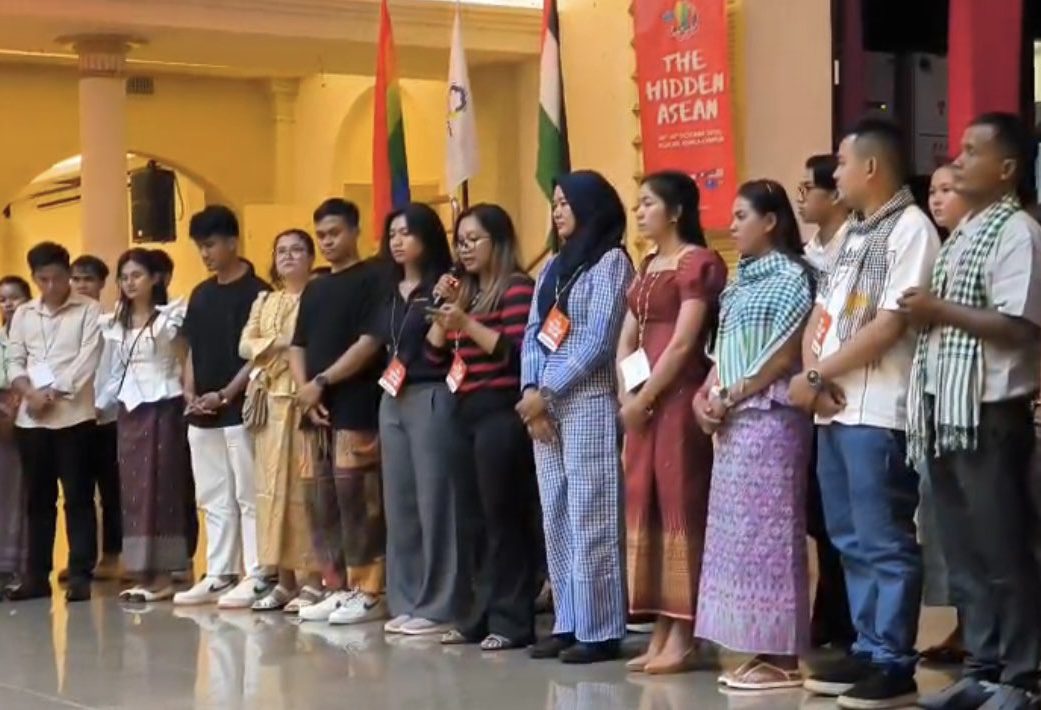
Participants highlighted an increase in repressive laws in Cambodia, including those limiting rights to form workers unions and restrictions on press freedoms. They also raised concerns about transnational crime and sprawling online scam networks operating across Cambodia, Laos and Myanmar.
Simmering tensions between Cambodia and Thailand were also discussed, including concerns over digital platforms amplifying misinformation and ultranationalism.
“Cambodia’s experience shows that peace cannot be sustained by governments alone. When official talks break down, civil society often becomes a bridge of trust, playing a crucial role, especially when conflicts arise across Southeast Asia,” said Cambodia geopolitical analyst Seng Vannly during a panel discussion.
He called for the establishment of civil society liaison offices across the region.
Seng Reasey, executive director of Silka, a Cambodian consulting group for rights organizations, emphasized that the regional bloc must move past the principle of non-interference to address local crises and abuses.
Thailand’s Institute of Human Rights and Peace Studies director Eakpan Pindavanija also highlighted the value of rights-focused dialogue.
“The problem is that we have a lot of discourse built on hostility,” he said, referencing tensions between Cambodia and Thailand. “We have to build more dialogue that helps people understand human rights and democratic values.”