
Listen to the audio version of this article (generated by AI).
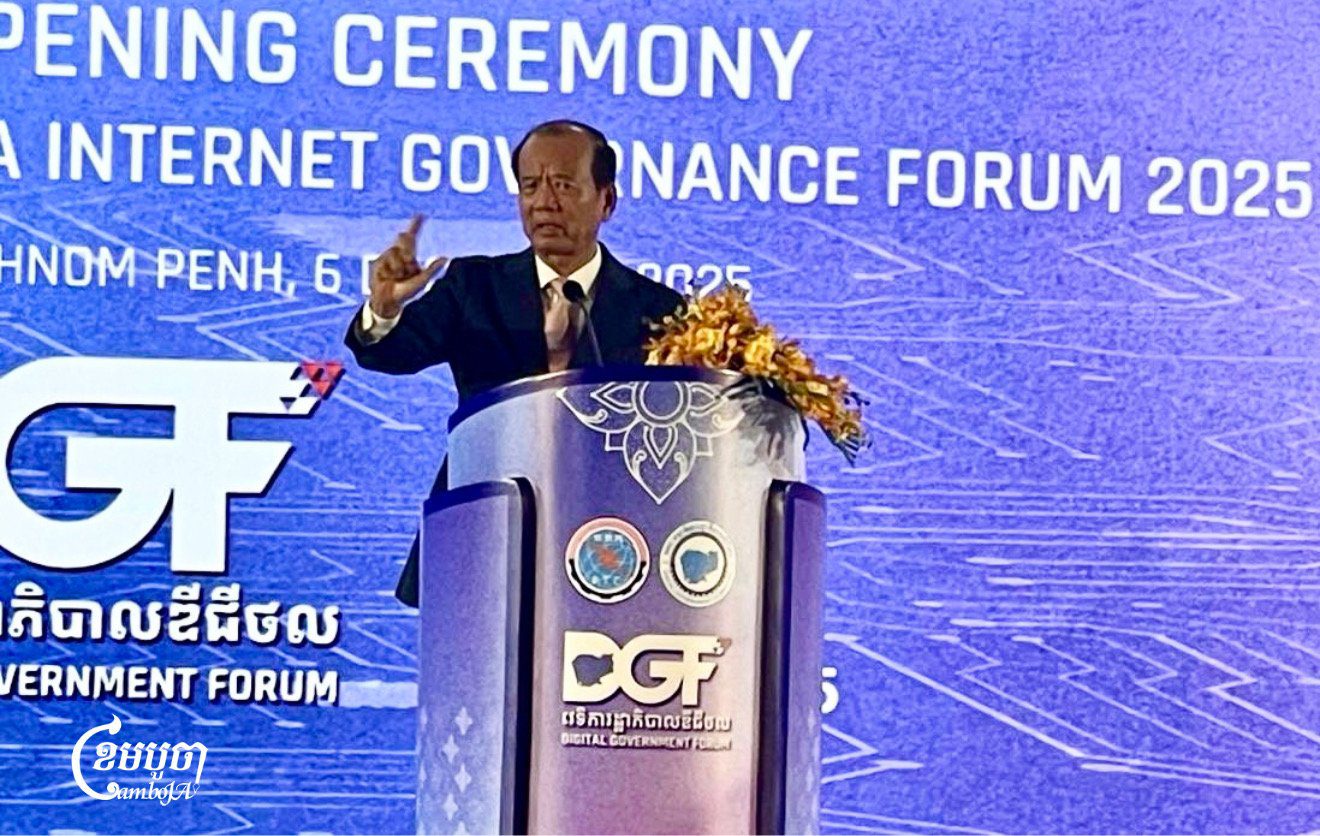
Post and Telecommunications Minister Chea Vandeth said agile policy frameworks should be adopted while digital inclusion and multilateral cooperation are boosted to tackle cybersecurity threats, online fraud, and harmful content to ensure sustainable and equitable digital development.
“Strengthen multilateral cooperation to coordinate efforts in cybersecurity, combat online fraud and illegal content, and build a trustworthy digital environment,” he remarked at the opening of the Cambodia Internet Governance Forum on Saturday.
Vandeth also announced that mobile operators are preparing to roll out 5G services in 2026, starting with Phnom Penh and five other provinces. It would be supported by clear investment plans to ensure high-quality telecommunications services.
According to him, operators have committed to major infrastructure expansion, including the construction of about 500 antenna towers per operator each year, totaling 2,000 towers over three years.
Sok Puthivuth, Secretary of State of the Post and Telecommunications Ministry (MPTC), highlighted two priorities: strengthening online safety as AI becomes more prevalent and ensuring universal, meaningful internet connectivity.
He called for use of responsible AI to protect citizens while fostering innovation, as well as affordable, reliable internet access to reduce the digital divide between urban and rural communities.
“The internet is no longer just a tool. It’s the backbone of modern society, an essential infrastructure for education and commerce, governance and social connection, as Cambodia moves forward in its digital transformation journey. We stand at a crossroad of immense opportunity,” he said at the three-day forum which ends on Sunday.
“We are not here to debate in style, but to listen, learn and develop solutions for cyber security, data governance and digital rights. There must be inclusion through genuine dialog among those present here,” Puthivuth said.

Esther McFarlane, office-in-charge of UNESCO Office in Phnom Penh, said that Cambodia is turning recommendations into action, demonstrating national ownership and a commitment to evidence-based digital policy and development.
Recently, she noted, the Education, Youth and Sport Ministry, MPTC and national institutions, organized a conference on AI in education, which was inspired by UNESCO’s AI Ethics Readiness Assessment, to call for the development of sector-specific platforms for responsible and human-centered AI. “This is digital governance in action, and it will be vital in shaping a safe, open and inclusive digital future for Cambodia.”
UNESCO is supporting MPTC to create Cambodia’s first ICT and AI competency framework for teachers and developing digital solutions ranging from workforce planning to expanding access to flexible learning programs for out-of-school youth.
Cyber security expert Prasad Jayabalan from Malaysia’s Axiata Group said digital progress depends on trust, noting that modern digital services—from payments to healthcare and identity—only function well when people feel safe.
Cyberattacks increasingly target individuals through misinformation rather than just technical systems, and a “single bad experience” could quickly spread and damage public trust. The solution is to empower citizens to understand their rights, practice basic digital safety, and report issues early, making them a “vital first line of defense”, he said.
“The message is very clear, technology and trust must go hand in hand. If we lose trust, we will slow progress. If we build trust, we strengthen our resilience,” he said.
He stressed the need for safe practices in an AI-driven environment, and for users to verify information, follow approved tools, and avoid exposing sensitive data, which is a common mistake and one that attackers often exploit.
Prasad called for the building of “cyber confidence”, where citizens adopt cautious online habits, while government institutions design secure systems and communicate clearly, and organizations coordinate, share intelligence, and respond together.
Sin Putheary, executive director of the Cooperation Committee for Cambodia, pointed out the importance of digital inclusion, particularly for women and marginalized groups who often lack access, skills, and protections when using digital platforms.
“Vulnerable groups or women in the rural poor community can be integrated into this big system,” she said, adding that civil society plays a critical role in ensuring that rural and poor communities are integrated into the broader digital system.
She said the value of multi-stakeholder engagement is not only for shaping digital policies but also for raising awareness and communicating national strategies to the communities who will ultimately be the end users.
Realtor Knight Frank’s Data Centers Report in 2024 quoted Telecommunication Regulator of Cambodia (TRC) as saying that there are 20 million internet subscribers in the country.
“Assuming an average of two internet devices per person, we estimate around 10 million internet users in Cambodia. This equates to approximately 60% of the total population using the internet,” it said.