Listen to the audio version of this article (generated by AI).
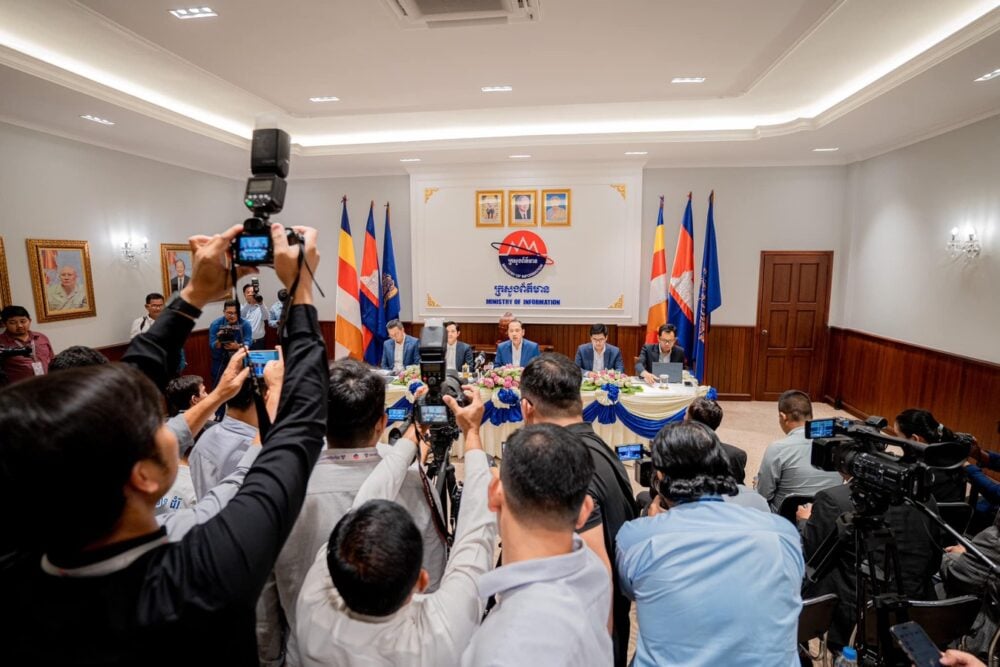
After media and rights groups sounded the alarm over new regulations they say tighten the government’s hold on what remains of Cambodia’s independent press, Information Minister Neth Pheaktra said the rules apply only to “newcomers,” not “recognized” outlets, a line critics say is blurry and ripe for censorship.
In late November, the Ministry of Informations issued a Prakas, or regulation, that took effect immediately and created a new licensing system for anyone producing journalism or even general content, covering newsrooms, journalists associations, advertising firms and public figures.
The rules set qualification requirements for key editorial roles, including a bachelor’s degree or ministry-approved journalism certificate, “good conduct” reports from authorities and a clean “complaint” record.
Many of the requirements also extend to applications for next year’s press cards.
Facing criticism that the rules could legally disqualify journalists and newsrooms, Pheaktra told local media this week that the new requirements apply only to newly established media outlets and digital content creators.
“The conditions in the regulation do not apply to those who are already operating, because we already recognize them,” he said, appearing to refer to outlets with valid ministry licenses and active reporting operations. “There should be no concerns for those who are currently working. Our focus is on new entrants – people coming into the profession now and in the future.”
He noted, however, that existing publications and broadcasters must still submit an application to the ministry, after which “they can continue their work in accordance with their qualification.”
Pheaktra, who has faced backlash from civil society groups over expanded rules they say target independent media, did not clarify how independent and freelance journalists qualify as previously recognized, or what counts as a new entrant. It is also unclear whether similar press card regulations will still apply to those who have held one before.
Cambodian Center for Independent Media executive director Chhan Sokhunthea said the minister’s explanation remains unclear.
“My concern is for journalists reporting on sensitive topics such as land issues, natural resources, online crimes, or trafficking, who may face challenges in applying for licenses or press cards because of the many conditions,” she said.
She noted particularly concerning requirements, including securing a letter of good conduct from local authorities and confirming they are not facing lawsuits or complaints.
Cambodian Journalists Alliance Association (CamboJA) executive director Nop Vy echoed Sokhunthea, saying additional applications for established outlets will be burdensome and create uncertainty.
“It creates barriers for journalists to exercise their rights and freedom and could lead to censorship,” he said.
Ministry spokesperson Tep Asnarith gave no clarity on whether recognized outlets will later be required to meet the new rules, repeating Pheaktra’s line that “carrying out an application is to fulfil with qualification conditions.”
The vagueness sparks uncertainty as Cambodia faces rising international criticism over shrinking civic space and the erosion of free press. The country ranks 161 out of 180 on Reporters Without Borders’ World Press Freedom Index.
Speaking at a Thursday event in Phnom Penh marking the International Day to End Impunity for Crimes Against Journalists, Centre for Law and Democracy executive director Toby Mendel said the new prakas violates international law by restricting who may practice journalism.
He added that the regulation’s stated aim of professionalizing the sector “will absolutely not improve journalism” in Cambodia, and called for genuine engagement between the government and the media.
But the Information Ministry has already moved forward with the rules, brushing off concerns they violate international law.
Phos Sovann, director general of the ministry’s General Department of Information and Broadcasting, said Cambodians “still have a limited understanding of the media,” arguing that some level of control was needed alongside the 2024 press charter and existing laws.
“Our people believe whatever they see, so some measures to manage will be considered, as we see in other countries who have already practiced [regulating journalists],” he added.