Listen to the audio version of this article (generated by AI).
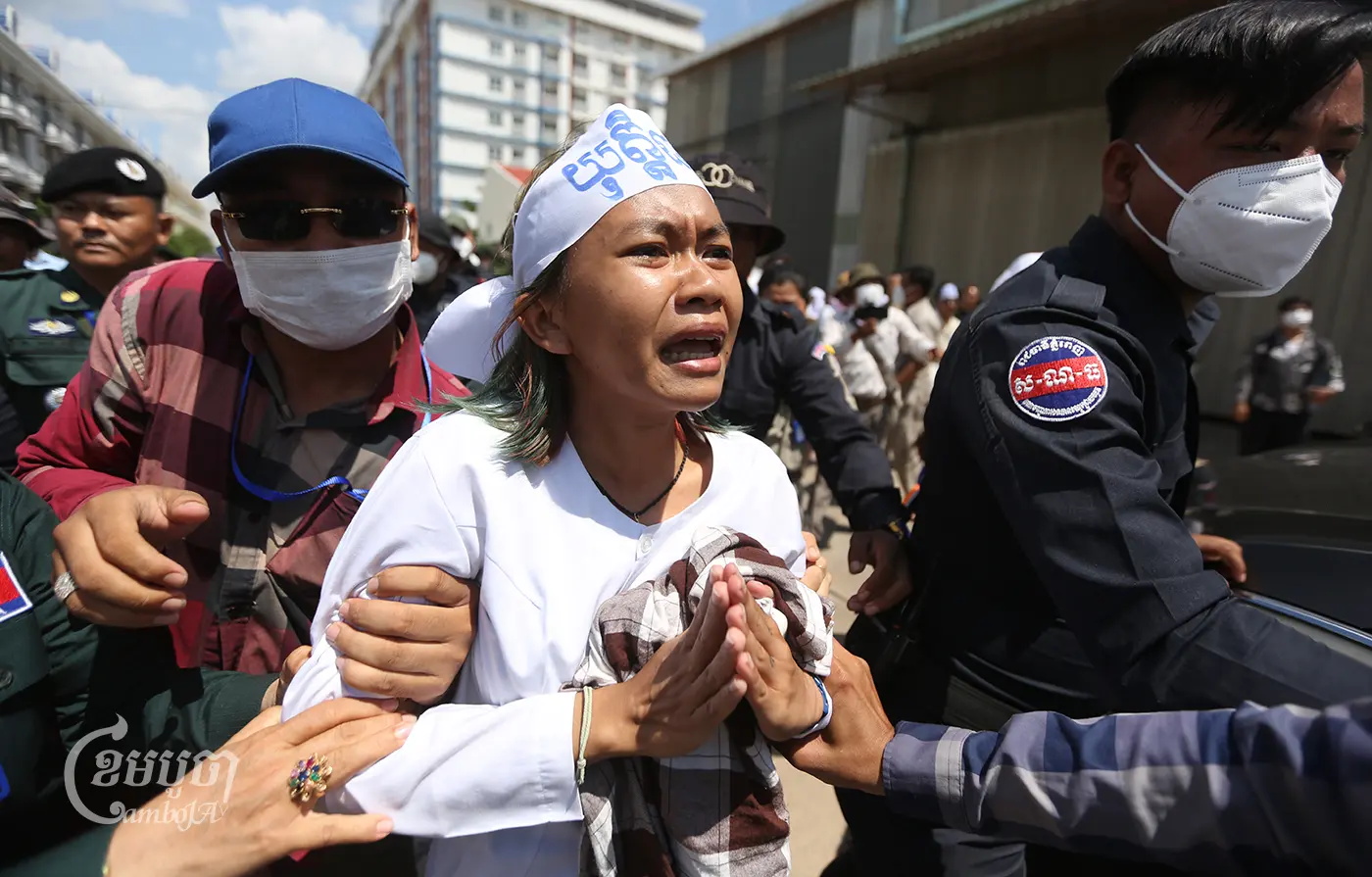
When leaders from around the Francophone world meet Nov. 15 in Phnom Penh, five activists from Cambodia’s preeminent environmental group will be serving their 866th day in prison. The Mother Nature Cambodia 5 (MNC5) are three men — Ly Chandaravuth, Thun Ratha, and Yim Leanghy — and two women — Phuon Keoraksmey and Long Kunthea. When they were free, they worked with local communities to educate and empower them to defend forests, wetlands, rivers and seas. They researched, investigated and exposed failures to protect the environment, and they documented their activities on social media for the Cambodian people to see and comment on.
What was the so-called “crime” that landed the MNC5 in prison? Simply put, they dared exercise their basic human rights by speaking out against the corruption and greed that drives the plunder of natural resources across the country. They urged protection for the environment, and when the authorities and their cronies ignored those calls, they dared to organize peaceful, symbolic public protests to bring attention to their demands.
They were unjustly convicted for “plotting” against the government — and, in Leanghy’s case, insulting the king — and sentenced to six to eight years in prison. Their lawyer appealed their convictions in July 2024 and has repeatedly pressed the court to hear the case. More than two years later, there has still been no appeals hearing.
The U.N. Working Group on Arbitrary Detention (WGAD) investigated the MNC5’s treatment by the government and judiciary, and comprehensively determined that their detention is arbitrary and unjust on multiple grounds. WGAD stated that “the appropriate remedy would be to release [them] immediately and accord them an enforceable right to compensation and other reparations, in accordance with international law.” Tom Andrews, the U.N. special rapporteur on the situation of human rights in Cambodia, highlighted their case in his report to the U.N. Human Rights Council, presented in October, and called for the release of all those imprisoned for exercising their fundamental freedoms.
Visiting Francophonie leaders should raise the situation of the MNC5 with their Cambodian hosts, and call on them to release these environmentalists. Such efforts are clearly in line with the Organisation Internationale de la Francophonie’s mandate “to promote peace, democracy and human rights.” At a time when international concerns about environmental protection and climate action are at an all-time high, the continued imprisonment of Cambodia’s leading environmental group contradicts the spirit of civil society engagement that motivates the Francophonie movement. Francophonie leaders could urge Cambodia to schedule the MNC5’s appeals hearing immediately, so the appeals court can consider the working group’s comprehensive opinion on the unfairness of their initial trial.
Mother Nature Cambodia plays a critically important role for the people of Cambodia who have suffered from the loss of the country’s national resources. The group has been involved in numerous campaigns to protect the environment. They led the successful effort to stop the Stung Cheay Areng hydropower dam that threatened to flood homes, Indigenous communities and forests in the pristine Areng Valley in Koh Kong province. They exposed the damage caused by sand dredging in maritime environments, and the widespread corruption connected with the exports of that sand to Singapore’s construction industry, leading to a multi-year export ban that, unfortunately, was recently lifted. They protested government backed developers’ destruction of Boeung Tamok, a critical wetland in Phnom Penh, and the illegal logging of the Prey Lang Wildlife Sanctuary forest. They stood up against the destruction of mangrove forests and critical coastal habitats in Koh Kong. And they documented and exposed the illegal pollution of the Tonle Sap River in Phnom Penh. In response, the Cambodian government revoked Mother Nature Cambodia’s legal registration, and harassed, intimidated, arrested and imprisoned their activists.
The government has deliberately sent them to separate prisons, and cruelly ensured they are incarcerated in facilities far from their families in order to make visits extremely difficult. For example, Keoraksmey, widely known by her nickname Akeo, is from Bavet City, in the easternmost part of Svay Rieng province on the Cambodia-Vietnam border, but she is being held in Pursat prison, a seven hour drive from her home. As of July 2023, the World Prison Brief ranks Cambodian prisons as second in the world for prison overcrowding, with wholly inadequate provision of nutritious food and clean water, and the MNC5 face these conditions daily. Each of the MNC5 was a breadwinner for their families, who are now suffering serious economic difficulties in their absence.
Yet despite all these hardships, these five activists are standing firm in their belief that they have done nothing wrong and should be released. As Ly Chandaravuth said from prison, “we are willing to express our thanks to the authorities if we are released, but we will not apologize to them.”
The Francophonie community should take up this appeal from the MNC5 and call on the Cambodian government to release them immediately, without conditions, and to recognize the importance of initiating dialogue with environmental defenders instead of criminalizing them.
Phil Robertson is the director of Asia Human Rights and Labour Advocates (AHRLA)