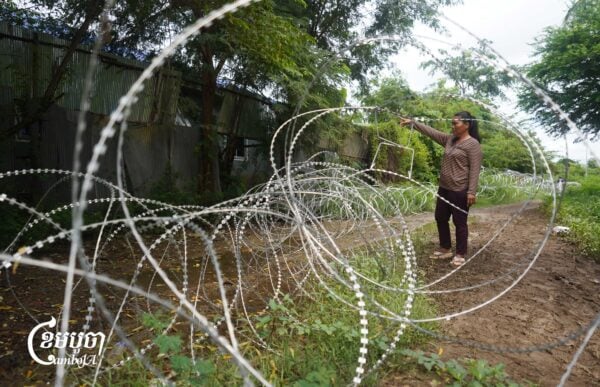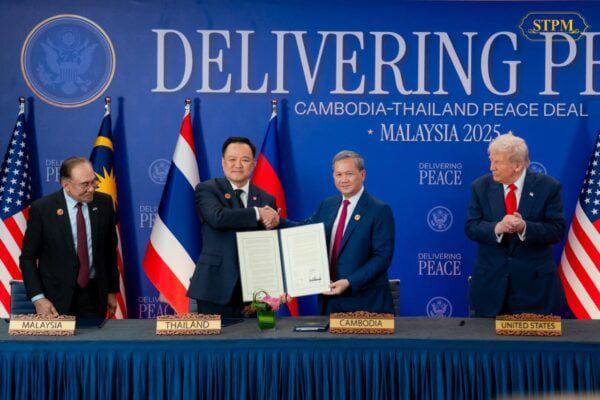

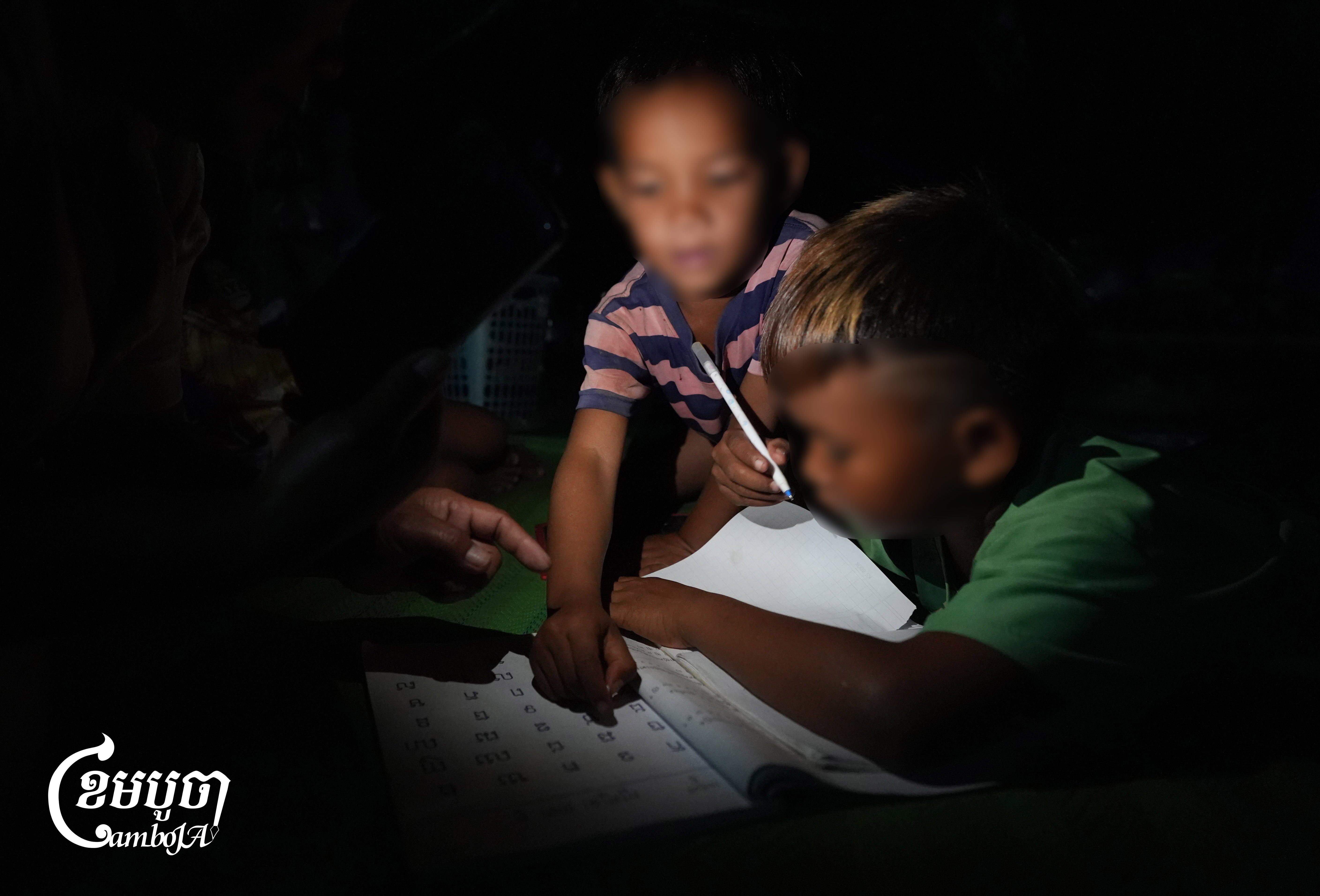
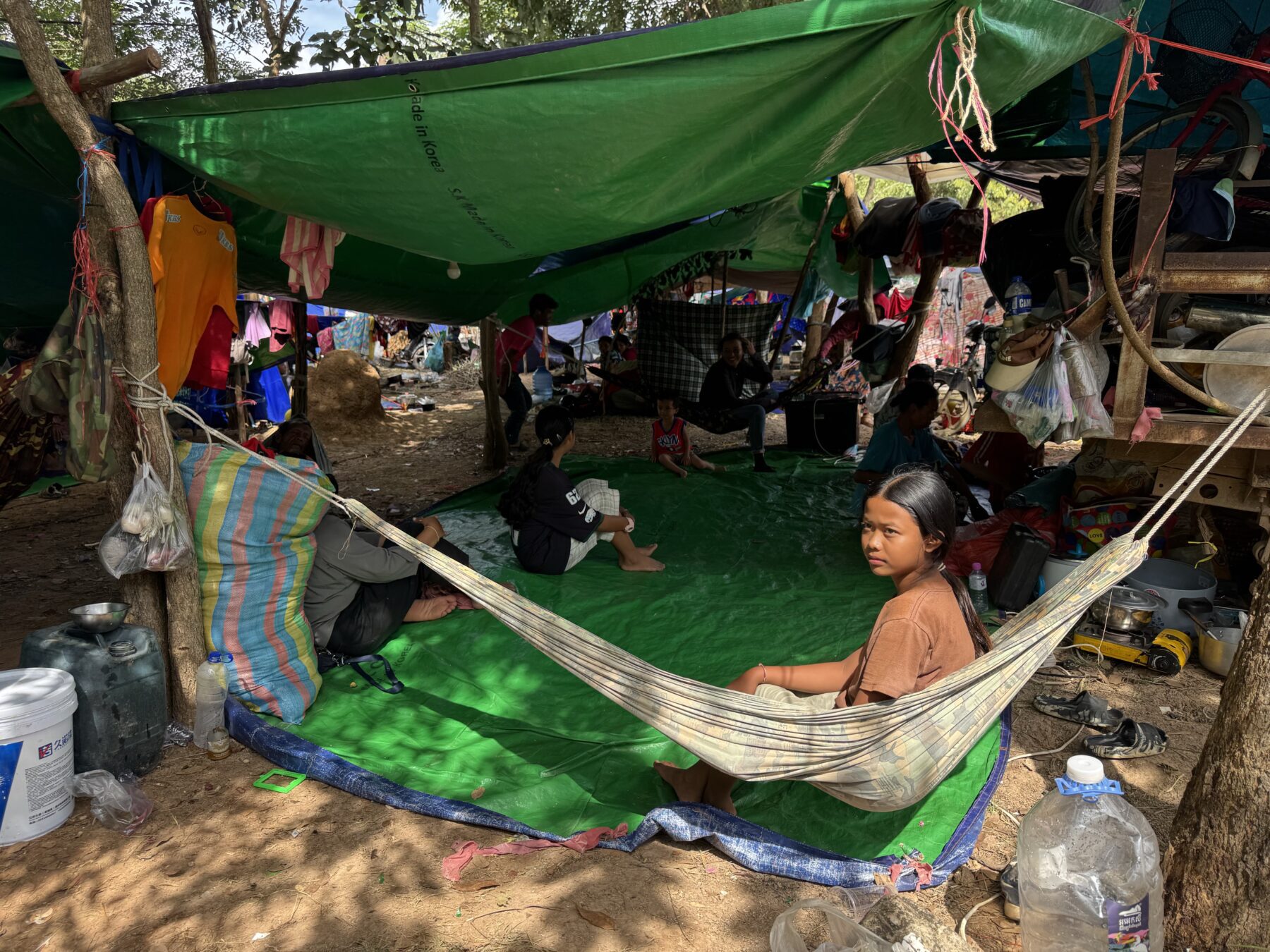
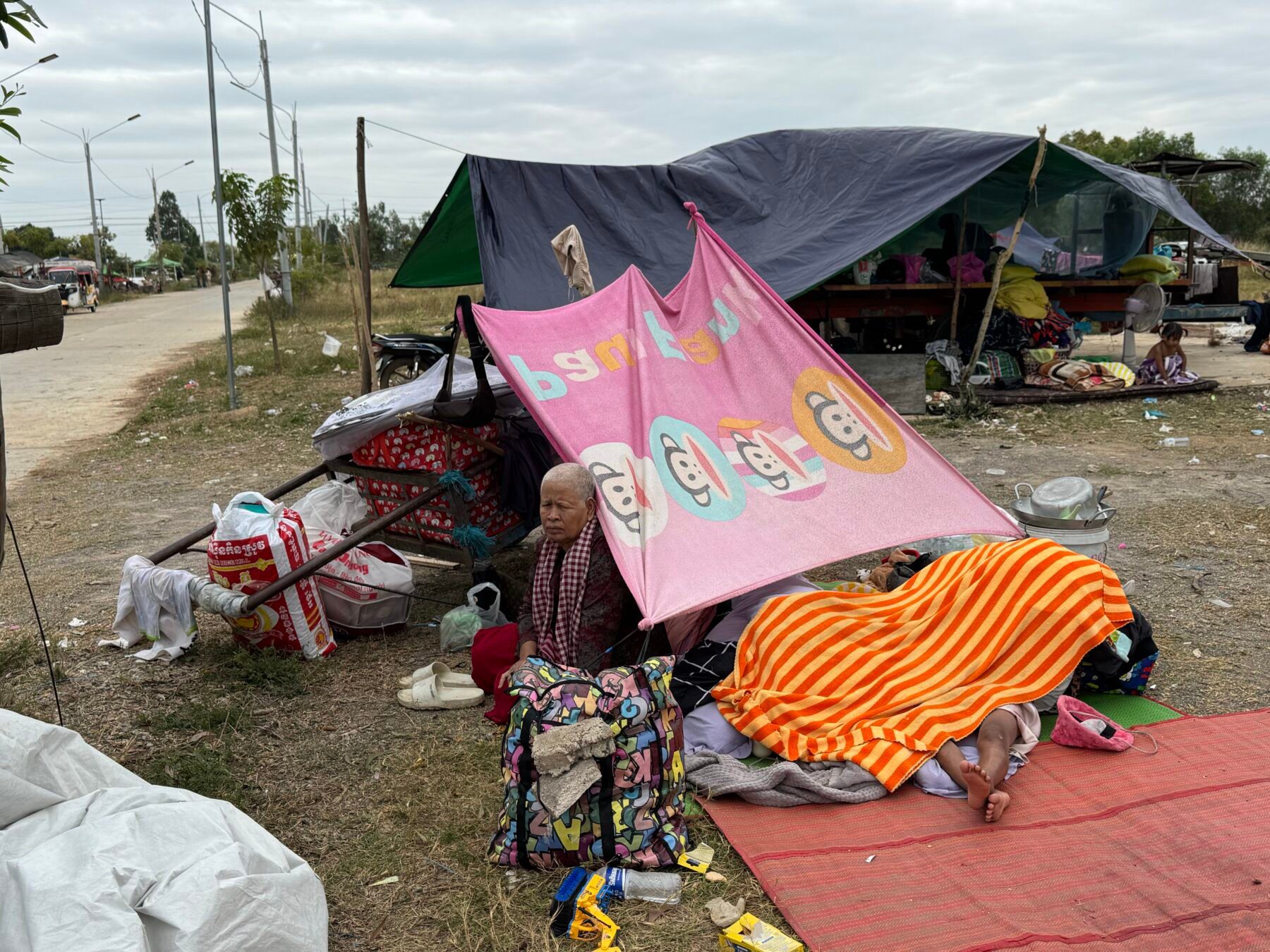
The border conflict has led to the temporary closure of 1,039 schools across seven provinces, disrupting the lives of 9,797 teachers and 242,881 students as of December 15, 2025. As families flee repeated bombardments, thousands of displaced children remain in camps without classrooms, teachers and school supplies.
Due to school closures in Preah Vihear, Oddar Meanchey, Banteay Meanchey, Pursat, Koh Kong, and some schools at Battambang and Siem Reap provinces, the Ministry of Education, Youth and Sport instructed all other schools to be prepared to accept displaced students to continue their education, while ensuring that they have a safe place to learn.
The ministry said it would organize and provide assistance, especially tents and temporary study spaces for displaced students, and enable a smooth process for learning and teaching under the circumstances.
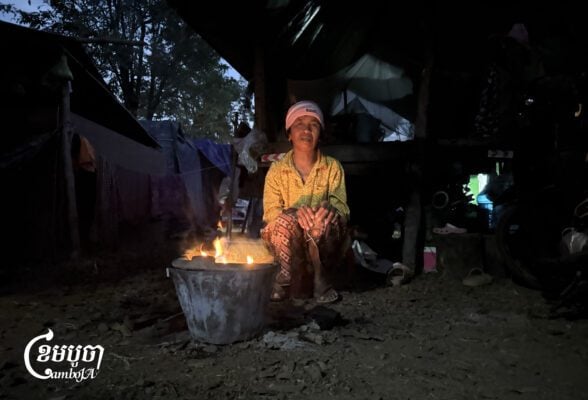
Choup Chanthea, 30, who was evacuated from Oddar Meanchey province, told CamboJA News that her children are in grade 7 and grade 3. When the fighting started, she and her family only brought essential supplies with them but could not pack the children’s school supplies in time. The most important thing was to find a safe place, she said.
The family had been at a temporary shelter for about five days, with the hope of sending her two children to a government school nearby. But, the Thai military dropped bombs near the camp where they were staying, so her family and other people had to flee to another camp.
As they have been moving from one place to another, she is worried about the impact on her children’s education if the war continues and spreads to the camp sites where people are seeking refuge.
She is also concerned that the war would not only affect the children’s education but also their mental health. For this reason, she hopes that the ministry and other stakeholders expedite the preparation of emergency classrooms and find volunteer teachers to teach students in evacuation centers.
“My children haven’t gone to school for many days. We are running from place to place, scared and not knowing when they will be able to return to school. We just ran again from where the [Thai] plane dropped bombs.”
“I feel sorry for my children. So, I ask the ministry to help build classrooms and have teachers to teach the children in displacement camps. If not, the young generation won’t gain any knowledge,” said Chanthy.
To be sure, the ministry has recently allowed displaced students to temporarily enroll in schools near their refugee camps or voluntary shelters.
Only reading room available
Nget Thy, a displaced person from Preah Vihear province, said the conflict has left people living in fear, but her greatest concern is that her children, like many others in the refugee camps, have no opportunity to learn.
“We had only returned home for one month and 10 days before we had to run again,” said Nget, who was living in a camp amid heightened border tensions. They went home when the situation improved but had to leave again due to renewed clashes.
She urged relevant authorities to establish temporary classrooms inside the camps, so children can continue their education. Her camp houses nearly 1,000 families and many of the children have no access to education.
“My children and nephews are not learning [anything]. I am worried about this, but I don’t know what to do. It would be good to have temporary classrooms,” she said.
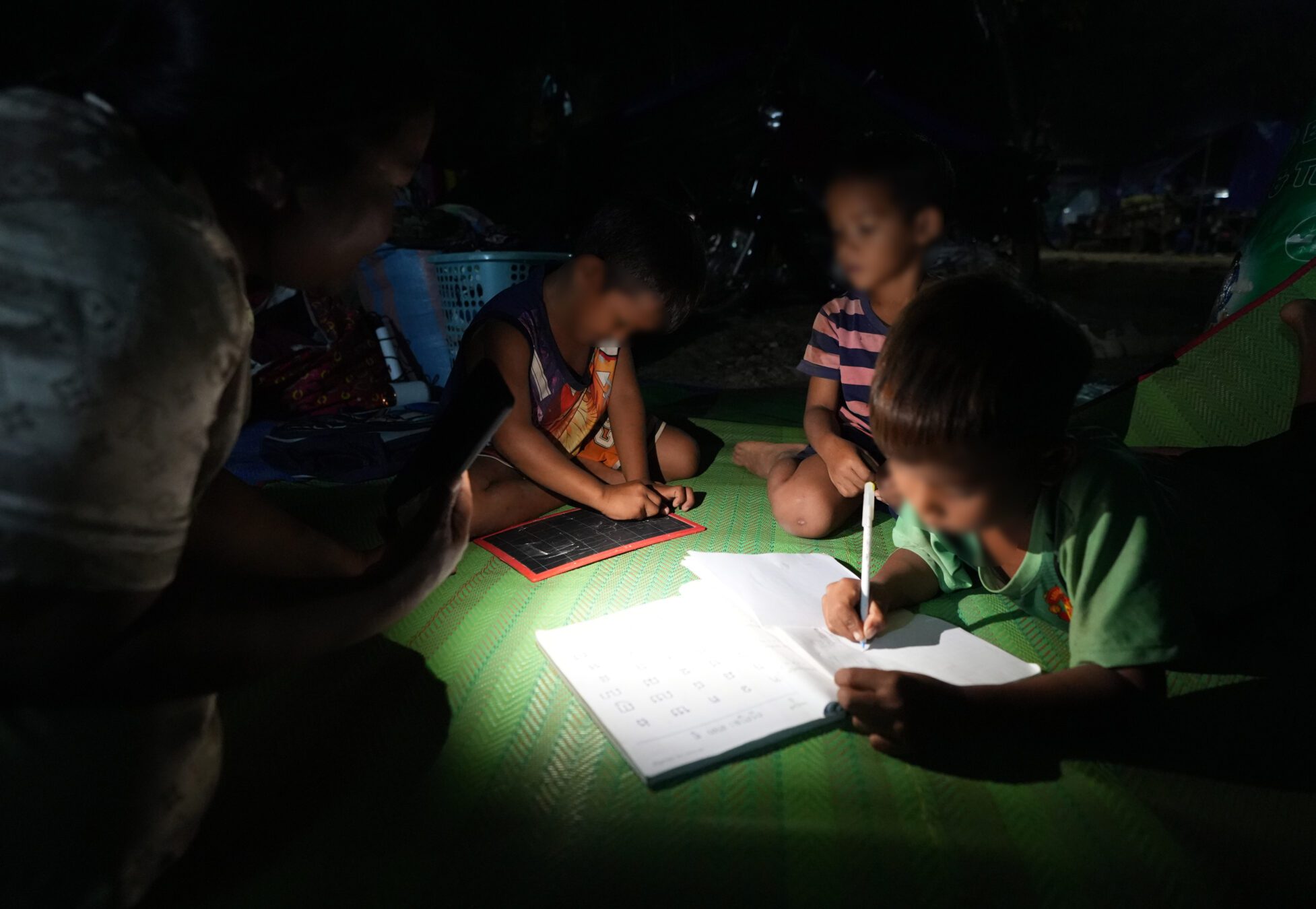
As of December 15, the number of displaced people stood at 126,204 families, equivalent to 421,853, including approximately 216,000 women and 127,000 children, in seven provinces along the border, according to the Ministry of Interior.
Den Soklorn, 41, from Choam Ksan district in Preah Vihear province, said he and his family fled to the shelter on December 8, 2025, without bringing their children’s school supplies. His children, who are in grades 6 and 1, have not joined any temporary classes, although a reading room with storybooks is available in the camp, where they read every morning.
His daughter told him she wants to go back to school to be with her classmates and teachers. She enjoys reading Khmer and English books and visits the camp’s reading room every day when it is open.
“I really want my child to go back to school, but when I ran away, I was so afraid that I did not think about bringing my children’s books with us. I only brought the necessary materials.
“I just want the war to end and there to be peace, so my children can go back to school and I can earn a normal livelihood,” Soklorn said.
Not yet feasible as exact numbers needed
Key Channy, director of Samroang High School, said only a few students requested temporary enrollment elsewhere. In some provinces, relevant stakeholders have visited and provided books and self-study materials, but mobile teaching has not yet been implemented.
“If mobile classrooms were arranged, it would be very helpful. If the war continues, children in border areas—especially in Oddar Meanchey—risk missing out on their education. However, mobile classes require coordination with the Ministry of Education and relevant authorities at the provincial and district levels,” Channy said.
According to UNICEF Cambodia, children who experience or witness conflict and violence could suffer severe and lasting psychological harm. Displaced children face an increased risk of violence, abuse, and exploitation.
“Every child has the right to live in a safe environment and to be fully protected from violence, as enshrined in the UN Convention on the Rights of the Child,” said UNICEF.
Head of the Banteay Meanchey Provincial Department of Education, Chhou Bunreung, said that 329 schools across the province have been temporarily closed, with nearly 100,000 students having been affected.
Owing to the rise of displaced people, it is not yet possible to set up temporary classrooms because the exact number of students and their location need to be known, an issue which has been considered by the education ministry.
“We will encourage teachers from nearby centers to teach in the refugee camps, and students can also go to public schools near the camps,” Bunreung said.
While there are some students who can study online, there are not many. The temporary classrooms require preparation time but are expected to be ready next week because the ministry released some funds to prepare children for temporary classrooms, noting that “we must learn as we did during COVID.”
Temporary classrooms coming soon
Pech Ratana, director of the Department of Education, Youth and Sports in Oddar Meanchey province, said the department has delivered school supplies to two large refugee camps for children in need. However, arrangements for temporary classrooms were suspended after Thai forces dropped bombs near refugee camps along the Chongkal and Srei Snam border areas in Siem Reap province.
He said that 260 schools in Oddar Meanchey province have been closed since December 8, affecting nearly 70,000 students.
The situation has been reported to the Ministry of Education, and he expects temporary classrooms to be set up in refugee camps by the end of December, with classes organized by grade and focused on core subjects such as Khmer and mathematics.
“The tents for temporary classrooms are not ready yet but will be sent to the camps when they are completed. We have a plan, and we need support from all parties to make this happen,” he said.
Yi Kimthan, interim country director of Plan International Cambodia, told CamboJA News that in the present situation, the plan is focused on three key areas—clean water, sanitation, and education—in refugee camps and with collaboration with the government.
In a few camps, Plan International has established child-friendly spaces where children can read books, draw, and listen to teachers read stories, which helps to support the mental well-being of both children and the elderly.
However, one of the challenges is the inability to set up temporary classrooms in time, as the conflict has spread to areas where people are seeking refuge, forcing further displacement and leaving young children without proper places to study.
As a long-term solution, he said, each camp should be equipped with temporary classrooms, organized by grade and done with the cooperation of authorities and relevant partners, as children cannot miss out on school for a long time
“Children’s education is affected because of the conflict which is expanding. So students have to flee to other areas, which risks their education,” Kimthan said.
Sek Socheat, consultant for Mindset and Research Development, told CamboJA News that it is difficult to decide what should be done, as such measures must be included in the government’s annual strategic plan, but conflicts are not something one anticipates.
However, the ministry has made efforts, and it shows genuine concern to ensure that young people and future generations do not miss out on school.
“The government should call on youth and civil society organizations to come together to establish mobile schools and mobilize teachers in affected and displaced areas. This collective effort would help organize support and provide learning materials for students,” said Socheat.
He also urged the education ministry to prepare a strategic plan to request a budget and seek public participation, both domestically and internationally.
“All funds, whether from the government or public contributions, must be managed transparently and with accountability so students can continue their education,” he said.