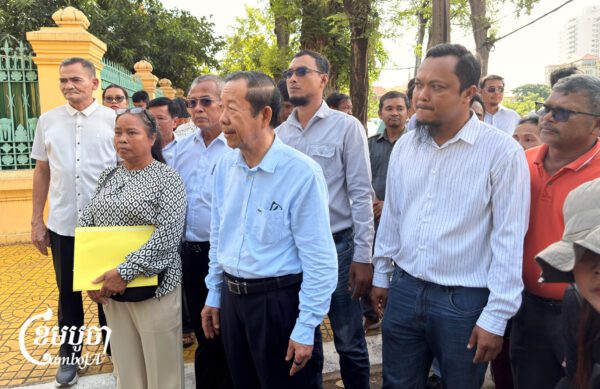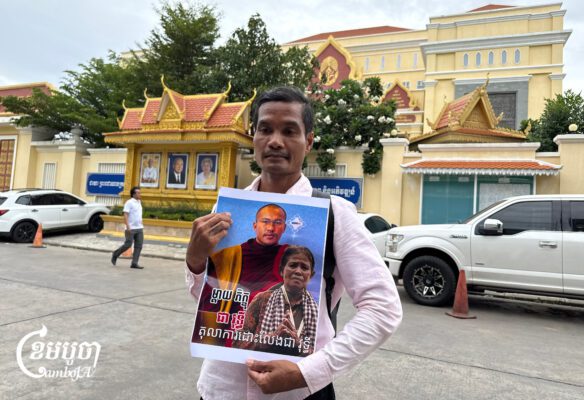
Fourteen local and regional journalist groups, as well as civil society organizations demand the release of an environmental journalist who was charged with incitement, after being “arbitrarily arrested” by two plainclothes military men and without an arrest warrant.
Uk Mao, who reports on illegal logging and environmental destruction in protected areas in the northeastern province, was arrested at his home in Thala Borivat district, Stung Treng province last week. He was swiftly charged with incitement and public defamation, and placed in pretrial detention at the provincial prison.
Prior to his arrest, Mao, 49, was reporting on deforestation activities in Prey Lang Wildlife Sanctuary.
“We call for Mao’s immediate and unconditional release from prison and for the charges to be dropped,” read the joint statement.
Mao is currently facing 15 legal lawsuits, which journalist groups are concerned that it was a way of “silencing” his reporting.
They said the levying of numerous cases, each carrying significant prison sentences and fines, must be viewed as a concerted effort to present an insurmountable legal and financial challenge for him. The aim of this is to make it impossible for him to continue reporting on environmental crimes.
It is testament to the power of his reporting, which exposes the involvement of those with power and influence in the clearing of Cambodia’s forests, the statement read.
“The targeting of journalists through violence, threats, and legal harassment not only undermines individual freedoms but also weakens democracy, public trust, and environmental governance and protection. Mao’s case must not become yet another example of impunity and repression,” the groups said.
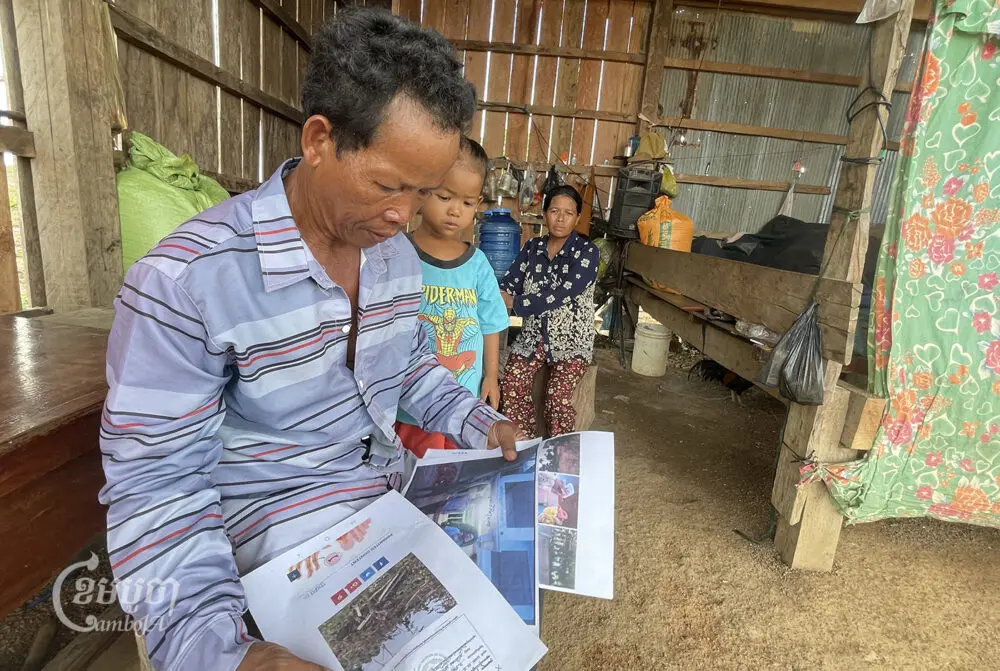
Mao’s wife, Ek Socheat, 42, spoke about their hardship following her husband’s detention. “Farming, cultivation and feeding our children are now entirely on me. I do not have any income now because I am busy with my baby, so I can’t go anywhere [for a job],” she said, adding that a farmer is helping with crop cultivation.
She and Mao have seven children — the oldest is 17 while the youngest is only eight-months-old.
Her eldest son, who is studying seventh grade, wants to drop out of school due to the absence of his father’s income for the family, she told CamboJA News.
Besides farming and defending the community forest, Socheat said her husband, who also reported on deforestation in protected areas, earned additional income from working on a cassava plantation.
“I cannot accept the charges because he is innocent. He speaks the truth,” Socheat said, noting that Mao has criticized some officials who colluded with businessmen in relation to forest crimes.
Socheat said she went to visit her husband at the prison, but was not allowed to visit him as she was told by the official that his detention was “too recent”.
Three days after the arrest, the Phnom Penh-based Overseas Press Club of Cambodia (OPCC) issued a call to the government to drop all charges against Mao, who has been exposing deforestation linked to powerful interests.
Meanwhile, Reporters Without Borders (RSF) said his arrest is an escalation of a longstanding campaign of judicial persecution against him.
“Mao’s arbitrary arrest, carried out without a warrant, is an escalation of the severe judicial harassment the journalist has long endured,” said RSF Asia-Pacific bureau director Cédric Alviani last week, urging the Cambodian government to release Mao and take concrete steps to protect journalists.
Last year, the Cambodian Journalist Alliance Association (CamboJA) reported 41 cases of harassment involving at least 64 journalists. Early this year, three journalists were detained on criminal incitement charges.
According to RSF’s assessment of press freedom, Cambodia was ranked 161 out of 180 countries — down 33 places since 2016.
However, the Ministry of Information rejected RSF’s claim, stating that the state of press freedom in Cambodia is “very good”, showing data that pressmen have “full freedom” and “felt safe carrying out their work”.
Information Ministry spokesperson Tep Asnarith did not respond.