Listen to the audio version of this article (generated by AI).
Tampuan residents in Ratanakiri province have launched a rare Indigenous-led master plan to expand tourism infrastructure around a sacred lake near the provincial capital, Banlung, after years of fending off efforts to privatize the land.
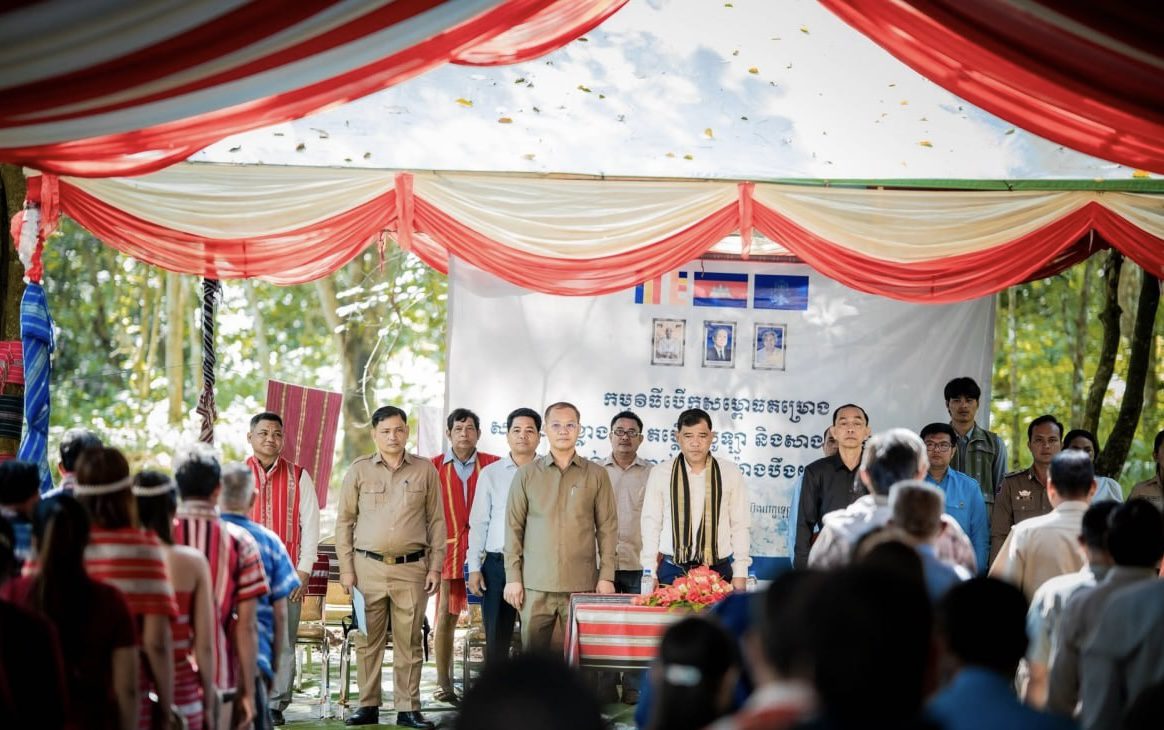
The Yeak Laom Committee, which represents the five Tampuan villages that surround and manage Yeak Laom Lake, launched a five-year development plan on Monday. The committee says the plan seeks to balance development with preserving the spiritual traditions, culture and identity of the Indigenous community.
The plan “serves as evidence of Indigenous identity,” said Ven Churk, vice president of the Yeak Laom Committee. He added that many people do not understand Tampuan culture because there has been little awareness of it.
The 2025-2029 plan was drawn up with input from village youth, women, elders and local authorities, with support from the Cambodia Indigenous Peoples Organization and the Cambodian Indigenous Women’s Association.
While the plan aims to conserve Indigenous culture and traditions, Churk said it also seeks to draw domestic and international tourists and generate more income for the community.
The launch, attended by local officials, also marked the groundbreaking for a new entrance gate whose design draws on traditional Tampuan architecture. Churk said the community plans to spend about $24,000 on the gate’s first construction phase. Most of the money will come from the community’s own tourism revenue, with additional support from Indigenous organizations.
Other planned developments include walking and cycling paths around the lake, parking and visitor facilities, an Indigenous cultural center, tourism-use areas and solar energy infrastructure.
The plan comes amid community concerns that the lake could be handed to a private company under a government program to promote investment in the country’s northeast. National and provincial authorities have denied any plans for commercial development at the lake, saying any future project would require consultation with the community.
Tampuan villagers have managed the lake and its surrounding 225 hectares (556 acres) of forest since 1998. The area became a community protected area in 2019 but remains under the jurisdiction of the Ministry of Environment. A 2018 plan to privatize the lake for a resort project was blocked.
Residents point to nearby Phnom Youl, another sacred Tampuan site, which was leased to a private company for a tourism project in 2008. Community members say that project stalled, promised jobs never materialized and residents were largely barred from the area.

Rights groups say land grabs and limited consultation with Indigenous and rural communities have been systemic in Cambodia for decades, and collective land titling for Indigenous groups often moves slowly.
Yun Mane, executive director of the Cambodia Indigenous Peoples Organization (CIPO), which supported the plan, said the Yeak Laom plan could serve as a model for other communities.
“I think this is a positive development and a model that various conservation and development projects should consider adopting,” she said. “It fosters a sense of ownership and encourages participation in conservation and development efforts, while also helping to generate income for the community, with the benefits directly reaching the people involved.”
But Mane cautioned that the community should not be expected to develop without outside help, particularly financial assistance. She said the public and private sectors and other organizations can still provide funding, technical support and capacity building while letting communities decide how to develop their areas.
Ministry of Environment spokesperson Khvay Atitya did not directly answer questions about supporting Tampuan-led development or ensuring continued support for the Yeak Laom community. He said the government promotes the participation of multiple stakeholders in developing protected areas and local communities, including community-managed green tourism sites.
“The registration and recognition of communities in natural protected areas provide legal safeguards and mechanisms to grant full rights to community members, including Indigenous peoples, living in protected areas,” he said.