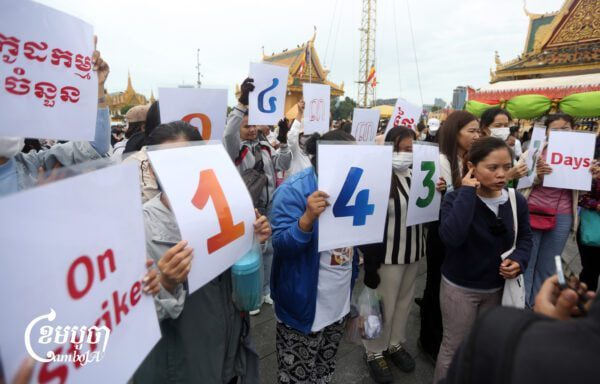


As the Cambodian boycott of Thai products grows, several non-Thai companies are also facing backlash for allegedly terminating contracts with public figures for commenting on the Cambodia–Thailand conflict. Business experts call it corporate neutrality, while national leaders urge calm, warning that misguided boycotts could be an “enemy trap” and hurt Cambodia more than the companies.
The phrase “boycott Thailand products” has gone viral. Earlier this month, Cambodian fuel station owners announced plans to terminate their contract with Thai brand PTT to promote local products, rebranding them to PPC (Peace Petroleum Cambodia) nationwide.
However, the boycott has extended beyond Thai products now. Some non-Thai companies, such as Coca-Cola, have also faced criticism from Cambodians following allegations that the company ended its contract with Cambodian rapper Mann Vannda, who released a song related to the Cambodia–Thailand conflict.
Many posts on Coca-Cola’s page were fueled by anger, with users accusing the company of “siding with Thailand” and urging it “to leave the country”.
The controversy reflected growing tension between nationalism and corporate interests, while national leaders warned that misinformed or overzealous boycotts could “ultimately harm Cambodia’s economy more than foreign firms”.
“I’ve no objection if Coca-Cola was produced in Thailand; you can stop using it,” said Senate President Hun Sen. “But Coca [Cola] is produced in Cambodia. If you boycott it and do not use it, Cambodia is the one which loses—both jobs, the direct and indirect income of the people, and state revenue.”
Hun Sen added that if the company withdrew from Cambodia, it would serve Thailand’s intention, as the neighboring country has allegedly put economic pressure amid border tensions.
Since Coca-Cola is an American company, it is a trap, he said, adding that an “enemy” is using the issue to drive a wedge between Cambodia and the U.S. relating to diplomacy, economics and trade.
“Please do not fall into the trap of our enemies,” he pleaded. “We must also work hard to keep Thai investors in Cambodia for our benefit.” He asked the public to stay calm and carefully consider the root cause of the situation.
Ros Van Ritha, co-founder of Oudom Consulting Co. Ltd., a business advisory firm, opined that Coca-Cola’s removal of VannDa’s picture from its official page reflects their neutral position. International companies like Coca-Cola have a policy of avoiding political involvement, no matter the country, he said.
“They are implementing their international policy of maintaining neutrality and protecting the company’s economic interests,” he said. “Coca-Cola is not taking the Thai side. But for the Cambodian people, it is seen as abandoning Cambodia and siding with Thailand.”
Coca-Cola Cambodia Beverage Company and Baramey Production, the label company which manages VannDa, did not respond at the time of publication.
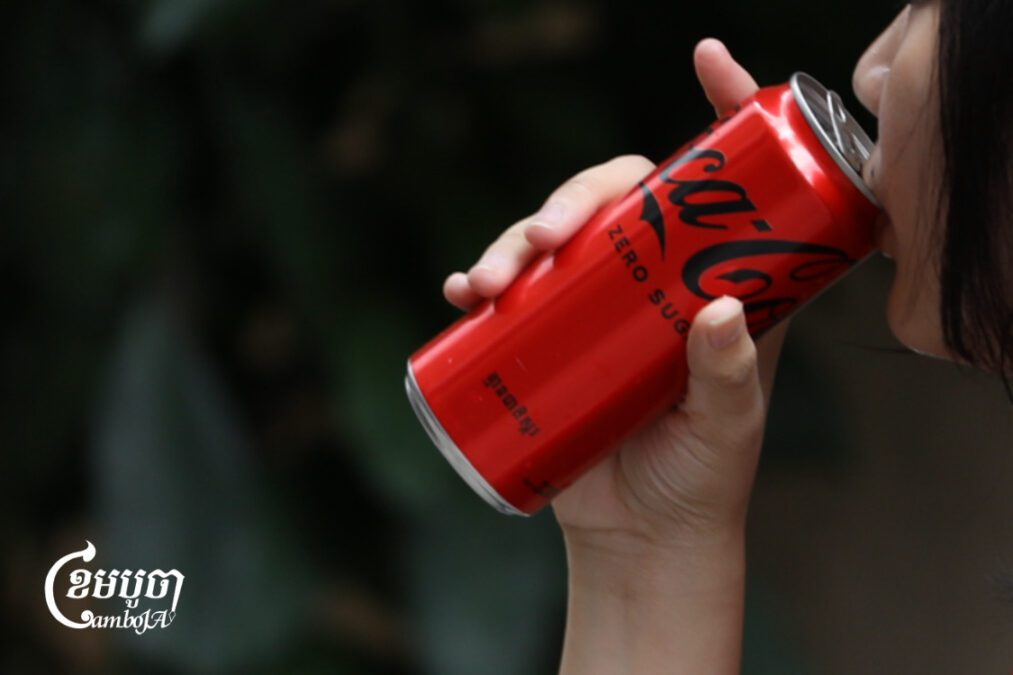
Arnaud Darc, chairman and CEO of Thalias Hospitality Group, told CamboJA News that multinational companies like Coca-Cola generally follow strict internal compliance rules to avoid political involvement, though the company should clarify its actions.
He added that Mann VannDa is one of Cambodia’s most influential artists, especially among youth. So, his sudden removal from Coca-Cola Cambodia’s marketing in mid-August triggered public backlash and calls for a boycott.
As of today, Coca-Cola has not confirmed any termination of VannDa’s sponsorship. Meanwhile, some have speculated that this decision was connected to the Cambodia–Thailand border conflict or that it was influenced by Thailand.
“When companies act in silence, they create an information vacuum, and in today’s digital environment, that vacuum fills instantly with speculation and anger,” Arnaud said. “In fact, this lack of transparency often damages consumer trust more than the decision itself.”
Besides Coca-Cola, other beverage companies such as Budweiser have also faced criticism for allegedly canceling work with public figures who spoke out about the conflict.
Another case which also prompted people to boycott is KOFI, a leading coffee solution provider in Cambodia, after customers found fraudulent Cambodian barcodes pasted on its sweetened milk imported from Thailand.
The company explained that the product was manufactured in Malaysia and the barcode was an error caused by a technical mistake at the factory. Following complaints, the Consumer Protection Competition and Fraud Repression Directorate-General (CCF) inspected and found that 144 out of 205 cartons had “new” barcodes, and 61 had not been changed yet. They ordered a recall within two days. KOFI later issued a public apology.
Arnaud said that calls for boycotts are an “understandable reaction” in times of conflict. He added that people want to act and express patriotism in a tangible way, but in Cambodia’s economic reality, “boycotts can be a double-edged sword”.
The food and beverage sector employed over 200,000 Cambodians in 2024, according to the Ministry of Labor and Vocational Training. Many of the outlets operate under international or Thai brand names, but in practice they are Khmer-owned businesses employing Khmer staff, renting Khmer property, and sourcing much of their supply locally.
“So, when boycotts target these outlets, the people who suffer first are Cambodian employees, not foreign executives. A Cambodian barista, waiter, cleaner, or supplier can lose income long before any parent company abroad feels real pressure,” he said.
Arnaud added that the best approach is to combine patriotism with pragmatism.
He said Cambodians have every right to defend sovereignty, but actions should strengthen—not harm—the economy, meaning boycotts should be focused only on Thai imports with available alternatives.
However, active support should continue for Cambodian-made products to create jobs and circulate value locally, diversify imports from other regions and protect Khmer-run businesses which operate under Thai brands so that local jobs, wages, and taxes remain intact.
Lim Buntheng, content creator of Kjel Niyey and social media manager, told CamboJA News that although global corporations avoid taking political stands to protect their business across diverse markets, consumers can act out of patriotism.
“The positive impact is that consumers realize their power. We now know we can voice our concerns when companies act against our values, and this feedback matters,” he added. “The negative side is that some reactions may be driven purely by emotion, without consideration that the boycott could unintentionally harm our people or economy.”
Pen Sovicheat, spokesperson for the Ministry of Commerce, said the boycott of Thai products is the right of consumers, stressing that the ministry does not encourage the continuation of boycotting foreign products.
“Continuing to believe in the boycott of imported foreign products can cause harm to our country’s trade,” he said.
“Boycotting or not buying Coca-Cola or other products is not good for our market, because, in this world, markets need products to complement each other,” he added. “Please do not let our sense of nationalism create challenges that affect other sectors.”
However, Sovicheat noted that during the crisis with Thailand, domestic products received strong support, but given the situation, Cambodia needs time to reduce reliance on foreign products.
Regarding KOFI, he said, the ministry inspected the company and collected products for review, and imposed fines for unfair trade practices.
He added that Thai products continue to be imported into Cambodia by air and water, while the ban on vegetables, fruits, and gasoline remained.