Summary:
- After the dismantling of USAID, tuberculosis resistance programs in Cambodia are faltering, leaving millions exposed and jeopardizing the country’s goal to eliminate the disease by 2030.
- Half of the country’s active TB case-finding operations ground to a halt between the initial freeze of USAID projects in January and an 83% cut to all of its contacts in March, leaving roughly 100,000 people unscreened and hundreds of drug-resistant cases undetected.
- Alternative donors have been slow to step in, compounding uncertainty.
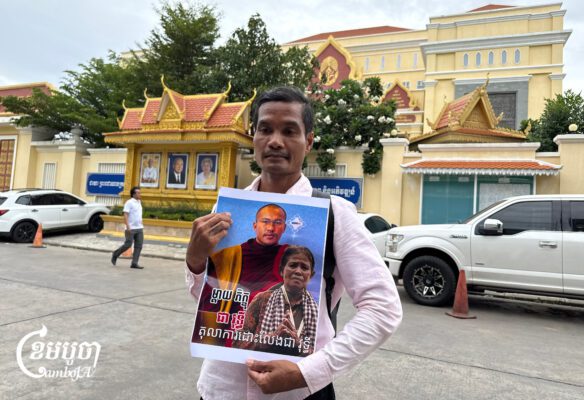
Tim Sreu is back on his feet. The middle-aged farmer from Kampong Cham province said he can now manage the daily chores that once left him bedridden after years of untreated tuberculosis (TB).
He credits his recovery to a U.S.-funded project that screened him and steered him into treatment last year. Without it, he said, he may never have been tested.
“They spread information about the disease and pushed me to stay on my medicine,” Sreu said of the Promoting Healthy Behavior project, one of several TB programs once backed by tens of millions of dollars from the U.S. Agency for International Development (USAID).
“This organization saved my life and helped many others,” he added, referring to the staff of the project implementer.
But in recent months, the volunteers and medical staff who once ran awareness drives and screenings in remote Kampong Cham have disappeared. The same is true across nine other underserved provinces.
The pullout follows the Trump administration’s decision early this year to slash 83% of USAID projects worldwide, including 30 in Cambodia. The $260 million cut hit programs in health, education, civil society and human rights, leaving frontline workers scrambling to keep TB in check and meet its near term goal to eliminate the disease in the next five years. Alternative donors have so far been slow to step in.


Between the initial freeze of U.S. foreign aid in January and the permanent cuts in March, more than half of Cambodia’s active case-finding operations ground to a halt, leaving an estimated 100,000 people without screening. According to a report from the Stop TB Partnership, roughly 300 drug-resistant cases and 10,000 drug-susceptible cases went undetected.
“Compared to the same seven-month period last year, TB screenings have dropped by about 16% because of a lack of funding,” said Hout Chan Yuda, director of the National Center for Tuberculosis and Leprosy Control (CENAT), which works with NGOs to run three major TB programs once backed by the U.S.
He added that around 16,500 people were screened for TB across the country so far this year, of which more than 7,500 tested positive.
Building the capacity to fight the world’s deadliest infectious disease has taken decades in Cambodia and leaned heavily on foreign aid, with Washington long serving as the anchor funder.
Heavy reliance on foreign aid for critical health and education programs is a precarious system in Cambodia that has received criticism for fostering dependency, weakening the development of domestic capacity while leaving essential services vulnerable to shifting donor agendas.
Even so, Cambodia has chalked up progress – mostly in treatment. Reported cases stood at roughly 32,300 in 2023, compared to 32,800 in 2022, but with treatment success at around 96% that year, according to the Ministry of Health. The country dropped off the World Health Organization’s (WHO) list of 30 high-burden TB nations in 2021, though it remains on the watchlist – and within ASEAN, it still ranks near the top for caseload.
In line with the U.N.’s sustainable development goals, Cambodia aims to eliminate the disease by 2030.
But Yuda warned the aid pullout could leave roughly 10,000 infected people without support each year.
The funding had gone to everything from portable AI-assisted X-ray machines for screening, field offices and operational support for treatment programs. Without new contributions to fill the gap, he said, Cambodia risks losing the 10-20% yearly progress needed to reach its 2030 goal of eliminating the disease.
A joint USAID and Stop TB Partnership assessment of Cambodia’s TB response in February found progress toward the U.N. goal has been limited. Cases fell by only 8.5% between 2015 and 2023, far short of the 50% reduction target, while mortality rose 14%, highlighting the urgent need for stronger interventions.

Funding Gaps Leave Millions Exposed as Alternative Donors Lag
The Community Mobilization Initiatives to End TB 2, or COMMIT 2, was USAID’s flagship program to assist Cambodia in fighting the disease, which has an incident rate of 335 per 100,000 Cambodians in 2023.
Just five months before it was shelved, former agency head Samantha Power announced $4 million in kickoff funding, a seed for the $15 million promised over the next five years to expand access to screening, diagnosis and prevention services in rural areas.
Choub Sok Chamreun, executive director of KHANA, Cambodia’s largest HIV-focused NGO and a longtime USAID partner who helps run TB programs, said the project was designed to reach more than four million vulnerable people.
Now with lost technical support and dwindling funds, 200 project officers and 5,000 community volunteers who ran 27 field offices coordinating technical and financial assistance for TB services across nine provinces were let go, Chamreun said.

As a result, an estimated 25,000 potential cases went undiagnosed in March alone, according to Stop TB Partnership, while 8,000 people missed critical awareness activities. Such programs are considered vital for active case-finding and building communities’ understanding.
More recent data leading up to late August is limited, but trends suggest hundreds of thousands more at-risk people may have gone unscreened, with tens of thousands of additional infections unreported.
Chamreun said KHANA has yet to secure new funding to fully fill the gap left by USAID, though a new grant from the French government is expected to help detect about 1,000 TB cases a year over the next four years.
Stop TB Partnership has stepped in to fund and temporarily reopen the 27 shuttered operations centers, but support remains limited, and the grant runs only through the end of this year.
The scramble for alternative donors stretches across many civil and development sectors once backed by the U.S., with some turning to other Western nations for small, temporary grants. China has partly stayed on the sidelines for non-infrastructure projects, and the Cambodian government has made only nominal statements about maintaining focus on TB, without indicating plans to channel new public funding to expand services, leaving open the question of which country may fill the gap and gain any lost U.S. soft power.
Since the U.S. cuts, China has announced new funding for areas Washington once backed, including child education and demining. In the two weeks after U.S. demining aid was briefly suspended before being reinstated with a presidential waiver, Beijing pledged $4.4 million to the sector.
So far, however, Beijing has not provided TB-specific aid, continuing instead to channel support into broader health infrastructure.
Disrupted TB Services Will Lead to Runaway Infections
With diagnosis, screening and awareness efforts rolled back, experts warn of runaway infections, drug-resistant TB and relapses.
“If there is no significant intervention soon, the risk of the disease spreading exponentially increases, and deaths will follow,” said CENAT director Hout Chan Yuda.

WHO research shows that when TB services such as screening, diagnosis and community outreach are disrupted, more cases go undetected, allowing the disease to spread, while patients who miss or abandon treatment face a higher risk of developing multidrug-resistant forms.
In 2023, drug-resistant cases began appearing in Cambodia, with 122 cases identified that were resistant to rifampicin, a key antibiotic used to treat the disease.
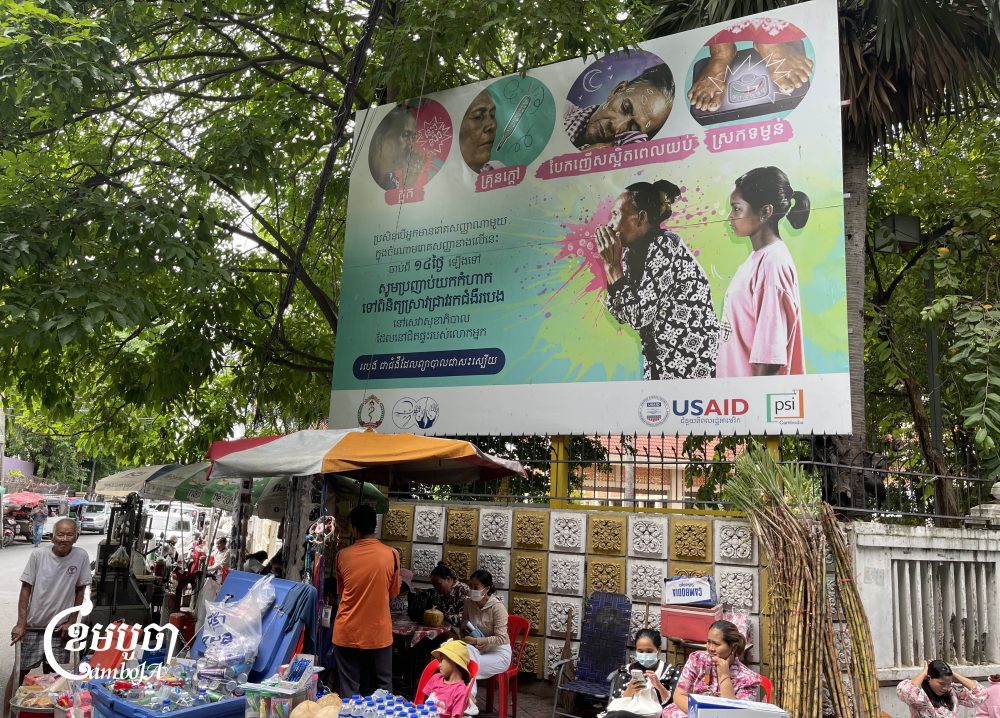
Awareness campaigns have been a critical frontline, especially in rural areas, alerting citizens to TB risks and guiding patients like Tim Sreu through treatment.
These efforts were largely run by the former USAID-backed Promoting Healthy Behavior (PHB) project, which operated from 2018 and was slated to run through June this year with an expected follow-up contract to continue operations. The project routinely carried out advocacy campaigns and supported patients with their treatment regimens.
PHB and local NGOs had been planning to expand into northern provinces before the funds were pulled, said project director Chi Socheat.
Min Thot, a local PHB volunteer in Kampong Cham province, no longer receives his small stipend to travel to rural villages for outreach. Now he is the only advocate in his home village.
“Many people ask me why I stopped broadcasting about TB,” he said, referring to villagers he encounters. “They’ve almost forgotten about it.”

(Additional reporting by Lon Saoda and Long Somneang)