Listen to the audio version of this article (generated by AI).
The United States and Cambodia have signed a more than $36 million health deal under Washington’s “America First Global Health Strategy,” the first such agreement in Asia and a sign of renewed engagement after sweeping U.S. aid cuts last year.
The U.S. State Department said the five-year pact, signed earlier this month, will advance “shared global health goals,” including efforts to curb HIV/AIDS, malaria and tuberculosis. Cambodia said it will boost its own health spending by more than $5.3 million and expand access to diagnostics and vaccines, while Washington has committed more than $30 million.
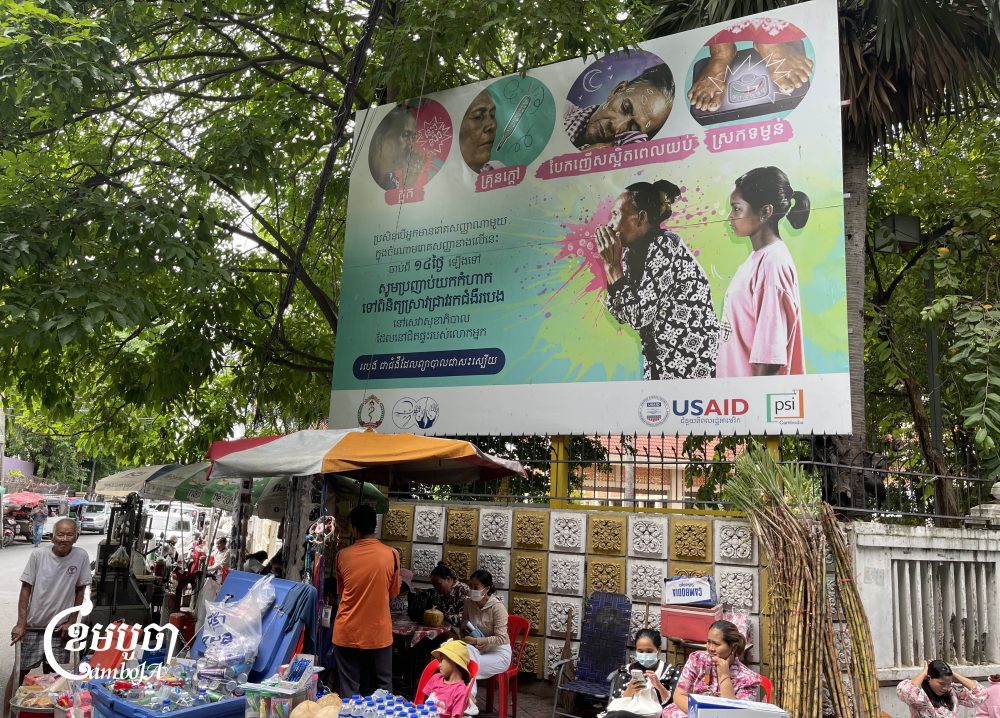
The agreement follows a sharp shift in U.S. foreign aid policy after the Trump administration, through the Department of Government Efficiency led by the world’s richest person Elon Musk, cut 83% of U.S. Agency for International Development projects. The cuts included 30 projects in Cambodia, slashing about $260 million in funding across health, education and civil society.
The funding vacuum left frontline health workers in Cambodia struggling to maintain nationwide tuberculosis screenings with limited resources, while many NGOs were forced to shut or scale back operations.
The U.S. Embassy in Phnom Penh said the agreement signals a “renewed effort” by both countries to strengthen direct cooperation on global health challenges.
Chargé d’Affaires Bridgette Walker and Chhieng Yanara, second vice president of the Council for the Development of Cambodia, formally signed the memorandum of understanding on April 2.
“Through the Trump Administration’s AFGHS, this MoU ensures that decades of U.S.-Cambodia health cooperation is sustained and increasingly led by the Cambodian government,” the U.S. statement said.
Globally, the Trump administration says it has signed more than $20.5 billion in America First Global Health Strategy agreements since last year, including $12.7 billion from the U.S. and $7.8 billion from partner countries.
Chi Socheat, country director of Population Services International Cambodia (PSI), a health-focused NGO, said the agreement was a “positive sign” as the country works toward targets such as eliminating tuberculosis by 2030.
“External support will help accelerate progress toward these goals,” she said. “No matter where the funding comes from – whether the U.S. or elsewhere – we can be confident we can achieve our plans.”
But Socheat cautioned there was little clarity on whether the initiatives would be implemented through NGOs that have long operated health programs, noting many are still reeling from last year’s aid cuts.
While the government is the main provider of public services, NGOs play a key role in improving health outcomes, she added.