Independent media outlets worldwide are facing an unprecedented crisis, as revealed in an in-depth report released Friday, which found that the 2025 U.S. aid cuts—removal of $150 million in annual support—triggered widespread closures, layoffs, and a surge in disinformation across dozens of countries.
The report, “Crisis in Journalism: The Impact of the US Government Funding Cuts on Global Media”, led by Internews Europe, BBC Media Action, and Free Press Unlimited, and backed by the European Commission, underscored the shutdown of news outlets, job losses, and growing disinformation threats in over 50 countries including Cambodia.
The report reveals key findings of widespread media closures and layoffs, with outlets cutting staff and reducing coverage. Journalists are facing increased risks as safety measures weaken, particularly in conflict zones. Trusted local news is rapidly disappearing, while disinformation threats are growing as weakened media environments are exploited.
“Without immediate and flexible support, countless journalists and communities will be left even more vulnerable to censorship, propaganda, and information blackouts,” Internews Europe CEO Meera Selva said in a press release. “Even modest investments can protect the future of independent media.”
The crisis was triggered by a January 2025 U.S. executive order that suspended foreign assistance, resulting in a devastating drop in funding for independent media—particularly in fragile or authoritarian contexts where support is most needed.
In fiscal year 2024, the U.S. Congress approved $271.5 million in foreign assistance through the State Department and USAID for “Independent Media and Free Flow of Information.” Of that, an estimated $150 million directly supported journalism and media development, while the rest was allocated to the broader information ecosystem, including freedom of expression, digital rights, and technology policy.
In Asia, the U.S. funding freeze wiped out about half of all media-related development aid, leaving independent outlets in countries like Myanmar, Afghanistan, Tunisia, and Cambodia without most—or all—of their operating budgets, putting the entire sector at risk.
In Cambodia, the report states that “almost all media critical of the government had already been shut down via legal attacks,” with the remaining outlets and support organizations now facing imminent closure due to lack of funding.
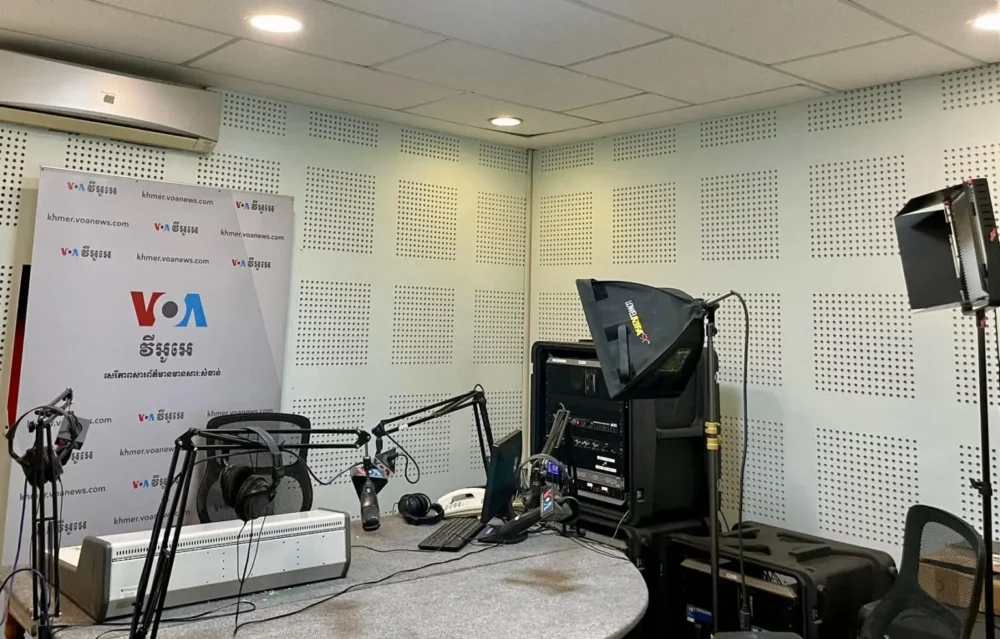
Independent radio stations Voice of America (VOA) and Radio Free Asia (RFA) have raised concerns among press freedom advocates and civil society in Cambodia during this crisis.
Meas Da, former journalist for VOA Khmer, told CamboJA News that she has been unemployed since the suspension of VOA operations three months ago due to the U.S. funding cut. She said it not only cost her job but also severely impacted public access to information, and limited opportunities for young people seeking training with independent media.
“I don’t have a job right now. It’s very difficult to find a job,” she said. “If they [the U.S.] cut funding, independent media will be even smaller, which will hurt the people who want the media to report on issues that are coming up. It will also hinder efforts to find solutions.”
This finding echoes a report released this week by the Cambodian Center for Independent Media (CCIM), which warned that press freedom in Cambodia continues to deteriorate amid legal threats, shrinking resources, and tighter restrictions—creating a climate of fear for journalists.
With approximately $150 million in targeted annual media funding withdrawn, the sector faces overwhelming challenges, making prioritization and efficient use of resources essential.
The report stresses the urgent need for emergency aid, operational support, and a long-term strategy for the media sector—including rapid response and relocation assistance for at-risk journalists, core funding for key outlets and support organizations, sustained investment in public interest journalism, and stronger coordination among international donors and partners.
“This is not just a financial crisis, it’s a human rights crisis. We must realise that the brave journalists in repressive countries around the world are our eyes and ears. Now we run the risk that these eyes will close one by one, until we are in the dark about what is going on in the world and authoritarian regimes are legitimised,”said Ruth Kronenburg, Executive Director of Free Press Unlimited.