

Over 1.7 million Cambodian children are expected to benefit from the World Bank’s newly-approved Basic Education Improvement Project, a $105 million initiative aimed at expanding childcare and preschool services, improving teaching quality, and upgrading school infrastructure to strengthen foundational learning nationwide.
According to the World Bank, the project will enable access to early childhood care and education by building 60 public childcare centers and 60 new preschool classes, supporting 2,200 children up to the age of two, and 50,000 children between three and five.
Over 37,000 teachers will be mentored, as well as targeted instructions for students who are behind in lessons will be offered to scale up early grade reading and math programs nationwide. To “ease overcrowding” and improve school facilities, the project will build 900 new classrooms and provide gender-separated toilets and handwashing stations.
Tania Meyer, World Bank Country Manager, said Cambodia’s long-term growth depends on the strength of its human capital. This project will help children acquire the foundational skills they need to succeed in school and in their future careers.
A stronger, more resilient education system will prepare Cambodian children for the jobs of tomorrow, she said in the statement.
Although Cambodia has made strides to expand access to education, assessments show that many children are not acquiring the basic literacy and numeracy skills needed for continued educational progress or high-skilled jobs. “The Basic Education Improvement Project will address these challenges through cost-effective, evidence-based actions that improve learning outcomes,” it said.
There are 19,591 schools in the country in the 2024-2025 year, of which 13,948 are public schools, 2,295 (private schools), and community schools and kindergarten (3,348).
Teacher Chhoeun Thep of Daun Sok Primary School in Siem Reap province told CamboJA News that he will be teaching 26 students, 16 of whom are female, in Grade Three in the 2024-2025 school year. Regarding the shortage in his school, he pointed out that there is one school building under construction—with only a roof and no walls. Another major shortage is drinking water for students.
The World Bank project will promote education in rural areas, so that citizens value education and will lead to lower dropout and absenteeism rates.
“In terms of teaching, we still have contract staff who have not been trained and are in need of additional training for the new school year, so I hope this project will help to promote education,” Thep said.
Sin Seth, principal of Thlok Tram Kang Primary School in Siem Reap’s Srei Snam district, said his school has 277 students but is short of nine classrooms and a playground. Only four classrooms meet basic standards, while others have no flooring, and sport broken furniture, and incomplete walls and roofs.
“I want classrooms for students because, every day, only four standard rooms are used. There is no flooring, so they study on the ground. The tables and chairs are broken, and there are no proper walls and roof. The walls are not even soundproof. That is why I want a proper classroom,” Seth said.
He warned that without urgent improvements, poor learning conditions could drive up dropout rates in 2025.
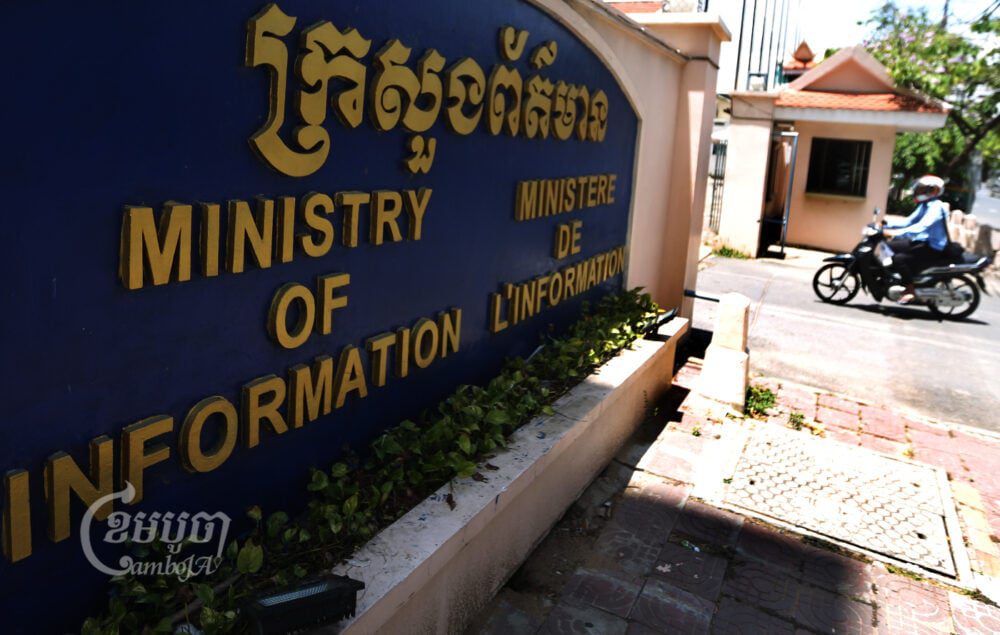
Ministry of Education, Youth and Sport spokesperson Khuon Vichheka said the project, which is in the planning stage, will focus on preschool and primary school students. The ministry expects teachers to be properly trained on reading and mathematics methods so that young children have a solid foundation before they enter the next grade. However, she did not specify its starting date or the provinces where the project would be carried out.
“The program will support children at the preschool level. Besides providing support for soft and hard skills, especially the construction of public child health centers and the renovation and construction of new primary school classrooms,” said Vichheka.
Ouk Chhayavy, President of the Independent Cambodian Teachers Association (CITA), believes that the World Bank has contributed a lot to the education sector in Cambodia. Therefore, to improve the quality of students in remote areas, public schools must further improve their quality, transparency and have proper buildings and teachers with proper qualifications, avoiding the recruitment of contract teachers.
“At one point, I see that education is going backwards, it is not getting better yet. The good news is that in this era of new technology, students are learning through technology, which is a point that affects the economy of some poor families who can’t afford to buy phones for their kids,” Chhayavy said.
In 2021, non-profit organization International Budget Partnership ranked Cambodia’s transparency 33 out of 100 in their open budget survey.
Sek Socheat, a consultant on development and research, said that receiving aid through the project is good news for Cambodia, and he hopes that the ministry will use the funds properly, meaning that they will reach every Cambodian primary school pupil.
In addition, the construction of additional schools will help reduce the shortage of classrooms, especially in rural areas that have always severely lacked infrastructure.
“The ministry should encourage teachers and improve their quality, because only quality teachers can produce quality students who can graduate from high school. In addition, it is also necessary to prepare a system to ensure hygiene and safety for children,” Socheat said.
Based on experiences, the use of aid is not transparent. Socheat expects the ministry to reduce the middle ground that leads to corruption and cooperate with the anti-corruption unit.
He also urged them to conduct regular investigations to ensure integrity, transparency, and use of funds for the intended purpose, without any division that leads to loss of trust from citizens and donors.