Listen to the audio version of this article (generated by AI).
The deputy police chief of the Phnom Den International Border Gate (Cambodia-Vietnam) has become the first official to be dismissed under the Ministry of Interior’s framework which enacted strict measures to remove subordinate officers who caused traffic accidents or harm to others while driving under the influence.
In a letter dated August 28, Interior Minister Sar Sokha declared the removal of Sin Rayu, deputy police chief of the Phnom Den International Border Gate under the Department of Border Gates II in Takeo province along the Vietnamese border, due to a violation of the National Police policy.
Rayu’s salary and other benefits will also be cut starting November 2026 onwards, the letter said.
Action was taken after he drove a Range Rover while intoxicated and crashed into a vehicle on August 25, 2026, in Sen Sok district, Phnom Penh. Although no one was injured, the incident violated the ministry’s new orders.
Sokha ordered that starting August 26, all ministry personnel, including national police officers and prison officers, are subjected to immediate dismissal if they cause traffic accidents, provoke disputes or violence against others, and engage in immoral acts while under the influence of alcohol.
Interior Ministry spokesperson Touch Sokhak told CamboJA News that Rayu’s case was the first since the ministry introduced the measures. However, he said, in the past, the ministry has issued disciplinary orders against national police officers depending on the severity of their actions, and has referred cases to court on a regular basis.
According to him, the framework states that ministry personnel can also be dismissed for drug use or drug-related offenses, online fraud, and for conducting unauthorized actions outside their work and responsibilities. However, he could not provide a specific number of cases.
“This is the implementation of firm reforms and a strict disciplinary policy without exception by the Interior Ministry,” said Sokhak.
He added that many ministry officers have performed their duties “very well”, but a “few still act contrary to orders”.
“A small number of officers are still negligent, failing to fulfill their duties properly, violate regulations, code of ethics or the law, for immediate personal gains. Those who [completely] violate the rules, strict disciplinary action will be taken without any exceptions.”
In addition to Rayu’s dismissal, the ministry also temporarily suspended two Svay Rieng provincial police officers for violating National Police policy. In the August 28 letter, the ministry listed the names of Chhun Chhang, chief of the Provincial Economic Crime Police Bureau, and Yorn Bonavi, a deputy chief of the unit, as those who are facing punishment.
An independent development and mindset research consultant, Sek Socheat, viewed the latest ministry disciplinary order as a positive sign of effective law enforcement. He hopes that disciplinary action will be carried out fairly and with transparency, and not only against cases that go viral on social media.
“I hope these actions will be carried out with no leniency [accorded to the wrongdoer], and please do not take disciplinary action only on cases that have gone viral,” he said.
To ensure long-term effectiveness, the ministry must avoid “downplaying” official reports when a “powerful” official causes an accident while under the influence of alcohol, Socheat urged.
As such, he said, the ministry should establish a discreet internal investigation mechanism and eradicate corruption, nepotism and the “culture of witness intimidation”.
“Ministry of Interior leaders must be discreet and establish an additional confidential internal investigation mechanism to gather evidence, and determine whether reports have been falsified or if key details were omitted to evade full legal action,” said Socheat.
Meanwhile, Kim Pagna, Country Director of Asia Injury Prevention (AIP) Foundation in Cambodia, believes that firing a police officer serves as a warning to other officials to be prudent and to respect traffic laws. He also called for severe penalties for officers who cause accidents while intoxicated.
“Besides dismissing officers […] if an accident involves severe injury or loss of life of other road users, please take strict and severe measures to provide justice for the victims and their families.”
Nevertheless, he hopes to see ministries and institutions establish internal traffic safety policies to ensure that their staff respect the law and help to reduce traffic accidents.
“Promoting preventive measures by protecting our officials from getting involved in such cases is a good thing so that we all win, while preventing accidents without having our officials face dismissal,” Pagna said.
Separately, political analyst Meas Nee, who also does research on social development, said the ministry’s order highlights the application of its own established principles.
He felt that action against driving under the influence should not be limited to Interior Ministry officials, but should be applied to all ministries, institutions, leaders, and lower-level staff.
“Regardless of which ministry they are from and whether they are high-ranking or low-ranking, they must face equal punishment,” Nee said.
He hopes that the order serves as an “encouragement” to other state institutions to ensure their high and low ranking officials across the country obey the law and set a good example for citizens.
Meanwhile, Minister Sokha viewed traffic accidents as a “severe social disease” compared to other societal issues. In the first six months of 2026, Cambodia experienced over 1,300 traffic accidents, an increase of more than 200 cases which killed nearly 800 people. The number was up by almost 80 deaths compared to the same period in 2025.
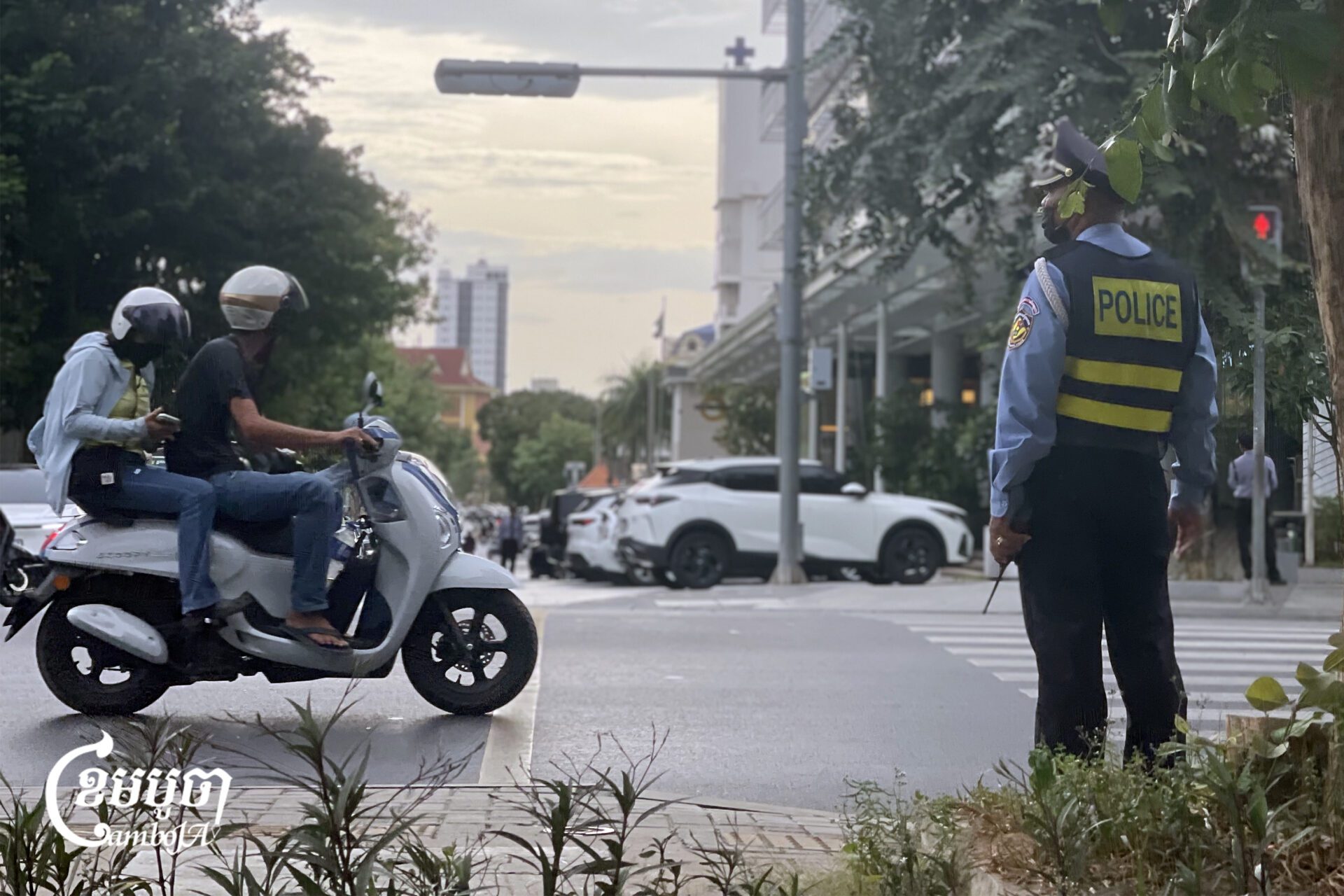
Sokha also ordered the re-enforcement of strict traffic law enforcement starting September 1, 2026, in the capital and provinces that have recorded high traffic accidents, such as Phnom Penh, Preah Sihanouk, Kandal, Kampong Speu, and Svay Rieng.