Listen to the audio version of this article (generated by AI).
Cambodia’s foreign minister on Tuesday called for Thailand to withdraw troops from what he described as Cambodian territory, telling the U.N. Human Rights Council in Geneva that their presence was the main barrier preventing thousands of displaced civilians from returning home.
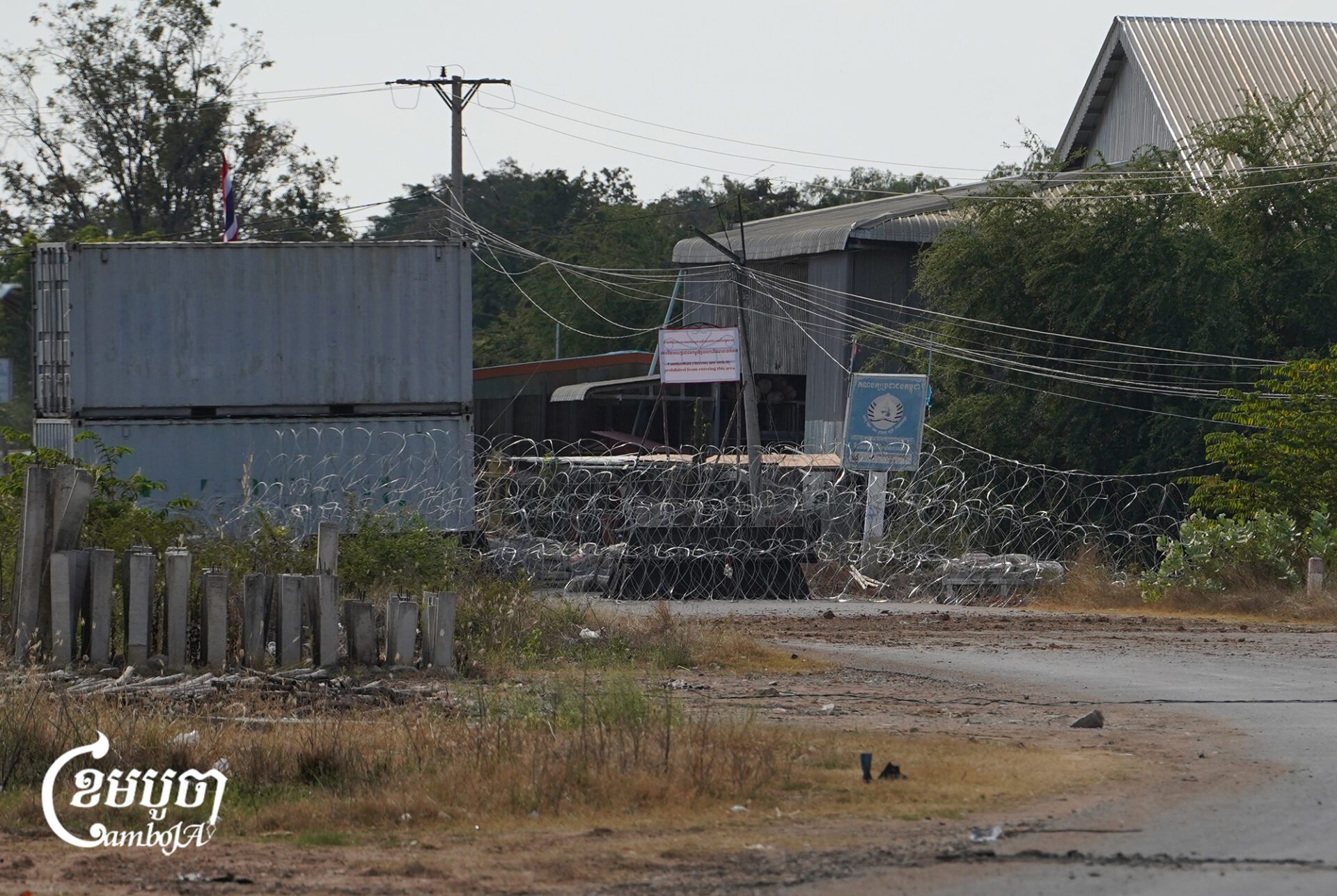
Foreign Minister Prak Sokhonn’s remarks echoed Prime Minister Hun Manet’s accusations that Thailand has occupied border towns following clashes last year, made during trips to the United States and Europe this month.
“Cambodia calls for the full respect and faithful implementation of the existing agreement, [and] the withdrawal of Thai military forces from Cambodia territory,” Sokhonn said in a ministry statement released on Thursday.
The neighbors fought two rounds of border clashes in July and December last year that killed more than 100 people and displaced nearly 1 million on both sides before a ceasefire was reached. Tens of thousands of Cambodians remain displaced, the government says, many from the contested villages of Prey Chan and Chouk Chey, which Cambodia says are part of Banteay Meanchey province.
Thailand has denied occupying Cambodian territory since the ceasefire, saying its troops remain at positions held when the truce took effect. It claims that Cambodian villagers have encroached on Thai territory since fleeing Cambodia’s civil war decades ago.
Sokhonn told the council the plight of displaced residents raised concerns under international human rights law, citing the rights to life, security of person, freedom of movement, adequate housing and access to cultural and religious life.
Thai Foreign Minister Sihasak Phuangketkeow, speaking at the same meeting, said the conflict followed years of “encroachments and repeated provocations,” including what he described as Cambodian interference in Thai politics, and accused Cambodian forces of indiscriminate attacks that caused civilian deaths.
He claimed Cambodian troop provocations continued along the border and later alleged that the Preah Vihear temple – awarded to Cambodia by the International Court of Justice several decades ago – had been used as a military outpost during the fighting, allegations Phnom Penh denies.
The neighbors are now due to dispatch joint survey teams to contested areas in March under their Joint Border Committee.
Sophal Ear, a Cambodian-American political scientist at Arizona State University, said Phnom Penh likely chose the U.N. Human Rights Council to air the dispute because the forum offers global visibility and allows Cambodia to frame the standoff as not only a sovereignty issue but also one affecting the rights of local communities.
“It is a way to internationalize the issue and place pressure on Thailand without resorting to harder security measures,” he said. “The forum may not resolve the problem directly, but it can shift diplomatic attention toward Cambodia’s narrative.”
He added that by raising the dispute in multilateral forums, Phnom Penh was signaling it viewed the situation as unacceptable and was seeking support from sympathetic states. The strategy, he said, helps offset Thailand’s stronger military position and raises the diplomatic cost of holding disputed ground.