Business owners in Cambodia have vowed to terminate their contract with Thai brand PTT with the intention of promoting local products. This decision comes as thousands of shop owners and employees face declining revenue and job losses due to a widespread boycott of Thai-imported products.
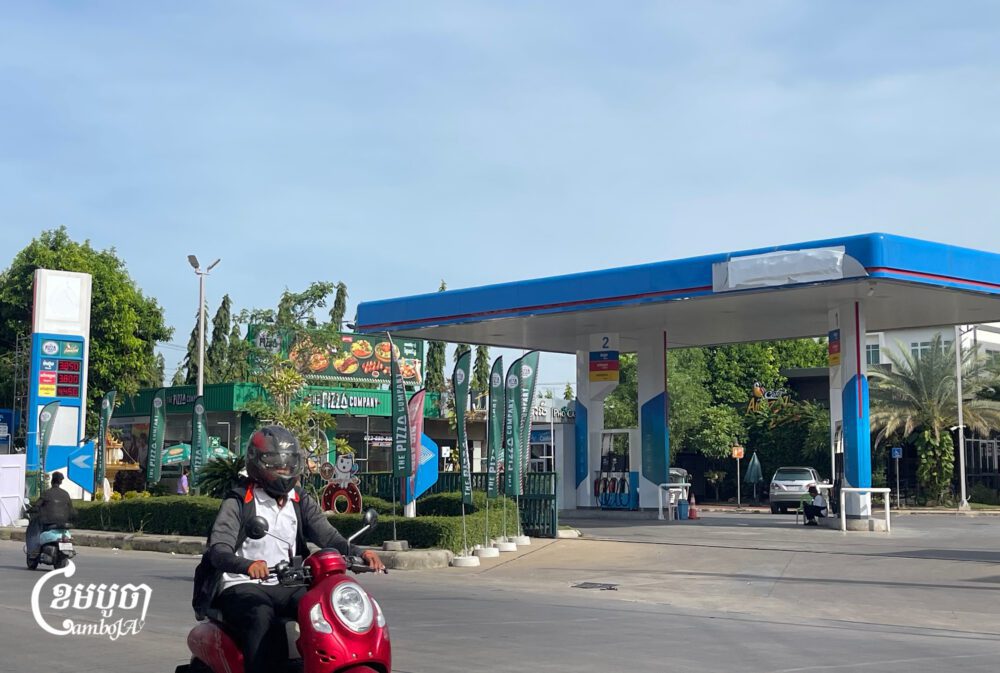
Tea Siam, a franchisee of PTT Cambodia, and the brother of National Defense Minister Tea Seiha, announced via a Facebook post on August 4 that “all PTT fuel stations nationwide” will be rebranded as PPC (Peace Petroleum Cambodia), a Khmer-owned brand. The new brand’s logo will feature five colors: red symbolizing Cambodian land, white for purity and peace, blue for strength and trust, a dove representing freedom, and gold signifying Khmer prosperity.
In a six-minute video, Siam noted that approximately 90% of PTT businesses are owned and staffed by Cambodians, totaling tens of thousands of employees. He emphasized his commitment to “acquiring full control of these franchises” to resolve internal conflicts among Cambodians, unemployment, and mitigate disadvantages on the international stage.
“I am trying to resolve both legal matters and issues related to employees. All issues should be addressed harmoniously. The impact on people, especially our employees. I don’t want anyone to suffer because of this issue,” said Siam.
“The logo [PTT] must be taken down [and] a legal path must be considered,” he mentioned, adding that over 100 company owners, who purchased the rights to the PTT brand, decided to delegate authority to him to act as a representative to terminate distribution contracts with PTT Cambodia as of August 3.
The “boycott Thai products” movement has sparked heated debates, leading to verbal abuse, provocative videos, and discrimination against goods with Thai labels or codes. This follows a five-day armed conflict between Cambodia and Thailand from August 24, which resulted in damaged temples, homes and monasteries, while impacting civilian lives.
Additionally, 20 Cambodian soldiers were detained after the ceasefire, with only two returned—one injured and another suffering mental trauma—prompting social media speculation of alleged torture against them by Thai forces.
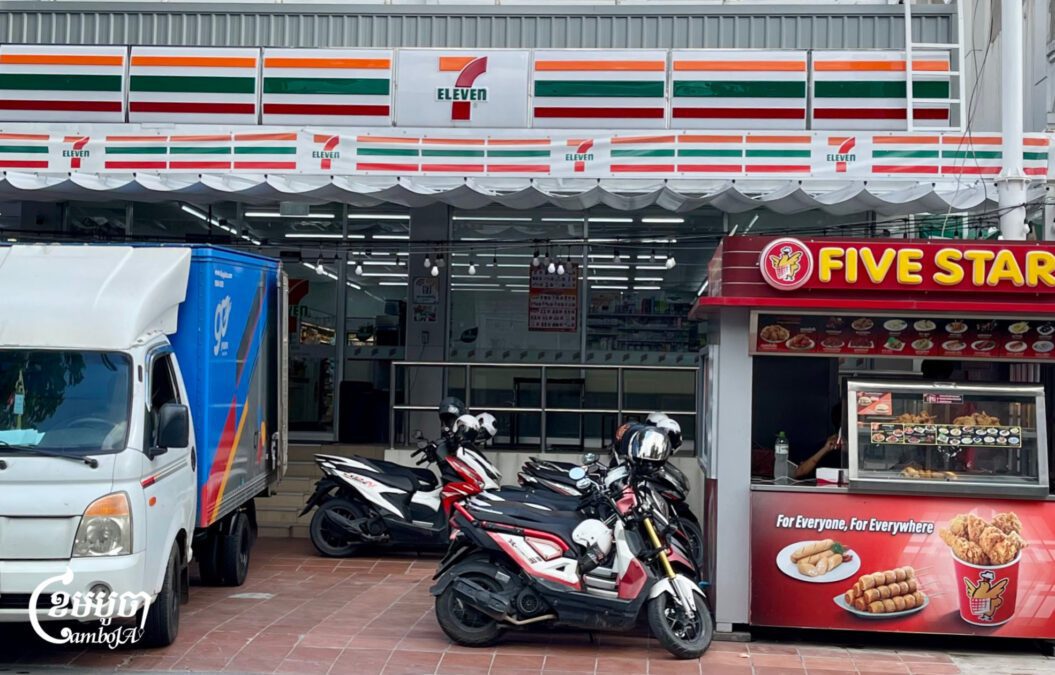
Tea Vichet, a franchisee of 7-Eleven and Amazon Coffee, expressed concern on Facebook, describing the boycott as an “extreme act” that violates the rights of customers, employees, and PTT owners.
“I am also a franchisee of 7-Eleven and Amazon Coffee. Seeing people enter the shops to question employees and customers—these actions show a violation of the rights of customers, shop owners, and employees, which is not a Khmer-helping-Khmer movement.”
Chin Senghong, manager of a PTT station in Phnom Penh’s Dangkao district, told CamboJA News on August 5 that he has been worried over the quietness in his station since the boycott intensified. He welcomed the rebranding initiative but noted he has not received clear details about the franchise buyout.
“If a Khmer buys the franchise outright, I’d be happy, but we haven’t received clear guidelines whether they really bought all the PTT [stations] or not because it is very quiet [here], although we haven’t laid off any staff,” he added.
Chheang Chharoth, manager of Amazon Cafe in Prey Nob district, Preah Sihanouk province, supported the initiative but highlighted the intense pressure faced by PTT-affiliated employees. In the past two months, her revenue has dropped over 80% since the Cambodia-Thailand conflict, and could lead to staff and wage reductions.
“Before, we were packed with customers, and the staff were overwhelmed. Now, we’re under so much pressure—some days I want to cry for the staff and other owners because we don’t want to lose anyone,” she said.
Chharoth said she hopes that initiatives led by Siam and Vichet will materialize quickly to foster Khmer unity and halt discriminatory actions, emphasizing that these businesses have historically supported the economy, particularly poor citizens and students.
Chey Sreynet from Takeo province joined the boycott of Thai products after Thai authorities unilaterally closed border crossings, hoping that it would discourage Cambodian businesses from selling Thai goods.
“I used to be a customer of PTT, Amazon Cafe, 7-Eleven, and Thai products, but after the border closure, I stopped. If no one buys, sellers will stop importing,” she said.
However, Keo Sovannarith, a third-year law student in Phnom Penh, disagrees with the boycott, citing concerns for unemployment for Cambodians.
“I have not joined the boycott until now. As I noticed, I think all the workers are Khmer. But I also do not oppose those who boycott; what is important is their rights. I continue to fill up [gasoline], it is my right.”
Social and political analyst Por Makara argued that boycotting Thai products creates internal conflict without economic benefits for Cambodia. He emphasized that nationalism fueled by anger cannot resolve issues and urged the government to prioritize border dispute resolutions to avoid harming innocent citizens.
“I urge Cambodians to produce more, and relevant ministries must pay attention because from ‘head to toe’, what do we produce ourselves? This problem cannot be solved in one day. So, while I encourage citizens to participate in politics and disputes, don’t be too extreme as that is not the way problems are solved,” he said.
PTT, a Thai state enterprise, was founded in 1978 during Thai Prime Minister Kriangsak Chamanan’s tenure. The company operates 415 PTT stations and 391 Cafe Amazon outlets across Asia, including Cambodia, Laos, the Philippines, Vietnam, Malaysia, Oman, Saudi Arabia, Bahrain, and Japan, according to Media OutReach Newswire report on July 8, 2025.
The company reported 182 billion baht in revenue the first quarter of 2025, with net profit of 4.38 billion baht, reflecting a 17.6% increase from the same period in 2024, according to OR (PTT Oil and Retail Business Pcl) CEO, ML Peekthong Thongyai.
In August 2024, PTT Oil and Retail Business announced plans to invest $100 million in Cambodia to build an oil depot. Cambodia currently operates 186 PTT stations, 254 Cafe Amazon outlets, and 71 retail stores.