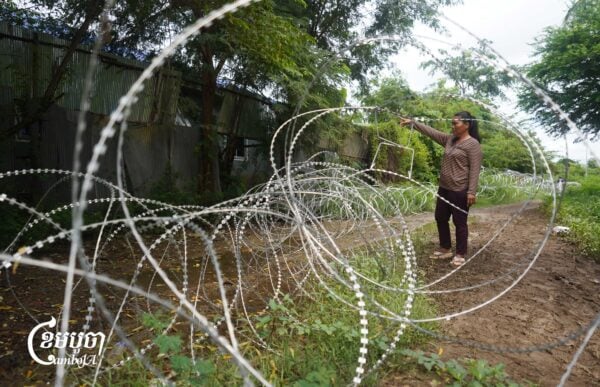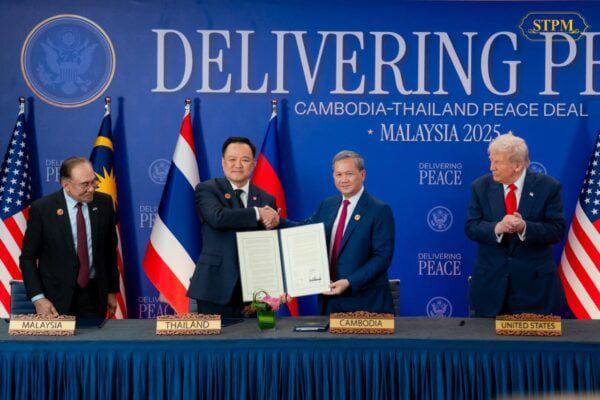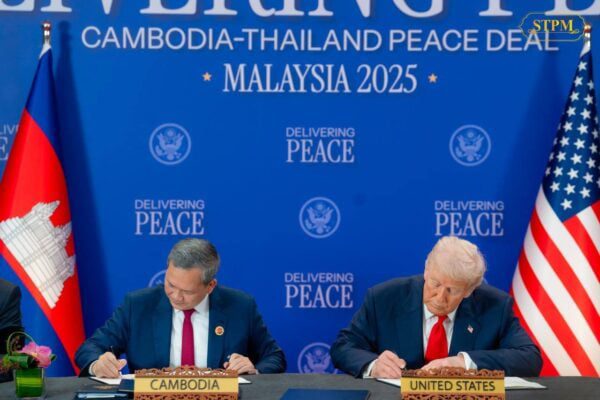
Due to debts owed to Thai employers, Chan Sophana must continue working in a durian plantation in Chanthaburi province, unable to return to his hometown in Siem Reap province despite fear of racial discrimination engendered by Thai nationalists following the deadly five-day Cambodia-Thailand conflict on July 24.
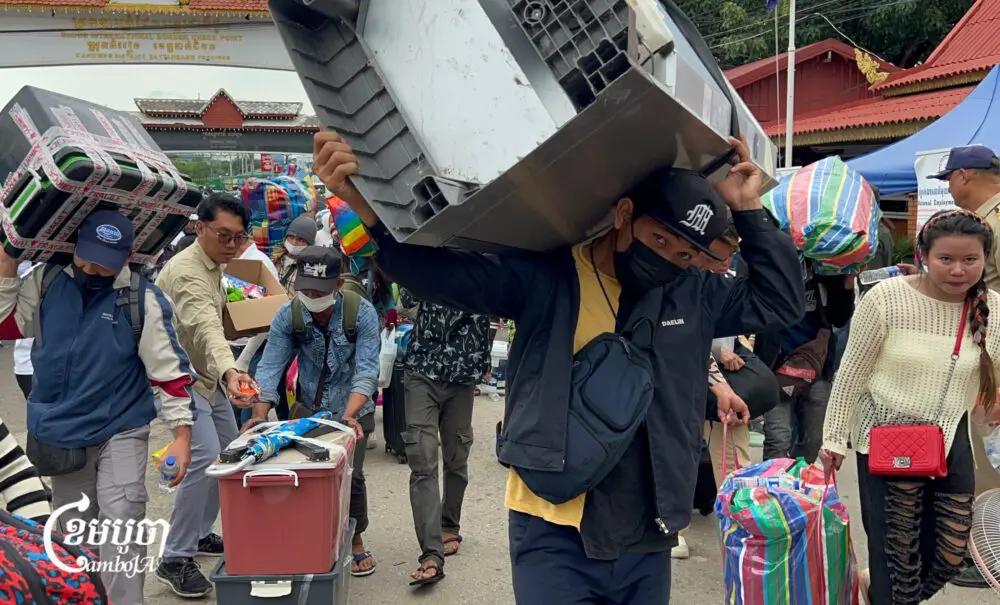
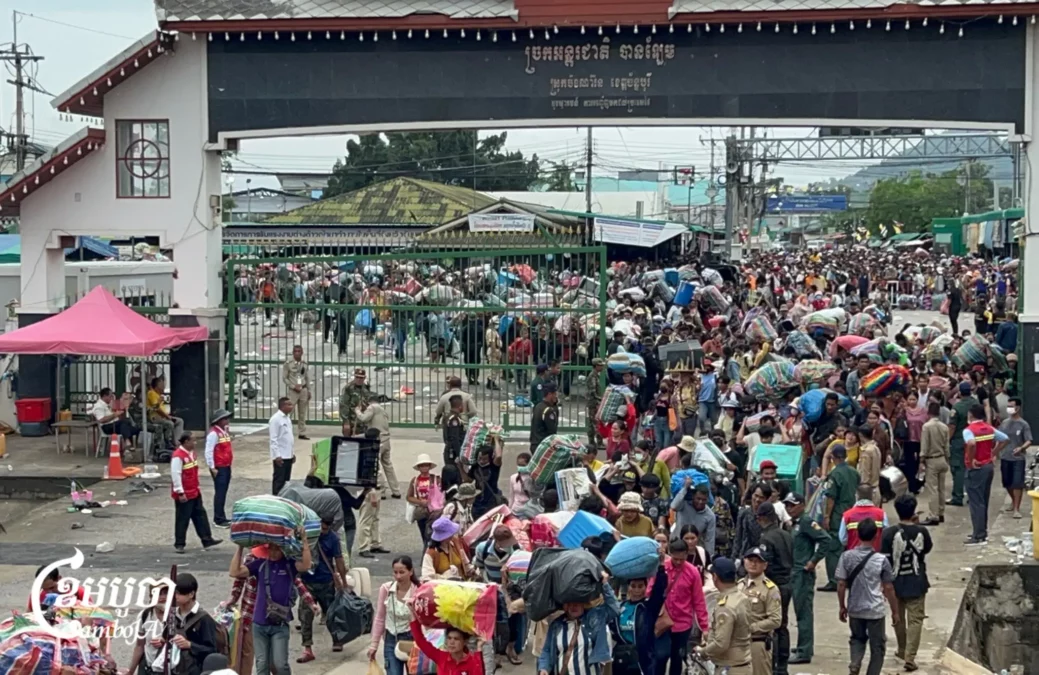
As of August 31, 2025, 920,000 Cambodian migrant workers have returned from Thailand, with tens of thousands assisted in finding local jobs, the Ministry of Labor and Vocational Training stated. However, civil society and experts warn that many returnees face risks of unemployment.
Sophana from Sotr Nikum district in Siem Reap, Cambodia, has worked in Chanthaburi’s durian plantations for over five years with his brother-in-law and two neighbors. Since the conflict escalated, their fears have grown. The 33-year-old said his neighbors went home on July 26, after being called back by their families due to fear.
“Some relatives and acquaintances mocked me, saying that the Thais have shelled Cambodian land, dropped bombs from planes, killed Cambodians, and insulted us, yet I still haven’t returned and continue working for them—beware, they might kill you!”
Sophana confessed that he does want to reunite with his wife and two children but he is bound by his $8,000 debt to his Thai employer.
“I borrowed money from my boss to give my wife to build our house, so I’m still working to repay the debt. My boss is very kind and treats me like family. I earn over $300 a month, with three meals a day provided and free housing. I don’t spend much. Half my salary goes to repaying the debt without interest, and the other half I send to my wife to support our children’s education,” he said.
Sophana, who borrowed the money over three years ago, has $200 deducted from his salary, with the rest sent home. He expects to clear the debt in about a year.
He stays on the plantation and rarely goes out, he said, adding that his employer ensures his safety and the other Cambodian workers there. If he returns now, he is afraid of not finding work, as his neighbors who left for home are still unemployed. But once he becomes debt-free, he hopes to go back to Cambodia and do farming using the skills he acquired in Thailand.
Kun Kour, 37, from Koh Keo commune, Lvea Em district, Kandal province, has worked in Thailand since 2010 with relatives.
He earns over $350 monthly, which changes according to the season, and is given three meals daily. His tasks include picking fruits and looking after the crops. He is working 60 to 70 kilometers from the Pursat border but declined to specify the exact location.
“I don’t work in Cambodia because the jobs are unstable and expenses are high, leaving very little for savings. With limited education and a poor family background, I followed others who used to work in Thai plantations.”
Kour, who lives with his wife and children in Thailand, said he stayed on due to job stability, reasonable pay, food, and his children’s education.
“Despite the Khmer-Thai conflict, I didn’t go back because working on the farm is not a problem, as long as I stay on the property and avoid crowded areas,” he explained. “From what I hear, it’s safe, but I see on Facebook that Thais are abusing people in public places. I feel sorry for those workers,” he said.
Like Sophana, Kour wants to come back to Cambodia but is hesitant as he might not be able to meet the needs of the family given the uncertain job prospects.
Loeng Sophon, a Thailand-based project officer with labor rights group CENTRAL, said on September 4 that over one million Cambodians are believed to have returned since the conflict began, but about 20% remain in Thailand. They are working despite being scared, he said, adding that the workers continue to monitor the border situation and might return if tensions persist.
“Many workers stay because they worry about their livelihood. They fear that returning to Cambodia would leave them without an income to repay bank loans. Most have debts to settle, and they lack confidence in finding jobs in Cambodia to cover those obligations.”
Pho Thida, 30, a widow with two children from Kandal Steung district, Kandal province, recently returned from Thailand after nearly 10 years working in durian plantations and construction sites.
She said that a labor ministry official contacted her to offer a job at a garment factory in Kampong Speu province, but she had already found work at a garment factory near the Toul Kork roundabout in Phnom Penh.
“In Thailand, I earned over $300 a month, but here, they say I might make just over $200 since I’m new,” she said. “But I need to work to pay off my housing loan. It will take almost three years to complete.”
Thida added that two colleagues who returned with her have started a papaya salad business and a vegetable delivery service, as everyone needs money to repay debts.
Prum Met, a construction worker from Banteay Meanchey province, told a forum held by CENTRAL on August 20 that he has struggled financially since returning as he has not been able to find work.
“Since returning, I’ve faced difficulties because I haven’t found work. I’ve been looking but have not succeeded. I’m not picky—I’ll do any job, just like in Thailand, where I did construction work and other tasks.”
Heng Sophak, chief of Banteay Chhmar commune, Thma Puok district, Banteay Meanchey, said on August 30 that some recent returnees struggled to find jobs and remain fearful due to the conflict.
“It’s not about government or NGO assistance, it’s about their psychological state after experiencing the recent conflict,” he said. “They are afraid and haven’t dared to look for work.”
Sophak added that the government, NGOs, and local authorities are trying to find jobs and support for the workers, but the ceasefire remains fragile.
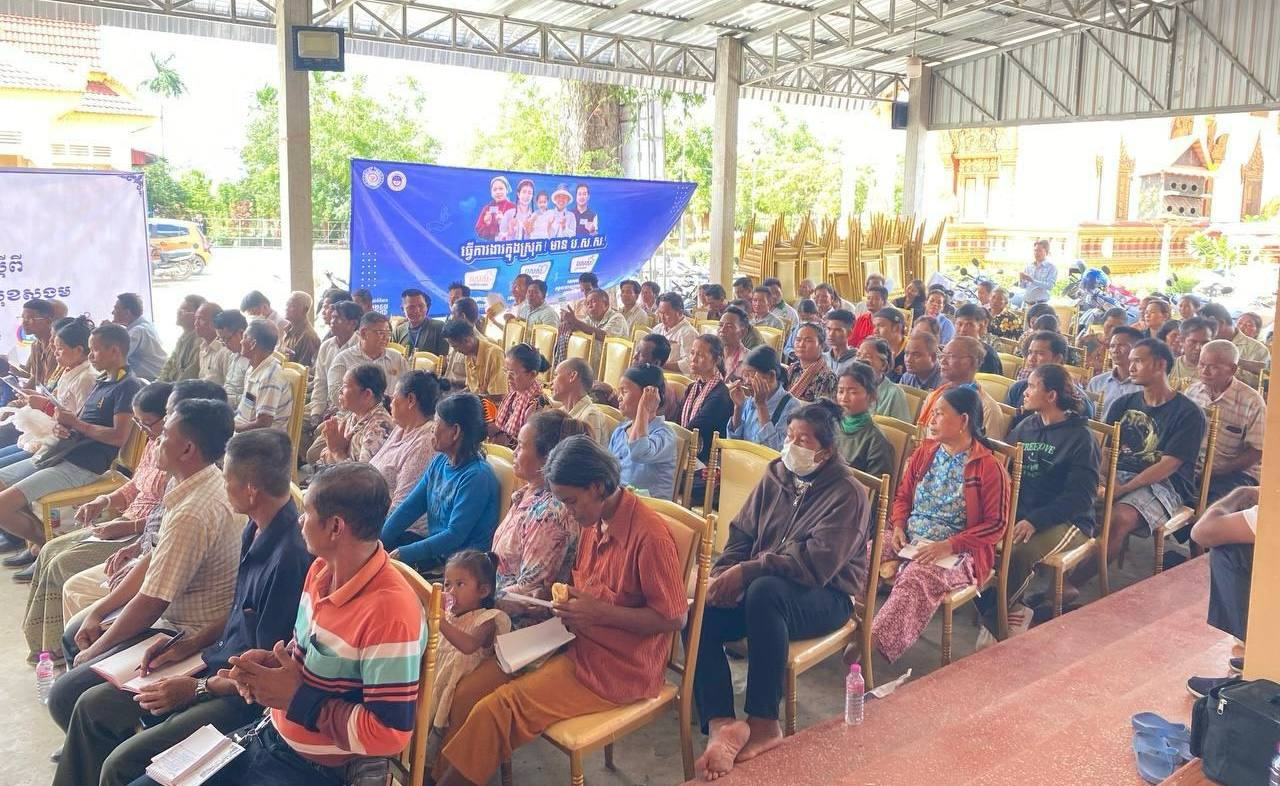
CENTRAL has organized “safe migration” forums and provided aid to thousands of returnees in Kampong Thom, Siem Reap, Preah Vihear, Oddar Meanchey, and Battambang, including 50 kilograms of rice, noodles, sauces, and 100,000 riels (25$) per family.
Moeun Tola, its executive director, said the problem is that there is a large number of returnees but just a few job vacancies. Only about 10% or less in some provinces have found work. “Workers say their biggest issue is repaying debts […] This makes it hard for them to know what to do.”
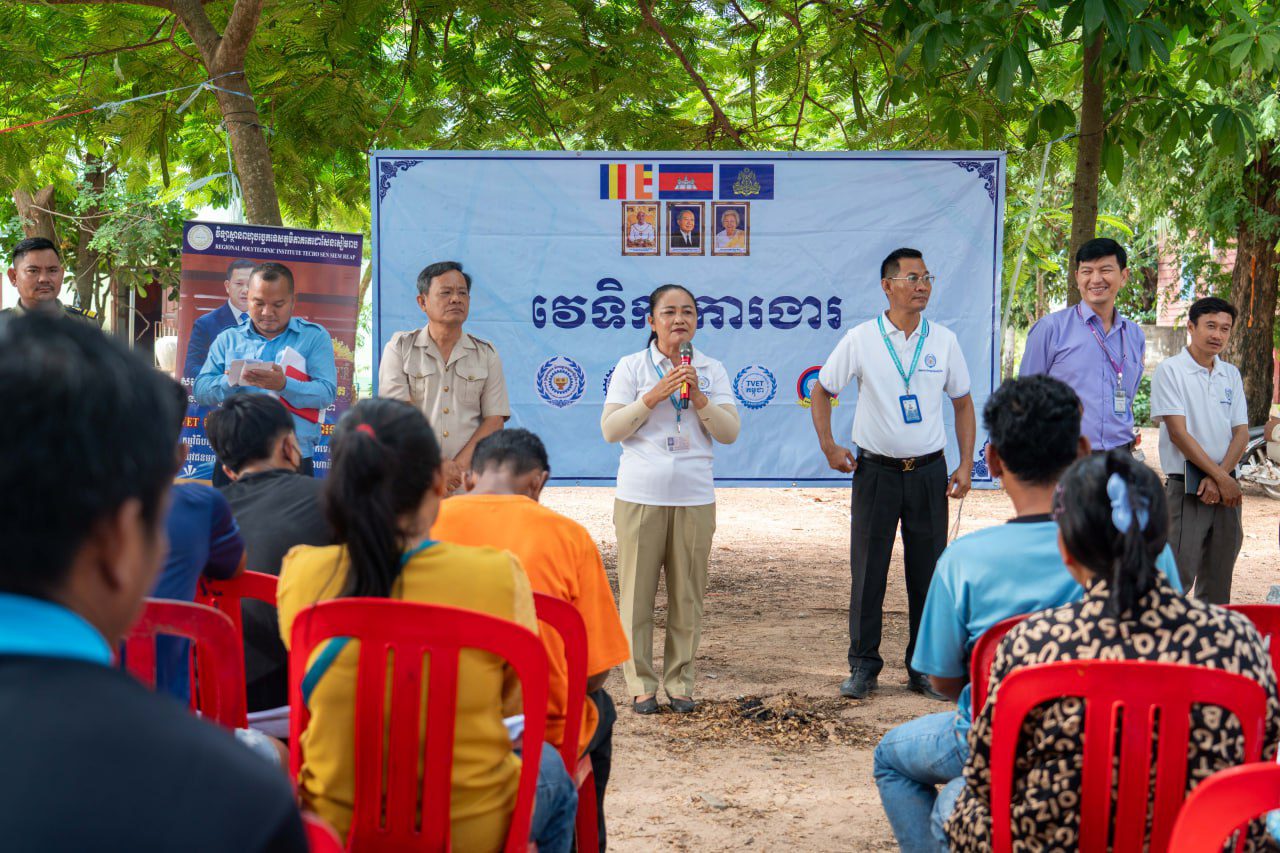
Labor ministry spokesperson Sun Mesa did not respond to requests for comment on their plan to help returning workers.
However, Minister Heng Sour on August 31 said 920,000 Cambodians have returned from Thailand, including about 700,000 workers, traders, and their families.
Since July, the ministry has managed to secure employment for around 150,000 individuals. While acknowledging that 150,000 might seem small in comparison to 700,000 workers, he said, “for the private sector to provide this many jobs in two months, is a miracle.”
Chan Sophal, director of the Center for Policy Studies, estimated that one million workers earning $250 monthly could generate $3 billion revenue for the government, boosting contribution to Cambodia’s gross domestic product by 6%.
Their employment would spur local demand, benefiting production and easing labor shortages. Companies lacking labor will be relieved, and new investments will find it easier to find workers.
However, Sophal warned that if there is a lack of jobs and workers cannot return to Thailand, it will burden the banking sector, which already faces high non-performing loan ratios. Furthermore, unemployment can create social problems.
“I believe the pressure is not less than during the COVID-19 crisis, when the government spent over a billion dollars. The government should study and intervene urgently, rather than delay or wait for the conflict to end. This is a great opportunity for Cambodia to expand its economy and strengthen itself compared to its neighbors in an era of weakening international law.”
Back in Thailand, Sopanha hopes that the border conflict will be resolved soon so that peace can return, allowing both peoples to live and trade freely as before.