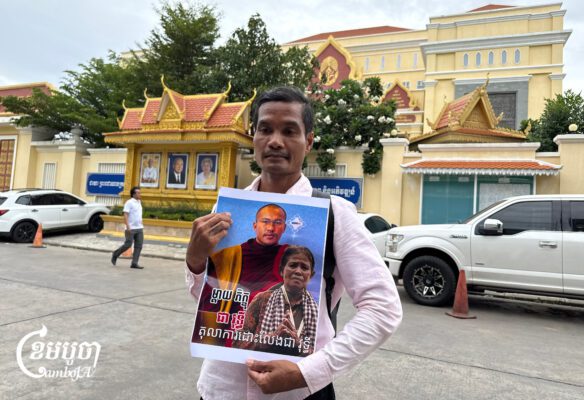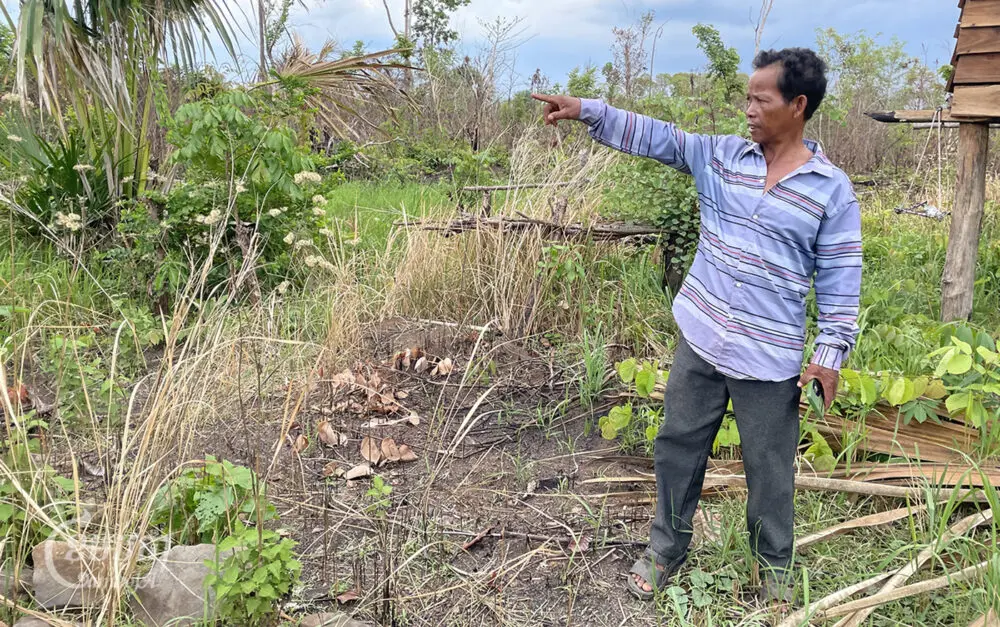
Environmental journalist Uk Mao, an indigenous minority, pledged to continue protecting the forest and exposing illegal logging activities following his release on bail on Sunday — his determination praised by civil society organizations and press freedom groups.
Mao was charged with two counts with incitement and public defamation, and was given bail by the Stung Treng Provincial Court investigating judge on Sunday. He has 15 pending legal cases.
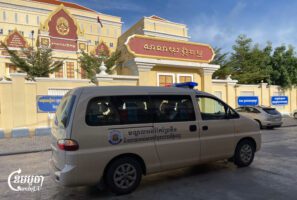
Chhum Seanghak, deputy secretary of the court, confirmed that Mao was placed under court supervision, which includes a travel ban without prior permission, to present himself at the local police station once every month, and adhere to court orders.
“I am determined to protect the forest. I will do more than before,” Mao told CamboJA News by phone after his release.
He denied the incitement and public defamation charges brought against him by the court. “What was the incitement? Yes, I told people to protect the forest, but I never provoked them to clear land or cut timber,” he said.
Mao shared that when he was released on bail, the court warned him not to speak with reporters or give comments that could be seen as violating the law, or he would be re-arrested.
“If they arrest me again for protecting the forest, the public can judge for themselves whether what I’ve done is right or wrong,” he said, noting that he has been involved in natural resource protection and environmental activism since 2017.
He said forest crimes have continued, alleging “collusion” between timber traders and local officials.
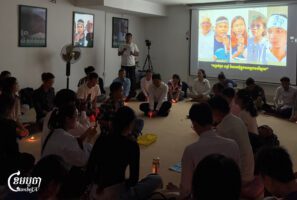
Press groups, including Cambodian Journalists Alliance Association (CamboJA), Reporters Without Border (RSF) and Cambodian Human Rights and Development Association (Adhoc), lauded Mao’s release from prison, but stated that he should not have been put behind bars in the first place.
“We are relieved that journalist Mao was released, but insist that he should never have been put in detention in the first place,” RSF Asia-Pacific advocacy manager Aleksandra Bielakowska replied via email.
She called on the authorities to drop all charges against him, and allow him to freely continue his work as a journalist.
The Cambodian government must take concrete steps to protect journalists, and cease its judicial harassment, Bielakowska said, adding that that was “clearly a tactic to dissuade them from reporting on environmental issues”.
CamboJA executive director Nop Vy welcomed the court decision to release Mao to “render him justice” because of his “contribution to public interest relating to forest protection”.
“I am still begging the court to reconsider the charges against Mao, and to drop them,” he said, adding that the government should encourage reporters to report on forest destruction and the occupation of state forest land.
Mao’s arrest was widely criticized by local and international media associations, however, the Information Ministry collectively accused the groups of “pursuing their own political agendas” and portraying press freedom negatively in Cambodia.
The ministry said it did not issue a press card to Mao because he has “more than 10 lawsuits in the court”, accusing him of violating the code of journalism ethics.
Mao’s lawyer Rin David could not be reached for comment.