Listen to the audio version of this article (generated by AI).
Two Cambodian journalists serving 14 years in prison on treason-related charges asked the Supreme Court on Friday to throw out the case that press freedom groups have condemned.
Phorn Sopheap and Pheap Pheara, reporters for TSP 68 TV Online, were convicted of supplying a foreign state with information prejudicial to national defense, a treason offense punishable by seven to 15 years in prison.
The journalists were arrested in July 2025 after being photographed with Cambodian troops near a frontline position following border clashes with Thailand. The image allegedly showed landmines in the background and was later circulated by Thai media.
The journalists were convicted in September and sent to a prison in Siem Reap province. Their imprisonment came before a wave of detentions that saw other journalists detained for reporting on border tensions and online scam operations, prompting concern from rights groups.
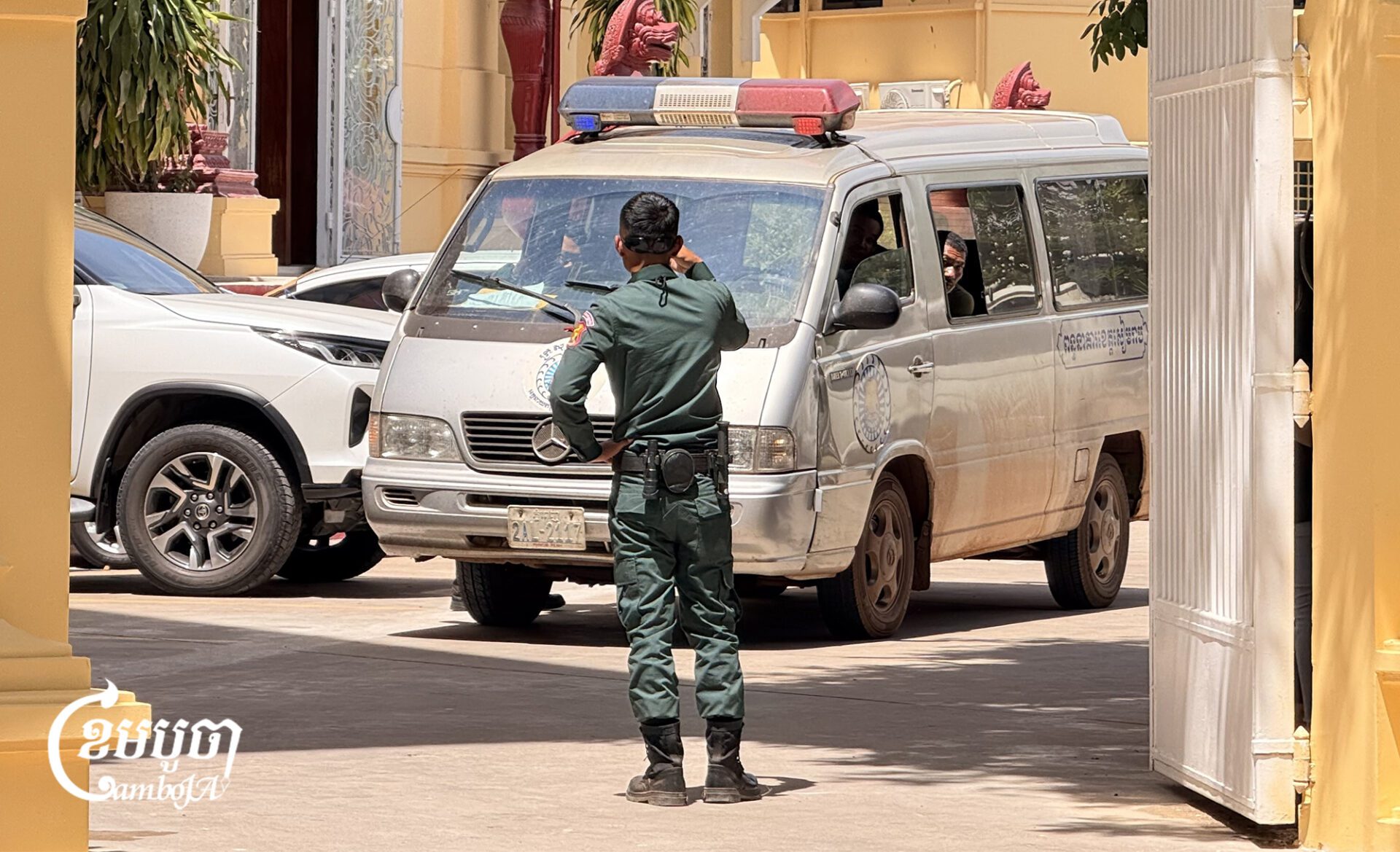
Sopheap and Pheara told the court they had no intention of providing information to a foreign state or harming Cambodia’s national defense, their lawyer, Un Chanthol, later told reporters who were barred from attending the hearing.
Chanthol urged the Supreme Court to dismiss the charges or reduce them to the lesser offense of “intentional or unintentional disclosure of national defense secrets” under Article 479 of Cambodia’s Criminal Code.
He also asked the court to suspend their prison sentences pending a final ruling.
The Supreme Court is scheduled to announce its verdict on June 25, Chanthol said.
Outside the court in Phnom Penh, Prom Yorn, Sopheap’s mother, fought back tears as she denied that her son had betrayed the country or passed information to foreign entities.
She described him as a journalist who regularly reported on social issues and said any mistake he may have made was unintentional. She appealed to the court to drop the charges against both men.
“I urge the court and the government to show leniency toward my son because he did not do this intentionally,” she said. “He has been separated from his wife and children, and we are getting old. Please release my son.”
Sopheap’s wife, Hong Tha, echoed her mother-in-law’s appeal.
“He has become thinner than before. He is a good journalist,” she said. “I hope the leaders and the court will help reduce this sentence because my husband is a gentle person.”
Information Ministry spokesperson Tep Asnarith said journalists “must distinguish between journalism and national security” and avoid activities that violate the law.
“At the same time, while journalists enjoy the right to freedom of expression, the law also sets clear boundaries and strictly prohibits the dissemination of information that could affect national security, political stability and national defense,” he said.
He said the ministry had provided support and intervened before and during the legal process.
Press freedom in Cambodia has eroded sharply over the past decade, according to rights groups including Reporters Without Borders, which ranks the country 151st out of 181 countries on its World Press Freedom Index.
More than 30 people, including political and social activists and journalists, were arrested between mid-2025 and early 2026 over social media posts related to the Cambodia-Thailand border dispute.
Sorn Sarath, research and advocacy manager at the Cambodian Journalists Alliance Association, said the 14-year sentences were the harshest penalties ever imposed on Cambodian journalists.
He called on the Supreme Court to consider the appeal.
*This article was updated to note that the journalists’ convictions were related to treason rather than espionage.