Listen to the audio version of this article (generated by AI).
Two years after Cambodia broke ground on the Funan Techo Canal, many families living along its route say they are in limbo due to compensation delays and lost livelihoods, even as Cambodia secured fresh Chinese financing for the US$1.2 billion project.
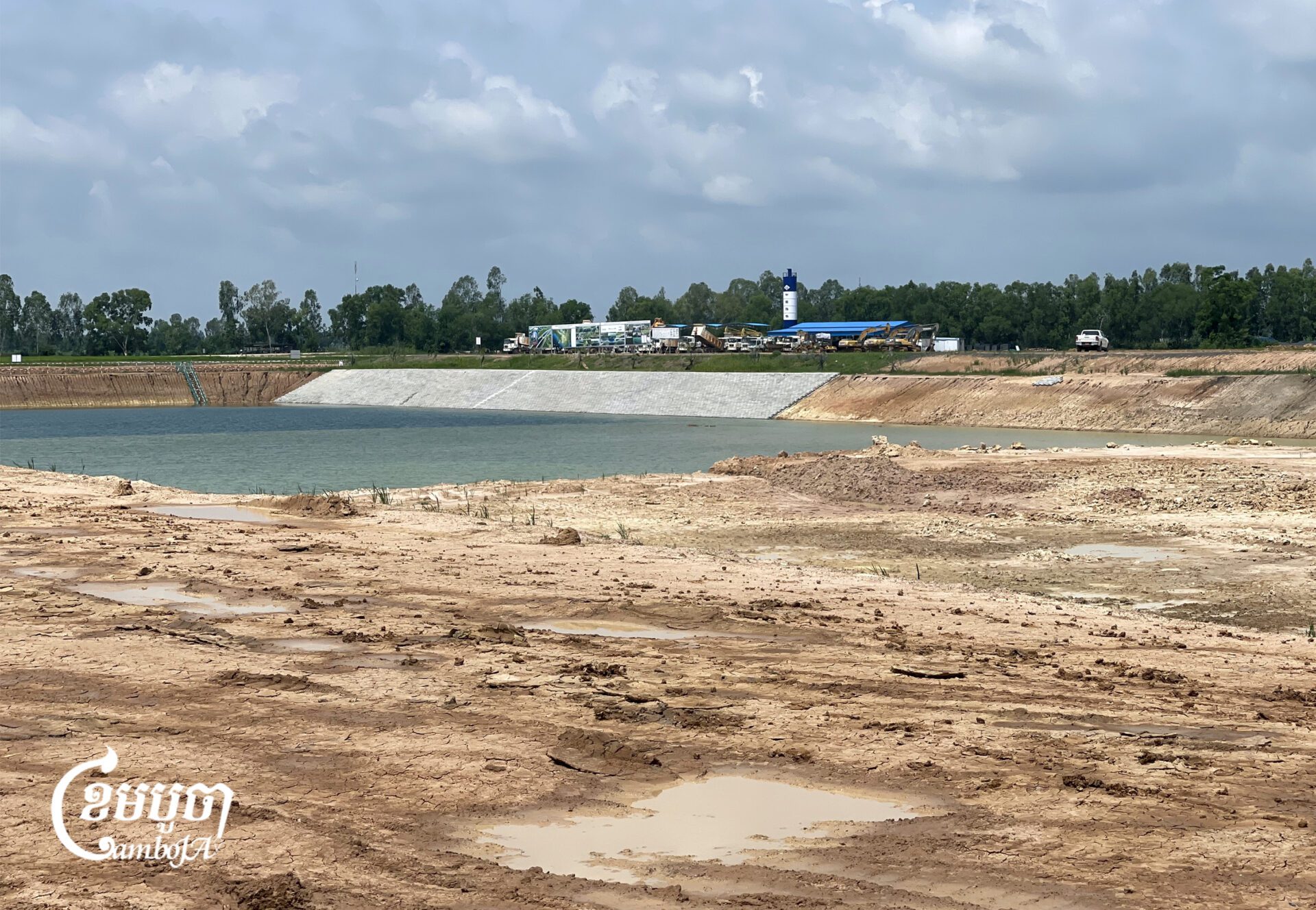
On August 5, 2024, thousands of people gathered in Prek Takeo commune, Kandal province, to celebrate the groundbreaking of what the government at the time described as a transformative waterway linking the Mekong River to the Gulf of Thailand. Since then, there has been limited construction, with the government saying it has completed demarcation work along the canal route.
For nearly two years, details about how the project would be financed has been scarce, fueling uncertainty over funding for one of the country’s largest infrastructure projects. That changed in late July, when the government made an announcement that China approved a concessional loan and grant package for the canal, marking Beijing’s first official financing commitment since construction began.
Notwithstanding official events and funding announcements, impact from the project is already being felt by communities along the canal route. Interviews with affected residents reveal a mixed picture: some received compensation, but many have not been paid, some have missed multiple rice-growing seasons, or are still waiting for clear timelines to relocate.
“They told us construction would begin in November [2025]. When it was time to plant rice that month, they told us not to farm. We did not dare cultivate the land. Now it’s well past November, we still have not been able to farm [since last year], and we still have not received any compensation,” said a resident of Angkor Borei district, Takeo province, who requested anonymity due to security concerns.
He said 1.5 hectares of his rice fields and residential land are affected by the project. In the past, the harvest provided enough rice to feed his family for a year. Now, unable to cultivate the land, they have been forced to buy rice instead, placing additional financial strain on the household.
While some affected residents have already received compensation, he said he is still waiting for his payment and hopes it will arrive soon so his family can move forward. At the same time, he said he wishes the project would not go ahead.

Another resident from the same village told CamboJA News that he has received compensation for nearly eight hectares of rice fields but has yet to be compensated for his residential land. The rate is dependent on the location of the land. His residential property was valued at $52 per square meter.
“My total compensation is more than $200,000. So far, I have received around $100,000,” he said.
Despite receiving part of the compensation, he said he was not entirely satisfied with the amount. He said his rice fields alone generated an annual income of around $20,000, and his property also supported a business along the main road, making it difficult for the compensation to fully reflect what his family has lost.
The 180-kilometer canal stretches across Kandal, Takeo, Kampot and Kep provinces. A recent study by the NGO Forum on Cambodia showed that the project could affect at least 2,305 households. During the ground breaking of the second section of the canal in Takeo in April, the government said $217 million had been allocated for compensation for land acquisition and other impacts across the canal.
Hem Khit, chief of Angkor Borey commune, told CamboJA News that details of the affected families’ land, including property size and farm yields, had been submitted by Funan Techo Canal officials to the compensation committee, but he did not know why some have received compensation while others are still waiting.
Meanwhile, in Trery Klork village, Doung Khpos commune, Borei Cholsar district in Takeo, Ouk Sam Ath said he was satisfied with the compensation he received, saying the company had fully compensated him for “everything on his rice field, including trees”. He received $20,000.
“After receiving the compensation, it really gave me peace of mind,” the 40-year-old said. “Previously, everyone was worried because [we] did not know when the compensation would be paid or whether the amount would be enough.”
He was paid around March, before the groundbreaking ceremony for the canal’s second section in April. However, he said, some villagers in his district, particularly those whose residential land is affected, continue to wait for compensation.
Sam Ath did not know why it was delayed for some villagers, but opined that it might be related to the companies involved in construction. The company working in his village is Chinese, while construction in neighboring areas might be carried out by Cambodian companies.

Several Cambodian companies are involved in the project, with different contractors working on different sections, he said, noting that construction in his area had made some progress, including excavation work.
According to the government, Cambodian companies hold a 51% stake in the $1.2 billion project, while Chinese companies hold 49%.
Last month, Sun Chanthol, First Vice Chairman of the Council for the Development of Cambodia (CDC), said China approved a $200 million loan to support the project, alongside a $200 million grant. He also said a syndicate of Chinese lenders would provide a $1 billion loan to the concessionaire to cover the canal’s construction costs.
CamboJA News sought confirmation from spokespeople for the Ministry of Economy and Finance and Ministry of Public Works and Transport, as well as Heng Suthy, spokesperson for the Funan Techo Canal project, regarding the $1 billion syndicate loan, but no response was received at the time of publication.
The Cambodian shareholders in the project — Overseas Cambodia Investment Corporation (OCIC), and Phnom Penh Autonomous Port and Sihanoukville Autonomous Port, declined to comment, referring questions to the CDC.
Am Sam Ath, operations director at rights group Licadho, said authorities should provide affected residents with clear information about the project and compensation process to ease concerns.
He urged the government to speed up compensation based on the assessments already conducted by the inter-ministerial committee, saying delays could create uncertainty for residents and potentially hinder the project’s progress.
The Chinese Embassy in Phnom Penh did not respond to CamboJA News.