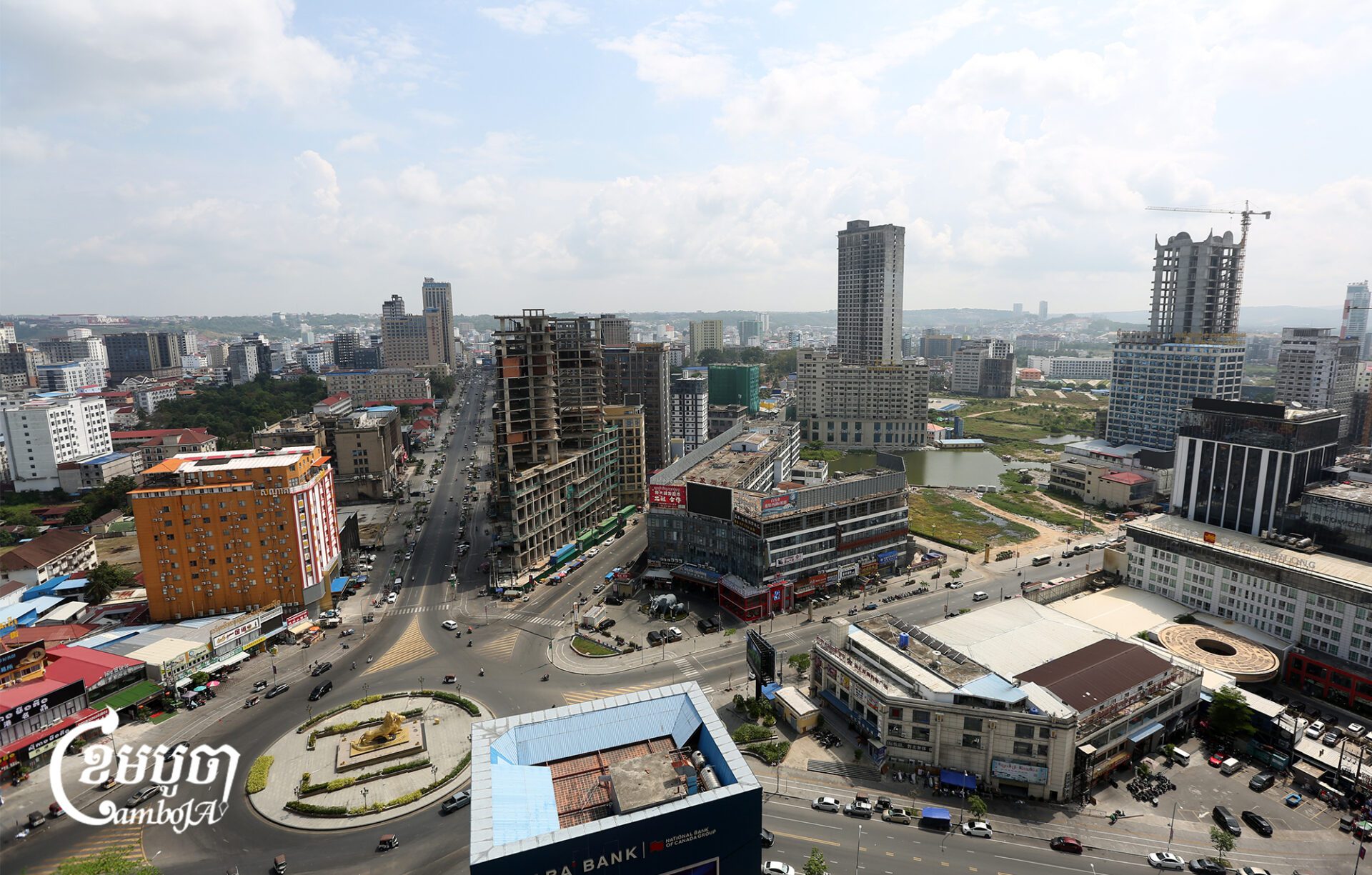
Sihanoukville is struggling to regain momentum. Once driven by Chinese investment, Cambodia’s coastal hub now faces a stalled construction sector, hit by weak capital inflows and uncertainty linked in part to an ongoing crackdown on online scam operations.
The city, one of Cambodia’s most populous, attracted a surge of Chinese investment in the mid-2010s.
Fueled by waves of Chinese capital, Sihanoukville experienced a construction frenzy, with thousands of high-rise buildings rising across its skyline. The boom also drew transnational crime syndicates, turning the city into an epicenter for gambling, online scam and trafficking networks.
But the building surge ground to a halt during the COVID-19 pandemic. Many investors returned to China, leaving thousands of commercial projects unfinished.
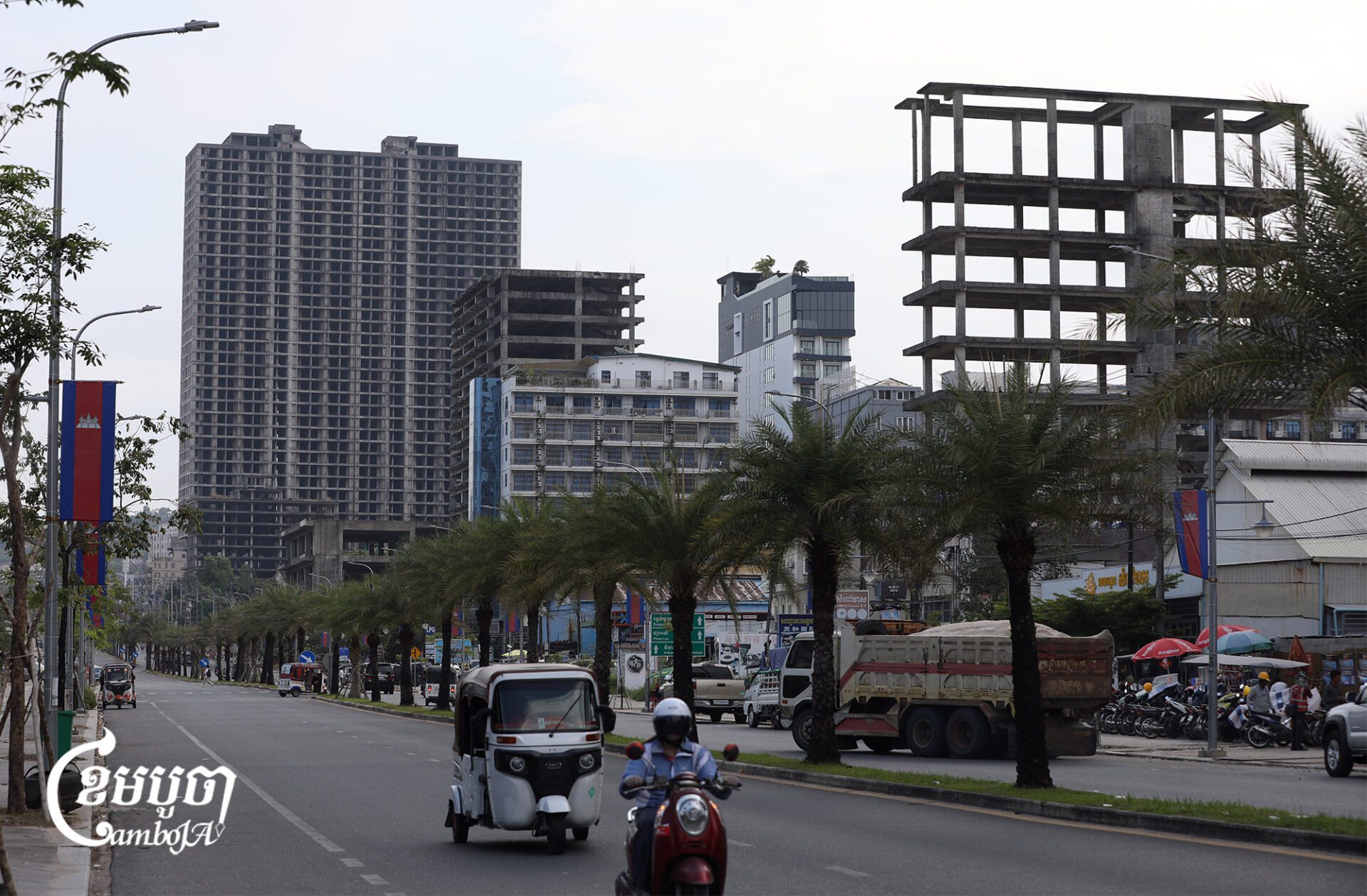
Concrete shells now sit idle on land owned by Cambodian residents, many of whom are working with local authorities to dissolve stalled contracts. Some agreements have already been terminated, allowing landowners to lease or sell their property to new buyers under initiatives such as the Sihanoukville Special Investment Promotion Program launched by the government in 2024.
Yet recovery in legitimate investment remains uncertain. Several landowners in the city told CamboJA News that investor interest is still weak, citing broader regional and global economic challenges. A second wave of Chinese departures following an anti-scam crackdown has also hit the local economy, which had come to depend on the flow of workers tied to the illicit trade.
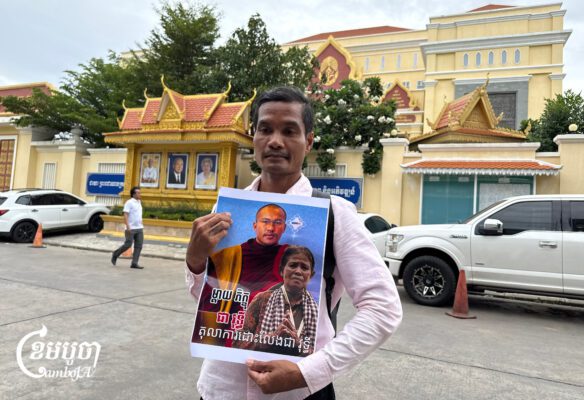
“It has been a while since late 2025, when they cracked down on scam operations,” said Sar Muywang, whose family leased land to a Chinese developer for a nine-storey residential building in 2019. “Many Chinese residents left, and a large number of investors also did. Now, there are very few investors.”
Muywang said her family had considered completing the building on their own but lacked the financial resources to do so. They hope a new investor will step in to revive the project.
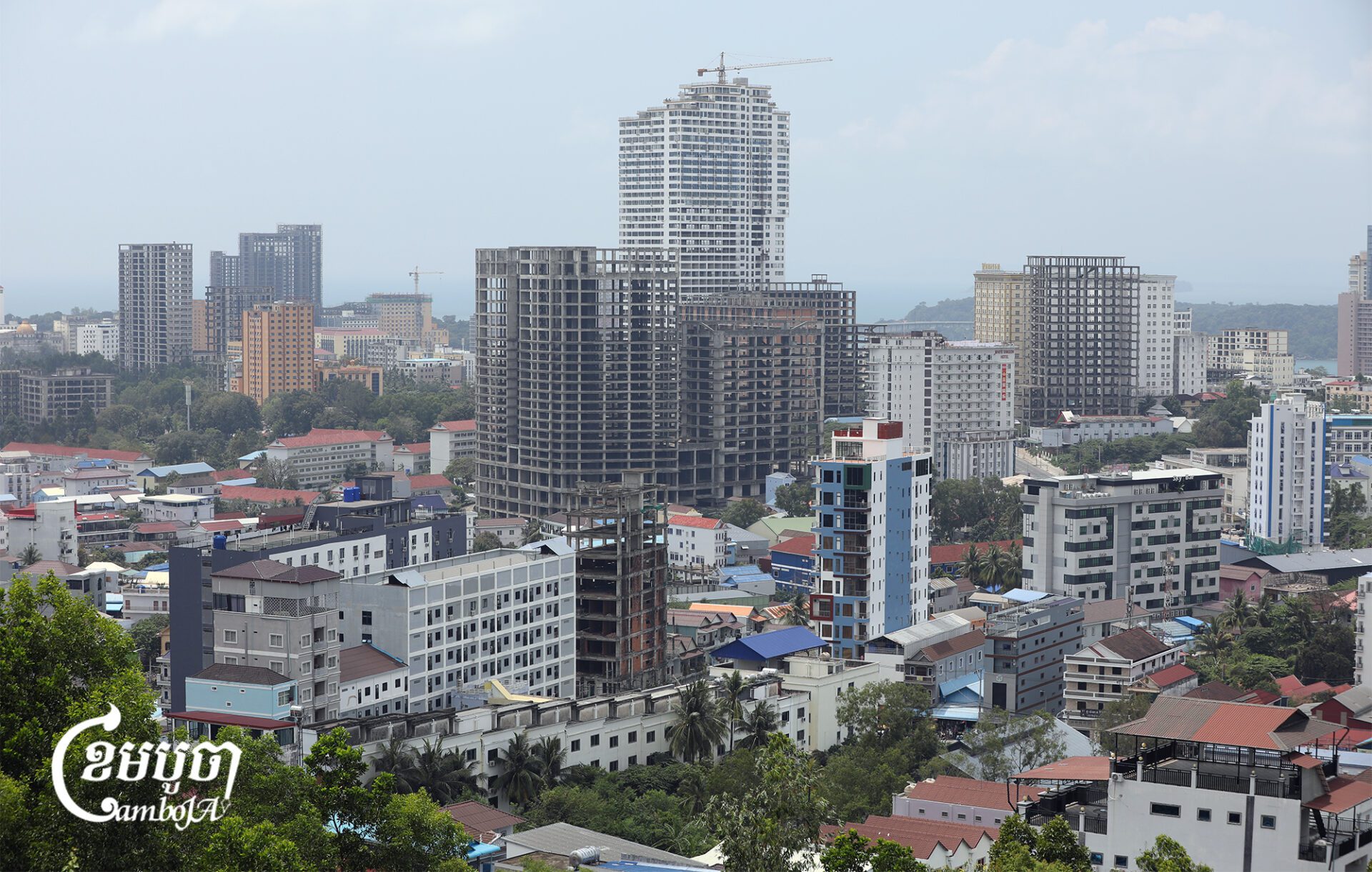
When a CamboJA News visited the site in early March, the ground floors of the unfinished building had been rented out to workers and vendors, who had converted the space into makeshift homes. Around Muywang’s lot, several other buildings stand empty, while some remain under construction.
“We are concerned about investment in construction. We hope that the government can resolve the issue and help the people so that more investors can come,” Muywang said.
The government launched the Sihanoukville Special Investment Promotion Program more than two years ago to revive investment in the city and the wider province. Officials say the scheme aims to restart unfinished buildings, accelerate new projects and expand existing businesses. The program has been extended to 2027, with authorities citing infrastructure upgrades and investor incentives to attract new capital.
In March, Hean Sahib, chair of the program’s working group, said that from 2024 to February this year, “incentive policies” were approved for 467 projects in the province worth $8.18 billion, including 209 linked to unfinished structures.
It is unclear how much of that capital has gone toward completing stalled projects. In 2024, Radio Free Asia reported that around $1.2 billion would be needed to finish hundreds of unfinished buildings in the city.
But property experts say the investment drive remains limited, citing issues including the quality of incomplete structures and a downturn in China’s real estate sector.
Chea Kimsea, research and consulting services manager at Advantage Property Services, said the program has delivered some results but its overall impact remains constrained.
Some stalled buildings have been completed, he said, but many remain idle or under construction, with others abandoned. He cited about 400 stalled buildings in downtown Sihanoukville, a figure discussed at a meeting with officials he attended.
He added that two main challenges remain: the structural quality of unfinished buildings and the property downturn in China, where most of the city’s investment originates.
The quality of many stalled buildings was weakened by lax oversight during the construction boom, Kimsea said. “Therefore, the quality of these remaining buildings has become an obstacle, making it difficult to resell to new investors to continue construction.”
He noted some progress, but said regaining development momentum would be a “very long and tiring process.”
The Sihanoukville Special Investment Promotion Working Group and provincial spokesperson Long Dimanche did not respond to requests for comment by the time of publication.
Sok Khim, a Sihanoukville resident who leased his land to a Chinese investor in 2020, said the investment promotion program has helped revive some unfinished projects, but economic uncertainty and the decline of “online gambling”, widely associated with the city’s illicit economy, have dampened new investment.
He added that an investment team visited his site a year ago, but he has received no update since.
Another landowner, Cheat Sokvorn, said “no one wanted to invest during this time due to economic conditions in the region and globally.”
At the same time, Sihanoukville’s association with scam compounds has weighed on investor confidence from other countries, while the government’s campaign to eradicate the illicit industry by April has also hit the local economy, a dynamic authorities have acknowledged.
Since July last year, about 250 scam sites and more than 90 casinos, many in Sihanoukville, have been shut, authorities said. Thousands of foreigners, many believed to have been trafficked into scam operations, have been deported.
Kimsea said the crackdown on online scams has also contributed to the market downturn.
He said scam compounds had supported building occupancy rates and formed a significant part of Sihanoukville’s economy.
“Those suspended buildings will be able to continue construction only if there is demand in the market,” he said. “The elimination of online scam centers will cause a decline in market demand, which is why those stalled projects are also partially affected.”
He added that eliminating scam compounds is a move in the right direction and that the market will adjust to new, more practical demand.
The strain is also being felt by local day laborers.
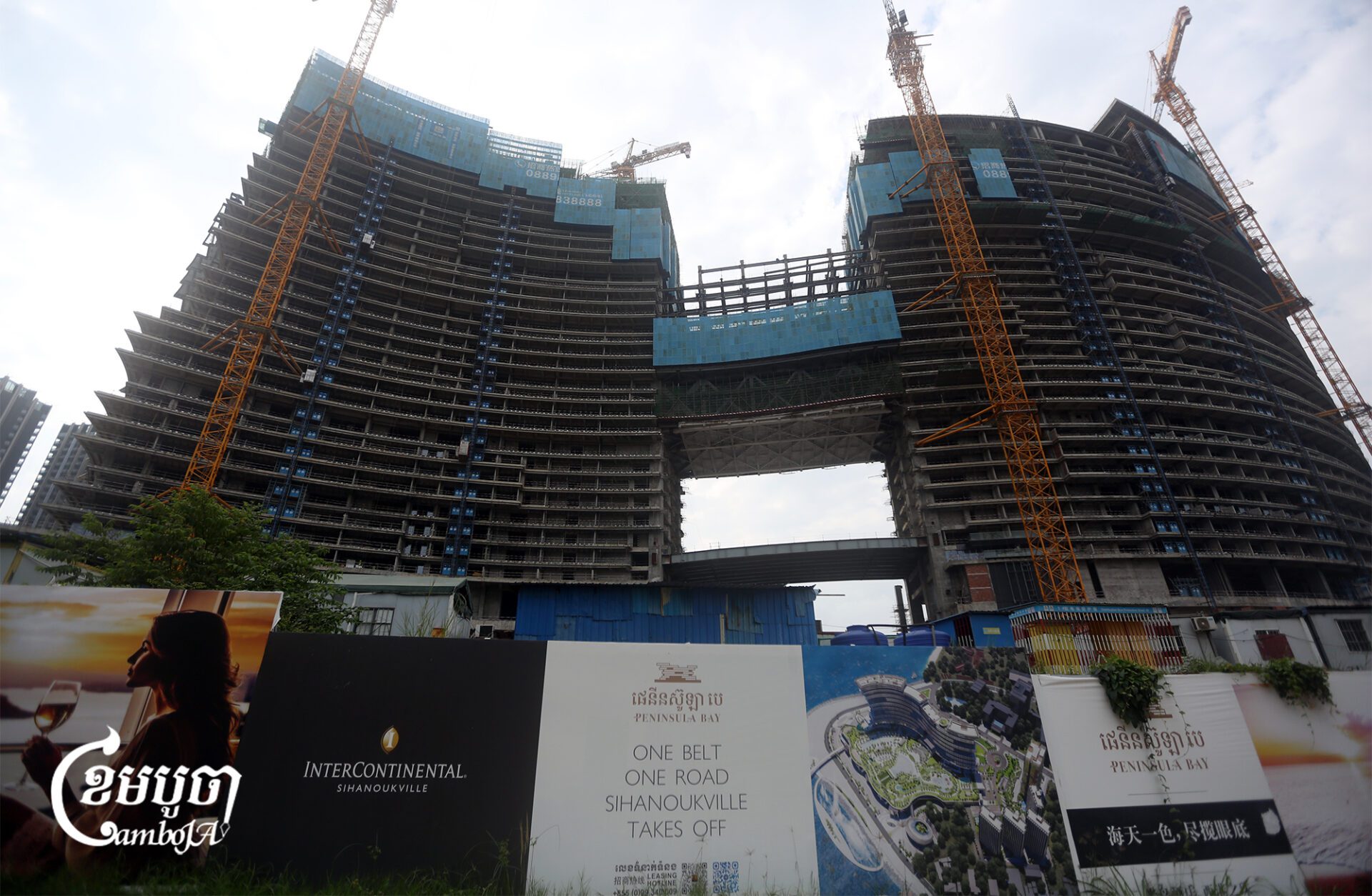
A CamboJA News reporter spoke with Sim Socheat in early March, one of several construction workers recently recruited to resume work on a building abandoned since the pandemic. She said it had been difficult to find jobs at construction sites due to the decline in projects following the shutdown of “online jobs,” a term often used by Cambodians to refer to online scam work, but she was glad to have secured work in the coming weeks.
When contacted again on April 9, she said construction had been canceled after the Chinese man renting the building was shot dead. Socheat could not confirm the man’s involvement in organized crime, but the killing follows a pattern of violence linked to illegal gambling and scam operations in the city.
Kimsea meanwhile said the construction sector in Sihanoukville continues to move forward, but at a slower pace than before the pandemic.
He pointed to major ongoing projects such as the $1 billion Peninsula Bay development, which includes hotels, shopping malls and entertainment facilities and is scheduled for completion in 2028.
“We expect the construction sector to continue to grow at a slow pace but will never return to its pre-COVID-19 level. However, through current government interventions, we hope to see positive results and renewed hope in the future,” he said.