Listen to the audio version of this article (generated by AI).
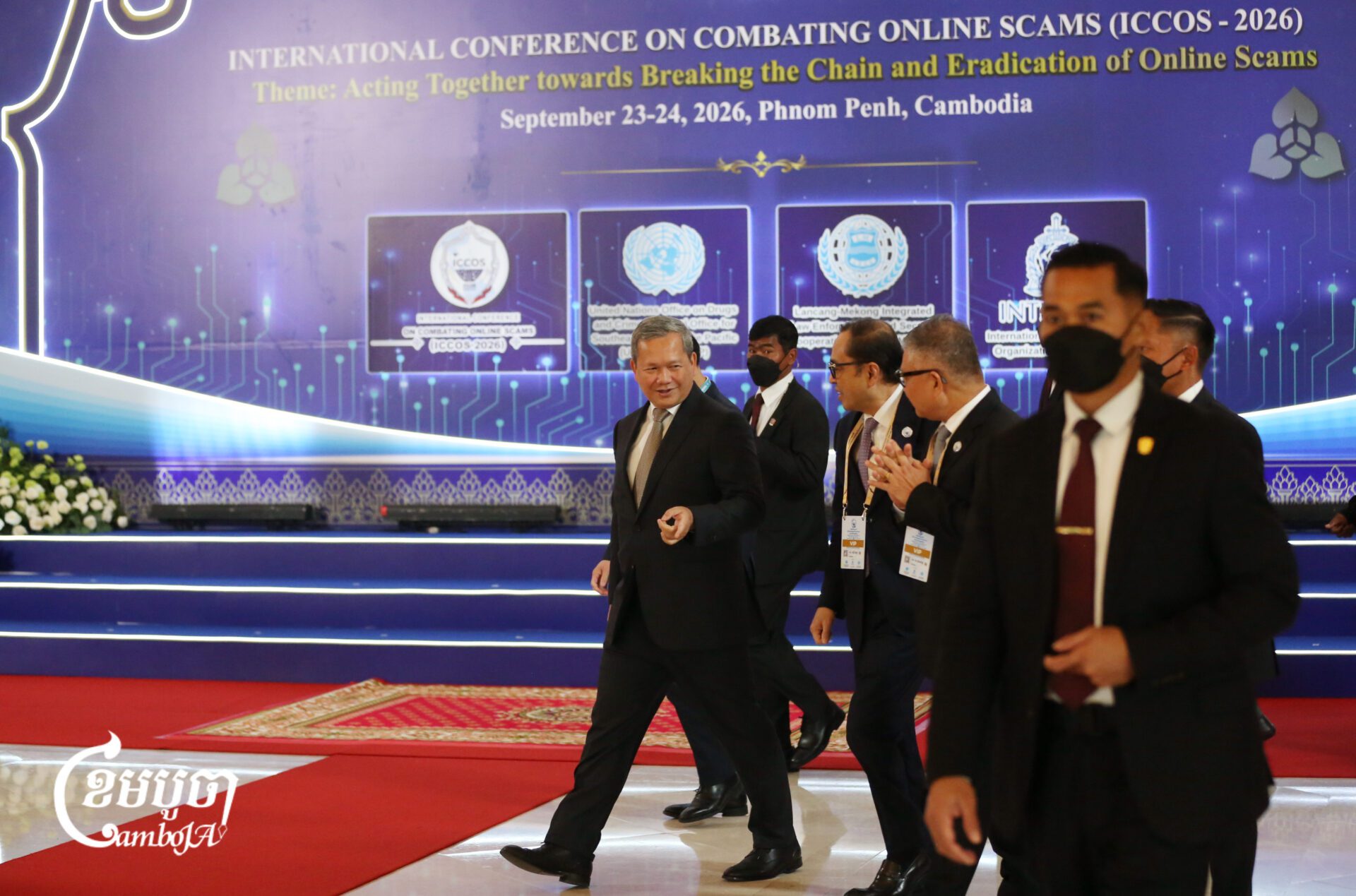
Prime Minister Hun Manet said on Wednesday that fighting transnational crime requires “acknowledging systemic vulnerabilities,” as Cambodia opened a global anti-scam conference to showcase its crackdown on a multibillion-dollar industry it became a hub for.
The conference comes as two U.S. House committee chairs push for an investigation into whether senior Cambodian officials, including two of the event’s speakers, should be sanctioned over alleged links to scam operations.
“True leadership and effective governance demand that we confront pressing challenges with clarity and resolve,” Hun Manet said. “Confronting this emerging transnational crime requires the courage to accept hard truths directly.”
He repeated the government’s statement from last month that all large-scale scam compounds in the country had been dismantled, and said authorities remained vigilant as criminal syndicates shifted to smaller, decentralized operations.
The prime minister also called for stronger international law enforcement cooperation and more oversight from technology companies. He said the industry “did not begin in Cambodia” and was linked to the growth of online gambling and “casino-related businesses” in the country.
Delegates from more than a dozen countries, including the United States and China, are attending the two-day International Conference on Combating Online Scams in Phnom Penh. The event follows more than a yearlong crackdown by authorities on an industry that generates tens of billions of dollars a year and that the United Nations estimated in 2023 relied on the forced labor of up to 100,000 foreign nationals in Cambodia alone.
On Monday and Tuesday, reporters were taken on a tour of sprawling compounds that authorities said had housed scam operations and as many as 20,000 workers. They were also shown materials seized by police, including fake FBI and Chinese police badges allegedly used in impersonation scams.
Some analysts remain skeptical of the crackdown, saying it has left high-level figures untouched, including some sanctioned by the United States over alleged involvement in scam operations.
Delphine Schantz, the U.N. Office on Drugs and Crime’s regional representative for Southeast Asia and the Pacific, said the conference showed Cambodia’s commitment to international cooperation against online scams. But she said more needed to be done at the national, regional and international levels to understand the evolving crime, protect victims and anticipate new trends.
Schantz said the region’s scam industry was shifting to a model that “looks like corporate franchising: specialized departments for money laundering, trafficking people, smuggling migrants, and harvesting data.”
“This makes it the same or even more difficult for law enforcement to separate victims from perpetrators,” she said.
Nicholas Court, director of INTERPOL’s Taskforce Coordination Directorate, said fraud-related notices received by the organization had risen by more than 50% in the past two years, and that fraud remained the world’s most significant crime by volume. Citing Global Anti-Scam Alliance data, he said more than $1 trillion is lost to fraud each year.
“We know that the numbers of arrests are going up, the numbers of victims are sadly going up, and the value of losses is going up. But fraud is not simply a matter of numbers,” Court said.
Stephen Flores, a senior FBI official, said online fraud “does not respect borders” and stressed the need for cooperation among governments. Yang Weilin, China’s vice minister of public security, said China was ready to work with other countries to fight online fraud, including by sharing information.
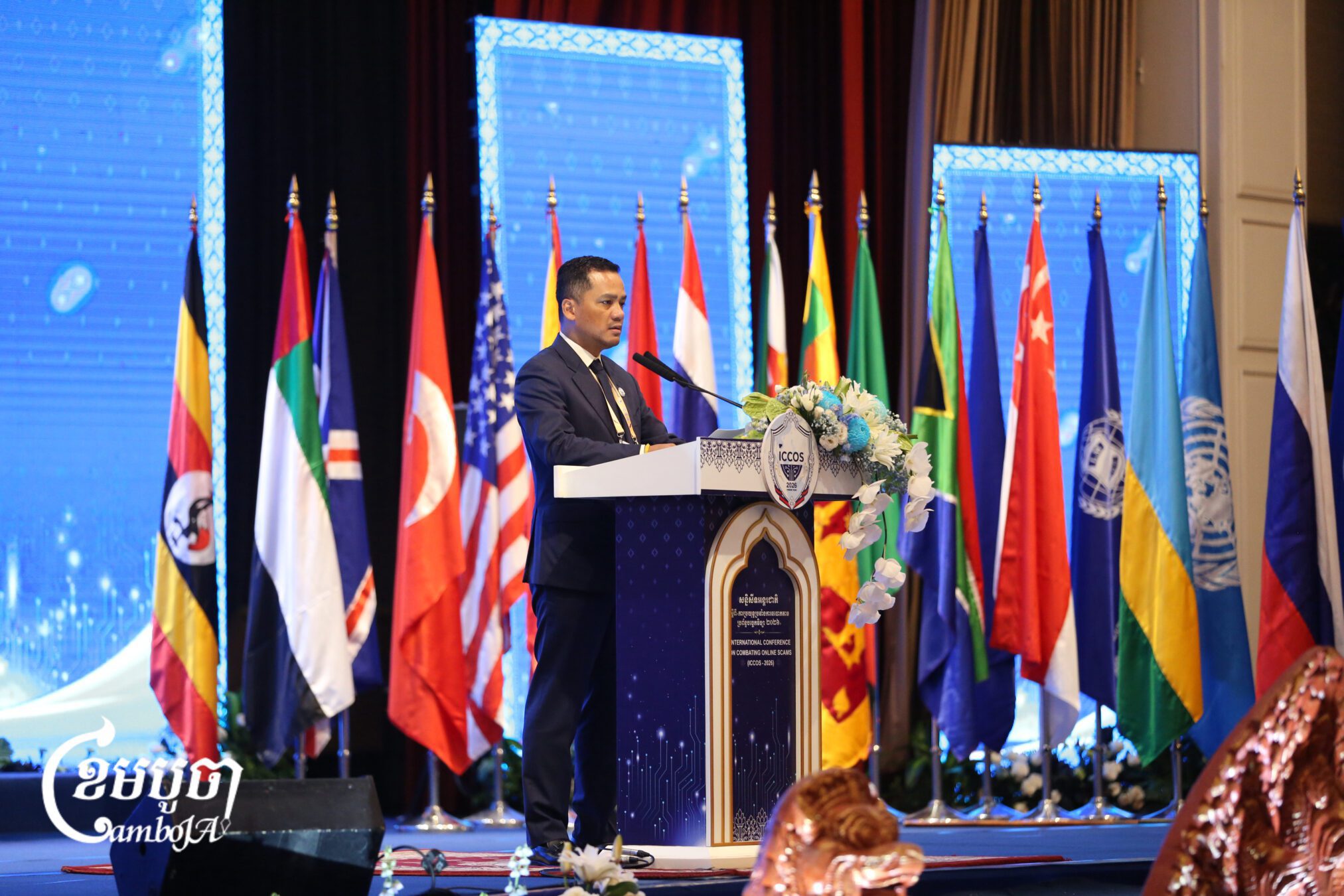
As the conference moves to panel discussions before closing on Thursday, some of its Cambodian speakers remain under scrutiny in Washington. Last week, two U.S. House committee chairs called for an investigation into whether 26 individuals and two entities should be sanctioned over alleged links to scam operations.
Those named include Interior Minister Sar Sokha and Deputy Prime Minister Neth Savoeun, who is due to deliver the conference’s closing remarks.
Sokha told the conference that from July 2025 to June 2026, authorities cracked down on 665 scam sites and sent nearly 2,800 suspects to court, with 2,200 of them held in custody. More than 21,000 foreigners were deported over the same period, he said.
He said Cambodia had used “all means and comprehensive measures” against scams, and that while the crackdown had weakened criminal networks, syndicates had splintered into smaller groups operating covertly within communities.
Sokha did not address the U.S. lawmakers’ call in his remarks. He has denied wrongdoing.
(Additional reporting by Khuon Narim)