Listen to the audio version of this article (generated by AI).
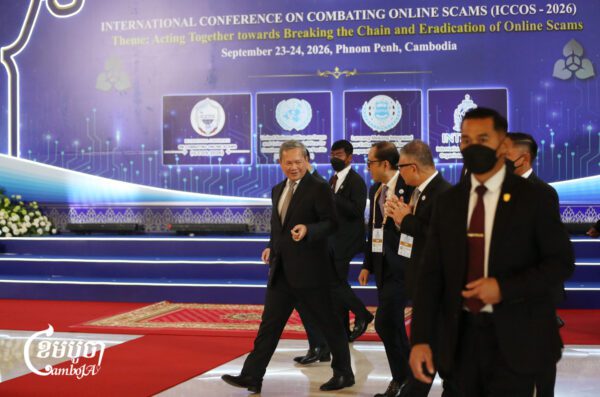
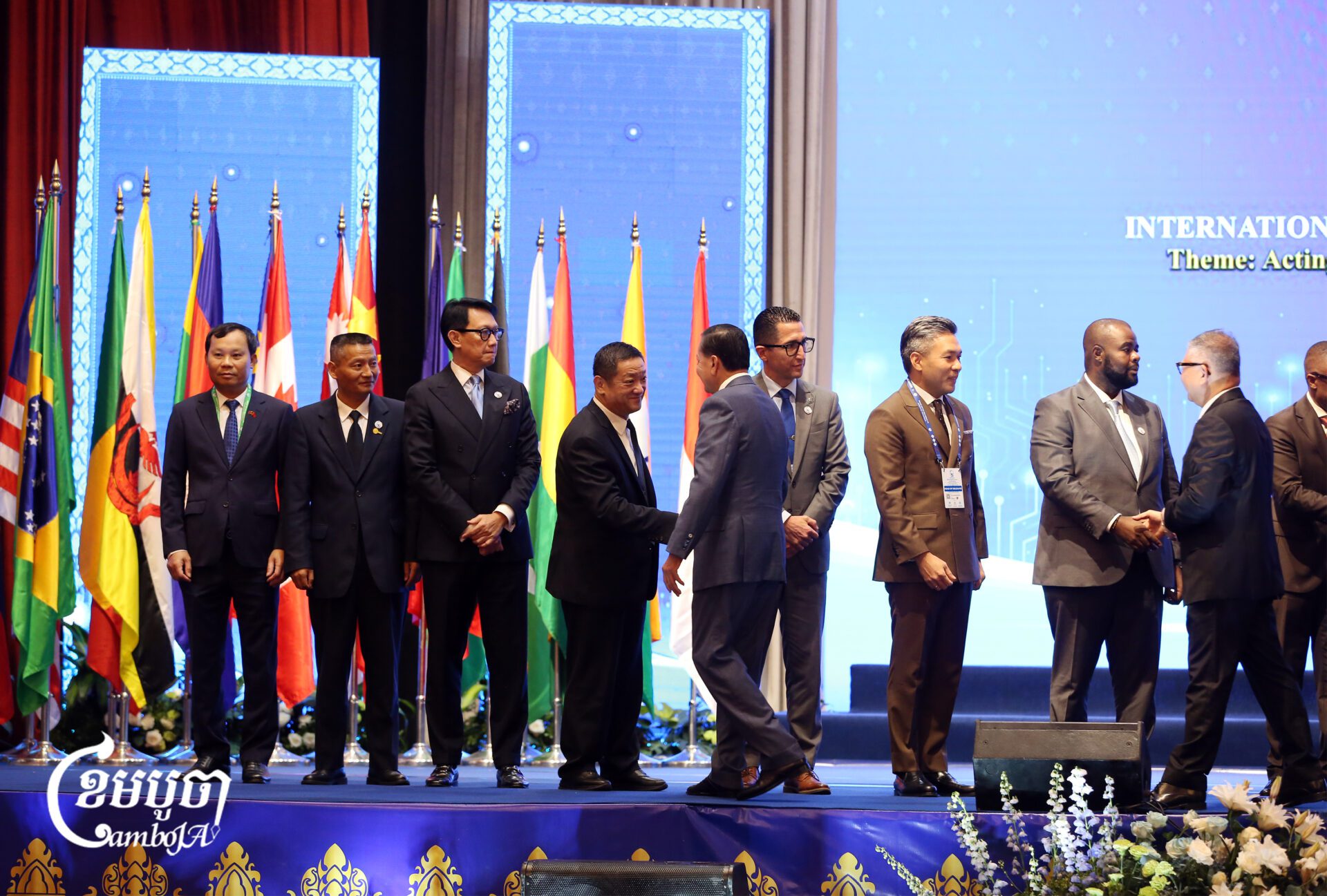
Cambodia wrapped up its international anti-scam conference Thursday, with delegates from dozens of countries agreeing to step up cooperation to target fraud networks and protect victims trafficked into the industry.
Deputy Prime Minister Neth Savoeun closed the conference, which was overshadowed by a call last week from the chairs of two U.S. House committees for the Trump administration to investigate whether he, Interior Minister Sar Sokha and dozens of others should be sanctioned over alleged links to scam operations.
“There is one critical point I believe we all recognize: no single country can successfully combat tech-based scams alone. International cooperation is essential,” Savoeun said.
Savoeun did not address the U.S. lawmakers’ call in his remarks, nor did Sokha when he opened the conference. Sokha has denied any connection to scam networks.
Savoeun, a former national police chief, said delegates, including ministers from across the region and senior officials from the FBI and China’s Ministry of Public Security, shared their experiences responding to cyber scam crimes. He said they discussed challenges and emerging trends, building resilience and cybersecurity, and developments in AI technology, financial investigations, infrastructure and human trafficking networks.
The conference was announced after more than a year of crackdowns by authorities on vast online scam networks in the country following international pressure. The illicit industry has run rampant in Cambodia, Myanmar and Laos in recent years, generating tens of billions of dollars annually and often relying on forced or coerced labor. The United Nations estimated in 2023 that scam operations in Cambodia alone relied on the forced labor of up to 100,000 foreign nationals.
Some analysts remain skeptical of the crackdown, saying it has left high-level figures untouched, including some who have been sanctioned by the United States over alleged involvement in scam operations.
After panel discussions Thursday, which the Information Ministry told journalists were not for attribution, the Justice Ministry announced a declaration with 11 voluntary, nonbinding points for participating countries to implement under their domestic laws.
The points include commitments to share information, seize scam proceeds and protect trafficking victims. People forced into scam work would not be punished for resulting crimes, unless they voluntarily return to compounds after being rescued.
Britain and Cambodia also signed a memorandum of understanding Wednesday to deepen cooperation against online scams, fraud and transnational organized crime.
Bryony Lau, deputy Asia director at Human Rights Watch, said Thursday that “Cambodian authorities should bolster the screening and identification of trafficking victims who have been released from cyberscam compounds and help them return to their home countries.”
“Authorities should ensure these abusive compounds don’t return to Cambodia by transparently and independently investigating ruling party lawmakers and prominent business figures who have been implicated in cyberscam operations,” she said.
Interior Ministry deputy spokesperson Touch Sokhak said nearly 470 foreigners found to be in Cambodia illegally and involved in online scams are being held at detention centers pending deportation. Most are Indonesian, he said. He did not say whether any are trafficking victims.
Responding to rights groups’ concerns about protections for potential trafficking victims caught in raids on scam centers, Keng Somarith, a secretary of state at the Justice Ministry, said Cambodia is not the only country struggling to identify victims and that others in the region have reported similar difficulties.
“To determine if someone is a victim, they must first come forward to file a complaint against the perpetrator or ask for help in investigating and recovering their assets. Only then can we know who the victim is,” Somarith said.
He declined to say how many trafficking victims Cambodia identified in scam compounds it shutdown, saying the cases are still before the courts.