Listen to the audio version of this article (generated by AI).
Indigenous communities in Ratanakiri province called on the Ministry of Land Management on Thursday to finalize the return of more than 700 hectares of land they say was cleared by a Vietnamese agribusiness.
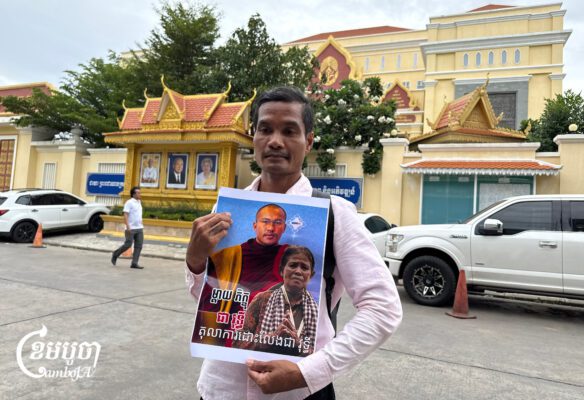
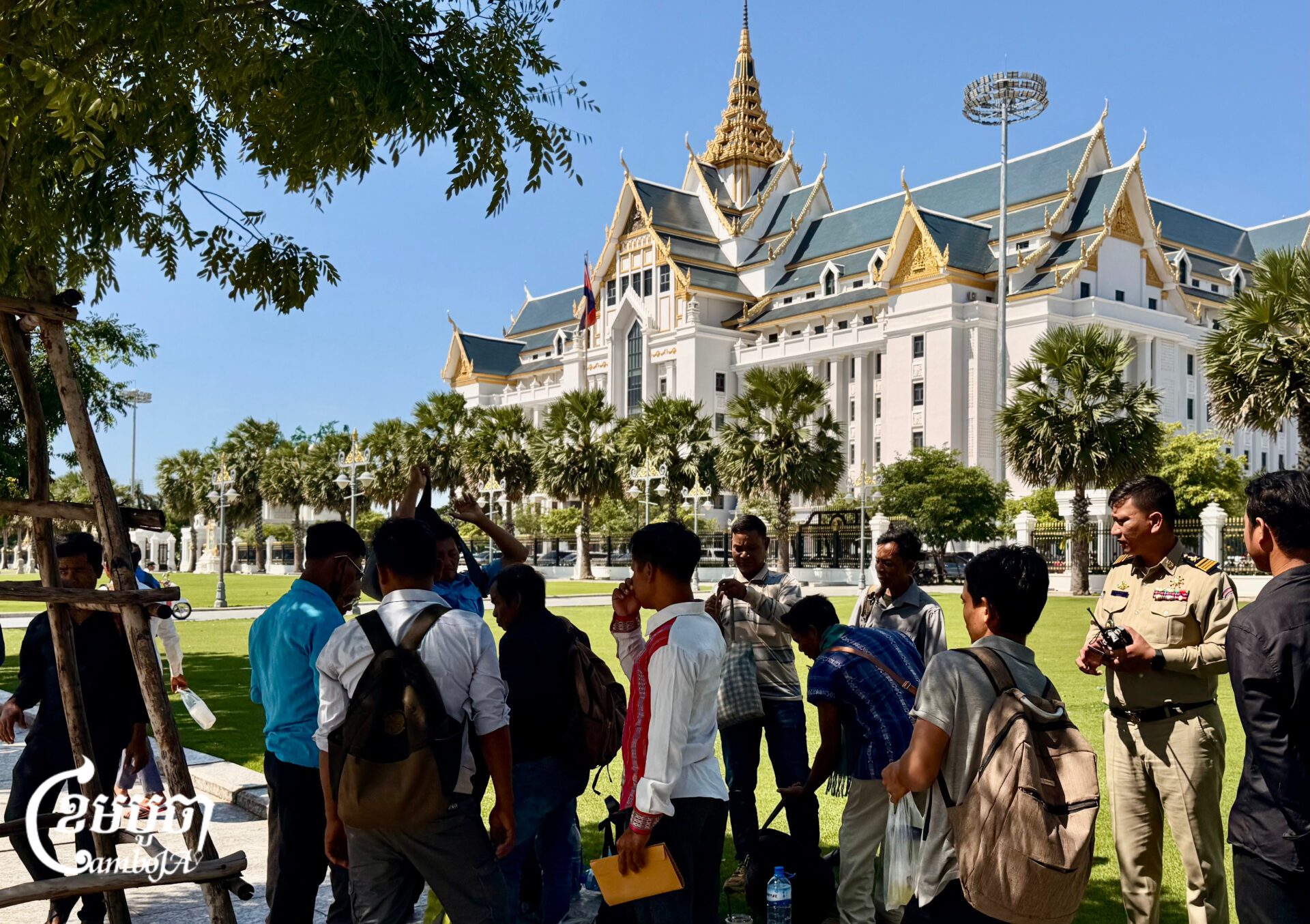
Representatives of more than 2,000 families from several Indigenous villages traveled to Phnom Penh to press the ministry to honor what they described as a January agreement with the provincial governor, national officials and Hoang Anh Gia Lai Agriculture (HAGL) to finally restore access to the land.
“Our main goal is for the ministry to facilitate the return of the land to the community as soon as possible because it has been delayed for too long,” said Sal Tha, a Kachok person from Andoung Meas district in Ratanakiri.
He said that the company, the Agriculture Ministry and the provincial governor originally agreed to return the land to residents from a dozen villages in Talao commune back in 2024.
“Even when someone dies and we need land for a burial, we are prohibited from using the land. We are facing so many difficulties. I just want to cry,” he said.
Seng Lout, spokesperson of the Ministry of Land Management, Urban Planning and Construction did not immediately respond to a request for comment. HAGL also did not respond to a request for comment.
The company, which has handed operations over to the agribusiness arm of another Vietnamese conglomerate, THACO, became embroiled in a land conflict with the communities in 2010, when it was granted a land concession by the government to develop large-scale rubber plantations.
The communities filed a complaint with the International Finance Corporation in 2014, which was accepted and has since been the subject of dispute resolution facilitated by the Compliance Advisor Ombudsman (CAO), the IFC’s independent accountability mechanism.
In June 2024, the parties signed a Memorandum of Understanding under which HAGL agreed to return more than 700 hectares of land to the affected communities. The agreement also included provisions to resolve a remaining dispute over 20 hectares and address the communities’ request for financial support.
Sev Chenda, a Jarai person from Ratanakiri, said delays in resolving the land dispute continue to affect his livelihood, religious practices and traditional customs.
“It is difficult to access our farms because when we pass through the company’s land, they accuse us of damaging their crops,” he said.
Ratanakiri provincial governor Nhem Sam Oeun did not immediately respond to a request for comment.
Eang Vuthy, executive director of land rights group Equitable Cambodia, said the dispute has already reached an agreement in principle, but the land must still be formally allocated, since the transfer requires approval by the prime minister.
“What remains is the final decision by the government and other relevant parties,” Vuthy said. “If the government resolves the issue quickly in line with the communities’ request, it could also serve as a model for resolving similar disputes.”