
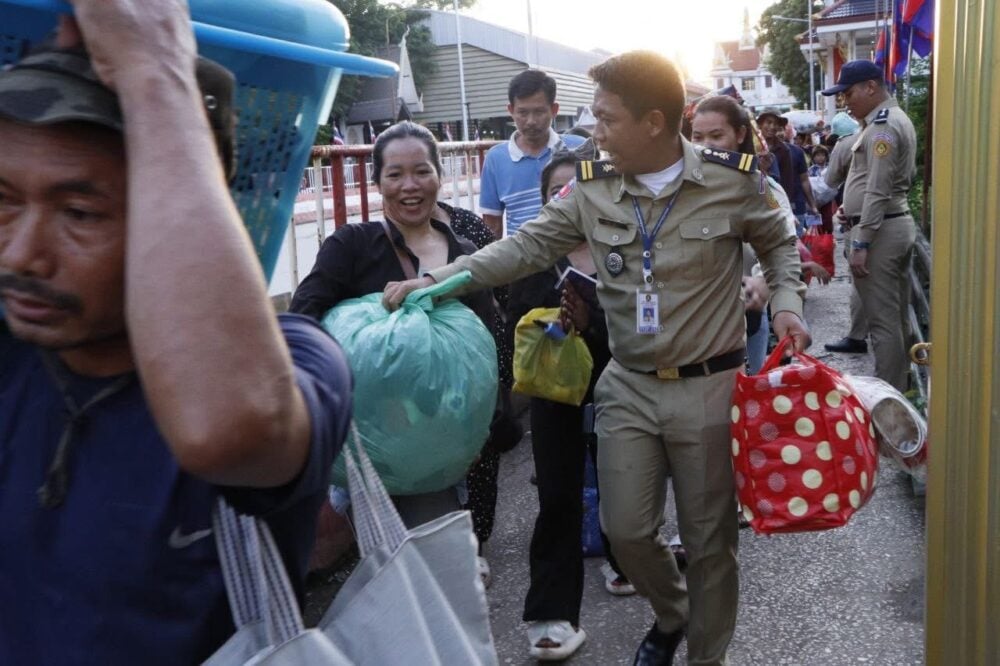
More than 6,000 people, mostly Cambodian migrant workers, have returned from Thailand via Poipet International Checkpoint, after the closure of all border crossings following the May 28 fatal clash with Thai troops near the Emerald Triangle — an incident that has sparked diplomatic tensions.
A senior official from Banteay Meanchey province reported that Cambodian workers, foreign and local tourists, and Thai citizens were stranded at the Poipet checkpoint when the Thai military announced a unilateral closure of all gates bordering Cambodia and Thailand.
However, both sides negotiated and agreed to allow citizens to return to their respective countries on the evening of June 24, 2025.
Banteay Meanchey provincial deputy governor Ly Sovannarith told CamboJA News on Wednesday that 6,485 people, including vendors and migrant workers, crossed the Poipet checkpoint between 5 p.m and 6 p.m on Tuesday evening.
Thai authorities temporarily reopened the border crossing for that period to allow migrant workers to return. Work groups facilitated the process and transported them to their respective provinces until midnight, he said.
“The majority of them are migrant workers,” Sovannarith said, adding that the workers who returned were mostly from Siem Reap, Kampong Thom, Phnom Penh, Koh Kong provinces.
All border checkpoints between Banteay Meanchey and Thailand remained closed on Wednesday (June 25) to people, with the exception of students and patients.
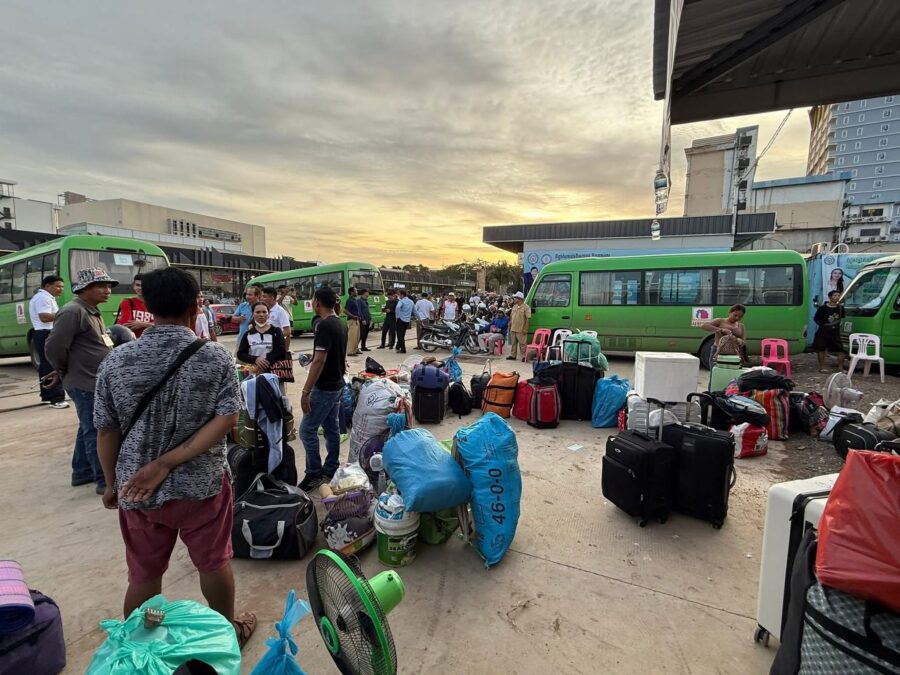
Regarding the return of migrant workers, government spokesperson Pen Bona said relevant authorities have organized to assist citizens, including laborers, and to ease the burden of microfinance debts for those returning from Thailand amid the ongoing tensions.
“The Royal Government of Cambodia is ready to welcome our citizens, including providing jobs. There are employment opportunities available due to the current labor shortage in the country,” he said.
Labor and Vocational Training Ministry spokesperson Sun Mesa said about 250,000 job opportunities are available across key sectors, such as agro-agriculture, business and industry. There are also technical and vocational skills training for workers to enroll in.
He added that the skill training programs cover 40 different areas. Workers in factories and enterprises are also entitled to benefits, including health insurance, workplace accident coverage, and pensions through the National Social Security Fund (NSSF).
Mesa pointed out that transit centers have been set up at all six international border checkpoints to give information and details on job vacancies to returning Cambodian migrant workers.
“When citizens arrive at the border crossings, we distribute brochures and relevant information to help them access jobs,” he mentioned.
Mesa emphasized that Cambodia’s economic sectors remain strong, with increased job opportunities as more factories and enterprises invest in the country.
Interior Ministry’s General Department of Immigration director Sok Veasna and the department’s spokesperson Sok Sumnea could not be reached for comment.