At the junction leading to Bou Sra Waterfall stands a wooden house surrounded by crops, such as avocado, banana, cassava and mango trees. The house has a small coffee stall that sells forest products, including honey, tree resin, vegetables, and fruits. This is the home of Roeurn Heng, a 40-year-old representative of the Bunong indigenous community.
Heng was born and raised under difficult circumstances after losing her entire family in the late 1990s.
She spoke about her painful past in a trembling voice. After her father died, Heng said, her mother and three siblings were killed by villagers who accused her mother of practising “black magic”. Heng was the only one who managed to escape the tragedy.
“They were taking us to be killed. All of us,” Heng told CamboJA News during an interview in her home in Sangkat Romnea, Sen Monorom in Mondulkiri province. “But I survived because I managed to run away. Four people died together on the same day.”
As an orphan living with disability, Heng said she endured discrimination, lacked proper shelter and warmth, and was deprived of basic rights other children enjoyed. Despite hardship, the Bunong indigenous woman was determined to protect her identity, beliefs and traditional culture of the Nglaev Krach community in her neighborhood, which is home to more than 120 families.

From being homeless to gaining a degree
Being orphaned at a young age left her without support or a stable home. She often slept under other people’s (stilt) houses or in abandoned farm huts, lacking proper food, shelter and medical care.
In 1993, when she was about eight years old, an older woman took her in out of compassion. Two years later, she went to live with a sports teacher, Leng Leap, who later enrolled her in Grade 1 at Hun Sen Monorom Primary School in Mondulkiri Province.
Heng has had a severe vision impairment in one eye since childhood following complications from measles and lymph node tuberculosis.
In 1999, she was sent to an orphanage supported by an international organisation, where she was able to continue her studies and receive proper care. But, she suffered discrimination and was ridiculed because of her family background and disability.
“The students I studied with in the centre and in school looked down on me,” she said.
Despite challenges, Heng persevered, and studied up to Grade 11. She had to stop although she wanted to continue studying. Instead, she took up sewing as the teachers at the orphanage thought it would be difficult for her to find work because of her physical condition.
Though reluctant, she abided by the arrangement made by the orphanage and moved to Phnom Penh for vocational training, but there she experienced difficulties finding a center that would accept her.
“They did not want to accept me because they thought that my visual impairment would hinder me from doing quality work,” Heng said.
After repeated rejections, one person finally allowed her to enroll for sewing lessons.
In between classes, she spent time learning foreign languages, believing that education was key to overcoming hardship. Two years later, she returned to Mondulkiri to start her life.
She worked at a foreign-owned shop selling handmade Bunong products to tourists, where she improved her language skills and gained experience through interactions with international visitors.
In 2008, driven by a desire to help her community, Heng trained as a preschool teacher and taught in Busra district. She also became a community tour guide in 2012. She kept improving herself, enrolling for an associate degree in English for Communication in Phnom Penh in 2015.
Now a member of the Cambodian Indigenous Women Association, Heng works as a tour guide in Mondulkiri and creates job and income opportunities for her community.
Soldiering on despite legal threats
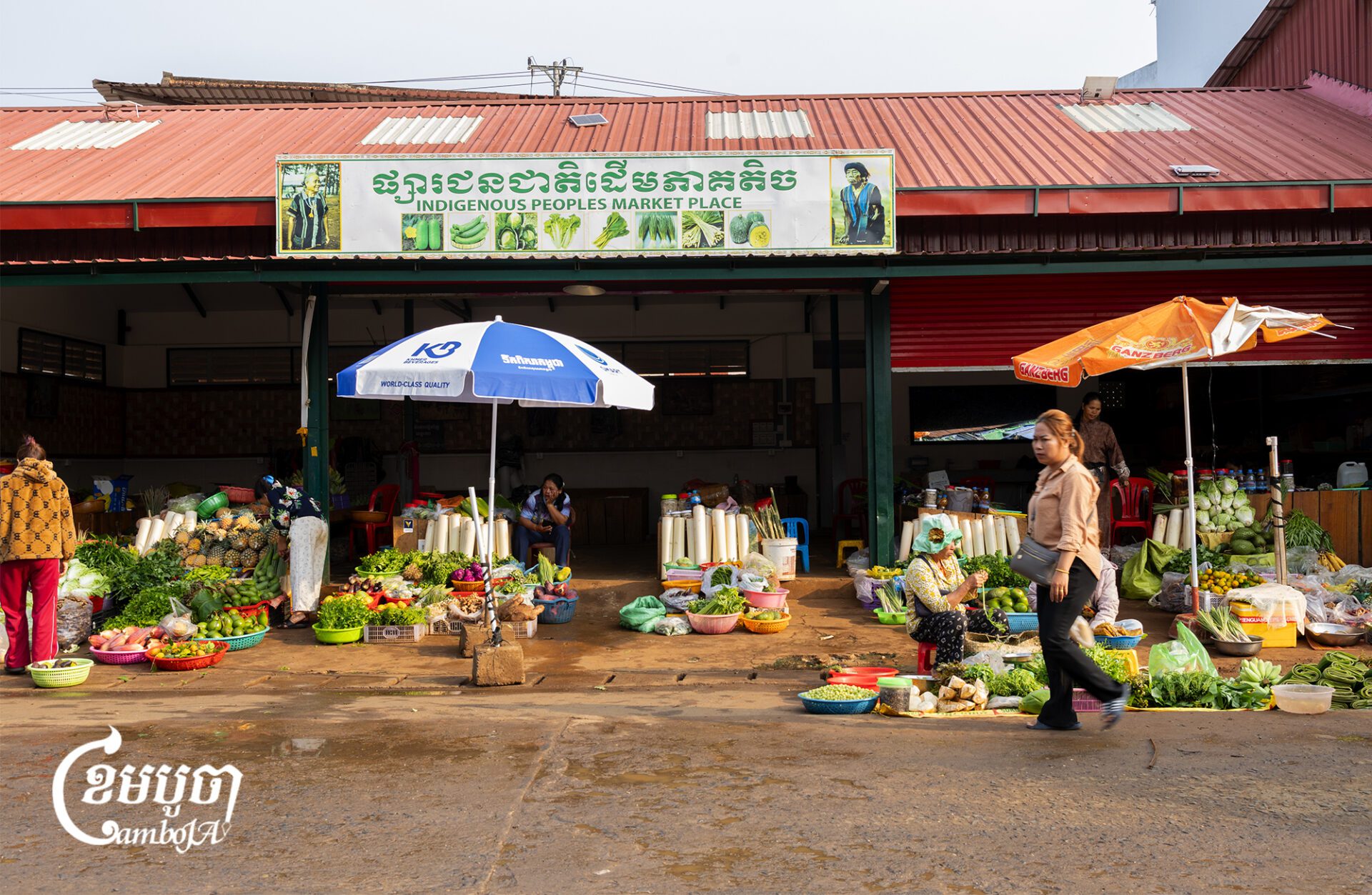
In 2024, she received an international award recognizing outstanding women. She used the prize money to support community development and an indigenous market where local communities could display and sell their products.
Heng said the recognition was given for advocacy work, particularly supporting women and defending indigenous rights.
“It is special because I am a person with a disability, and I have worked hard with others to protect our rights,” she said, adding that she works tirelessly to develop herself and contribute to her community.
“We protect our sacred forest, our communal land, and the rights of our indigenous people, especially those who are vulnerable and may be exploited.”
During the COVID-19 pandemic in 2019, the Bunong community’s sacred forest and identity were threatened by land disputes. She took up the issue, becoming a strong representative of the Nglaev Krach community. She also advocated the protection and return of Mount Radang, a sacred site for Bunong people, amid threats and pressure faced by community members.
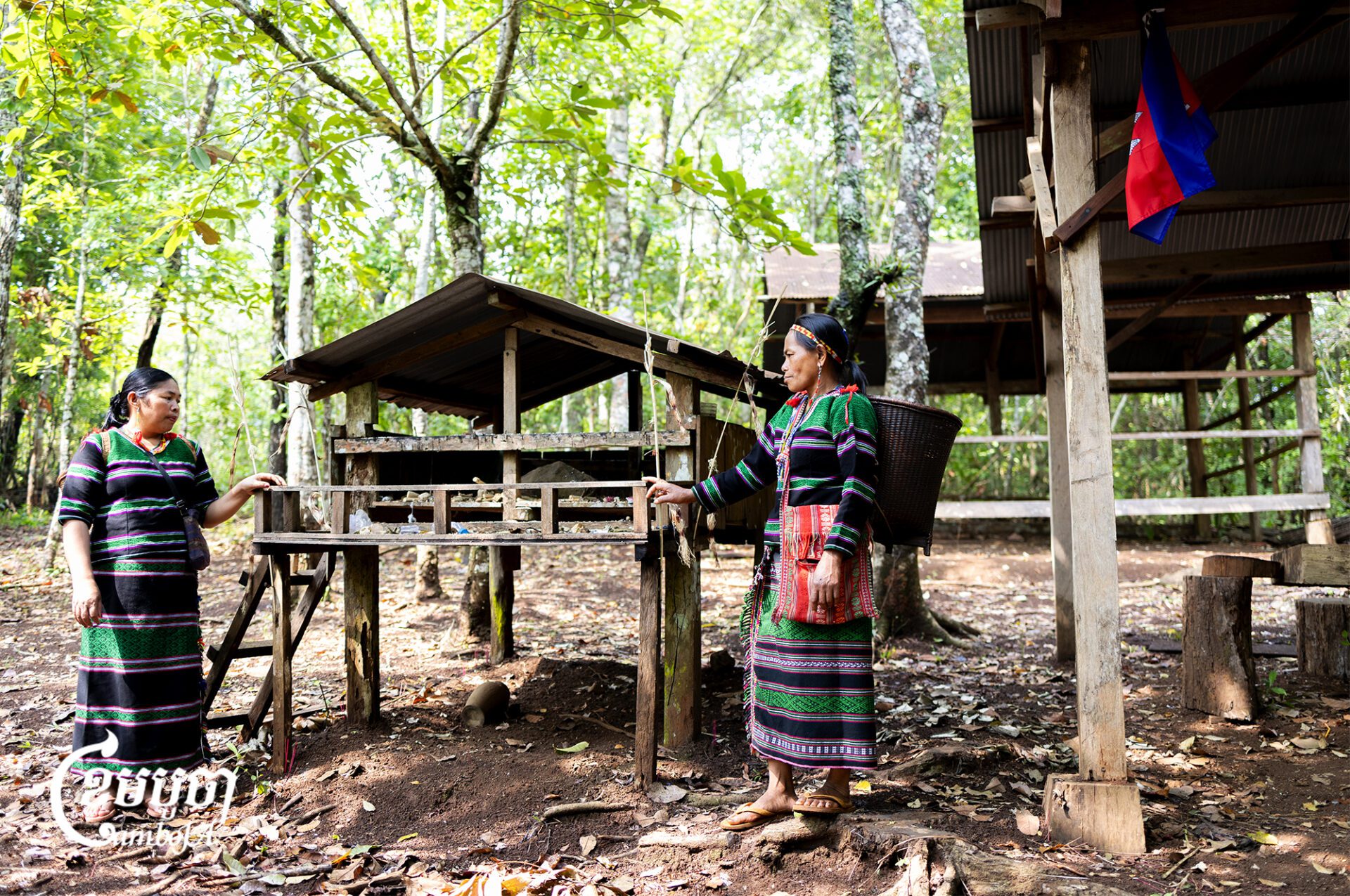
The sounds of wildlife ringing through the sacred forest on Mount Radang are so vivid, as Chan Na, a Bunong farmer and member of the Nglaev Krach community, speaks to CamboJA News during a visit to her place located close to a spirit shrine used for traditional rituals.
Along with Heng, she and other members work together to protect the forest and natural resources, which the communities depend on for income and livelihoods.
“We are constantly being sued,” she said. Despite threats and repeated legal complaints, Na, Heng, and other community members continue to protect their natural resources and community forest land, while striving to preserve the identity of the Bunong indigenous people for future generations.
According to a 2023 publication by the International Fund for Agricultural Development (IFAD) on Cambodia’s technical note on indigenous issues, indigenous communities continue to experience setbacks, including “loss of land due to abuses by powerful groups and exploitation of natural resources” through economic and social land concessions and other forms of development.
Preserving cultural identity
Sitting in a community dining area with other members after returning from forest patrol,Chaen Vanna, a member and committee representative of the Nglaev Krach community of the Bunong indigenous group, expressed his admiration for Heng’s dedication and perseverance.
“She makes sacrifices for the nation, for the people, and for future generations,” said the 58-year-old.
Cambodia is home to 24 different indigenous groups. In Mondulkiri province alone, there are eight indigenous groups, including the Bunong (Phnong), Jarai, Kuy, Krung, Krol, Stieng, Tampuon and Thmon. Together, they make up more than 50,000 people, accounting for approximately 55% of Mondulkiri province’s total population.
Vanna added that if more people like Heng existed in the community, it would be stronger and more resilient.
“It would be good if more people emulated her work. I think the community would not fall easily,” he said.
He added that with such engagement, the community would be able to preserve its cultural identity, traditional beliefs, and natural resources better in the long term, and not lose them easily.
The Bunong indigenous people in Pou Lung village and other communities in Mondulkiri province rely on community forest land for their livelihood. In particular, they depend on forest products to repay bank debts.
Rat Thavy, provincial coordinator for the Cambodian Human Rights and Development Association (ADHOC) in Mondulkiri, said without committed individuals like Heng who are willing to advocate and address community issues, society risks losing role models and ensuring that development does not benefit local people or communities.
He added that if the country wants individuals with strong commitment to continue their work, relevant stakeholders, the government must provide support.
“If there are legal complaints, we should also provide lawyers to defend them without charging fees,” he added.
‘Community can’t do without’
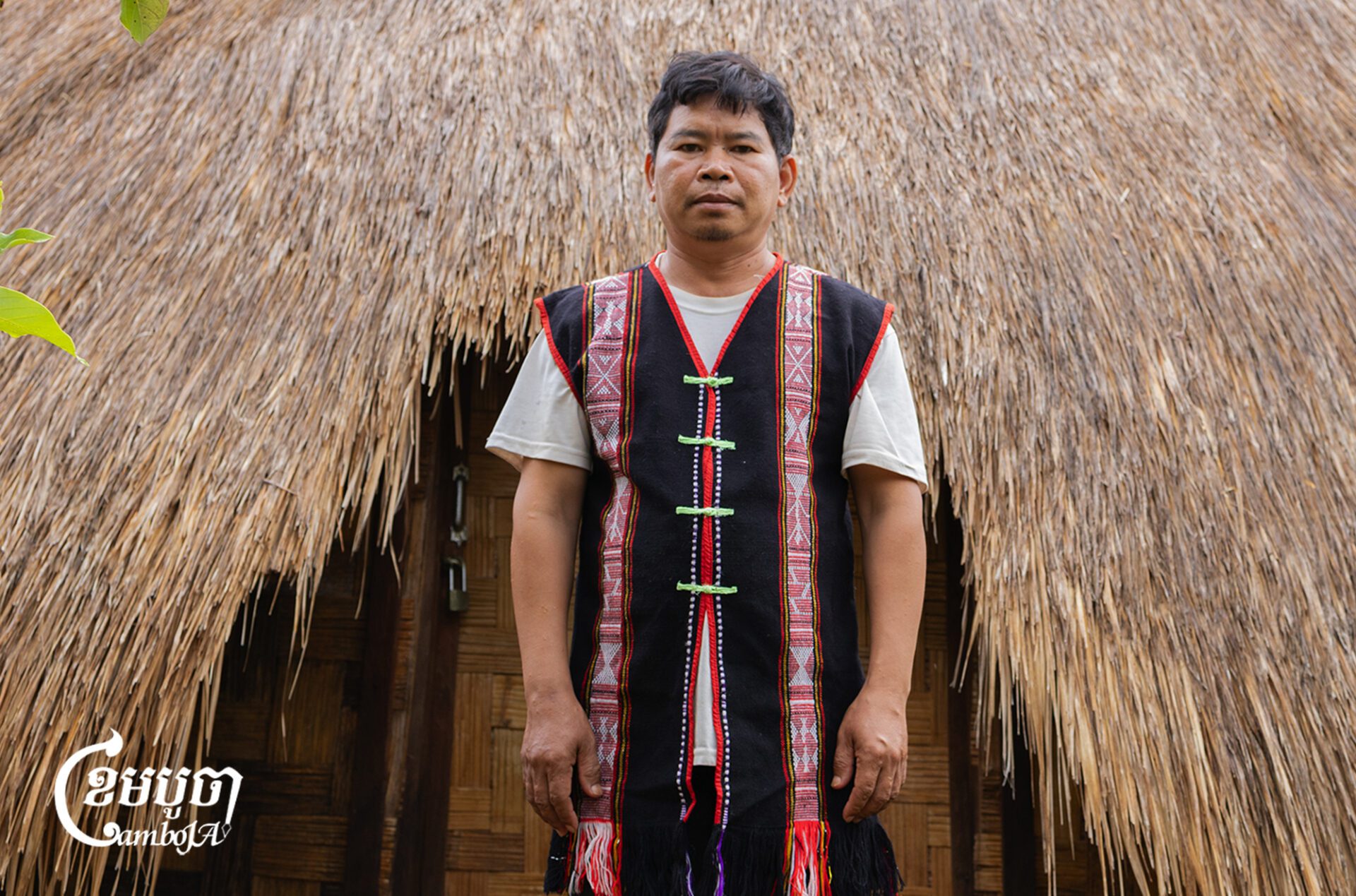
Boreth Kampy, deputy head of the Ping Brang Klang Pes Tho community forestry in Pou Les village, Dak Dam commune of O’Raing district in Mondulkiri, said Heng’s work has benefited not only her own community but also his community forest group and several others.
“She has made many sacrifices for the community and society as a whole,” he said. “She strengthens women’s groups so they can have jobs or learn to cook interesting food for tourists.”
Romnea commune Chief Phy Ngouk said the cooperation between the Nglaev Krach community and other indigenous groups in forest patrols, monitoring, and reporting illegal logging is important to protect shared resources. In addition, timely information from communities helps authorities intervene quickly and prevent forest crimes.
However, he said, the Nglaev Krach community is still only recognized as a community forestry group and has not received their collective land title status due to existing individual land registrations in the area. He added that full communal land registration can proceed once all legal requirements are met.
“The community is registered under a forest protection statute, not as a collective land title because much of the area has already been registered as private land. In Pou Lung village, about 80% of the land has already been formally recognized with titles,” he said.
Back in the village, Na said Heng is widely respected and valued by community members. “She is a person the community cannot do without.”
For Heng, the journey to where she is now is a testament to her own determination. Although it was never easy, it was shaped by encouragement and guidance from her leaders in the orphanage, her adoptive family, and teachers.
They provided emotional support and motivation that helped keep her on the path of growth to eventually representing the Bunong indigenous community.
“I was told I was capable, and they praised me. That made me feel less alone and know that they cared about me,” she said with a smile.