Listen to the audio version of this article (generated by AI).
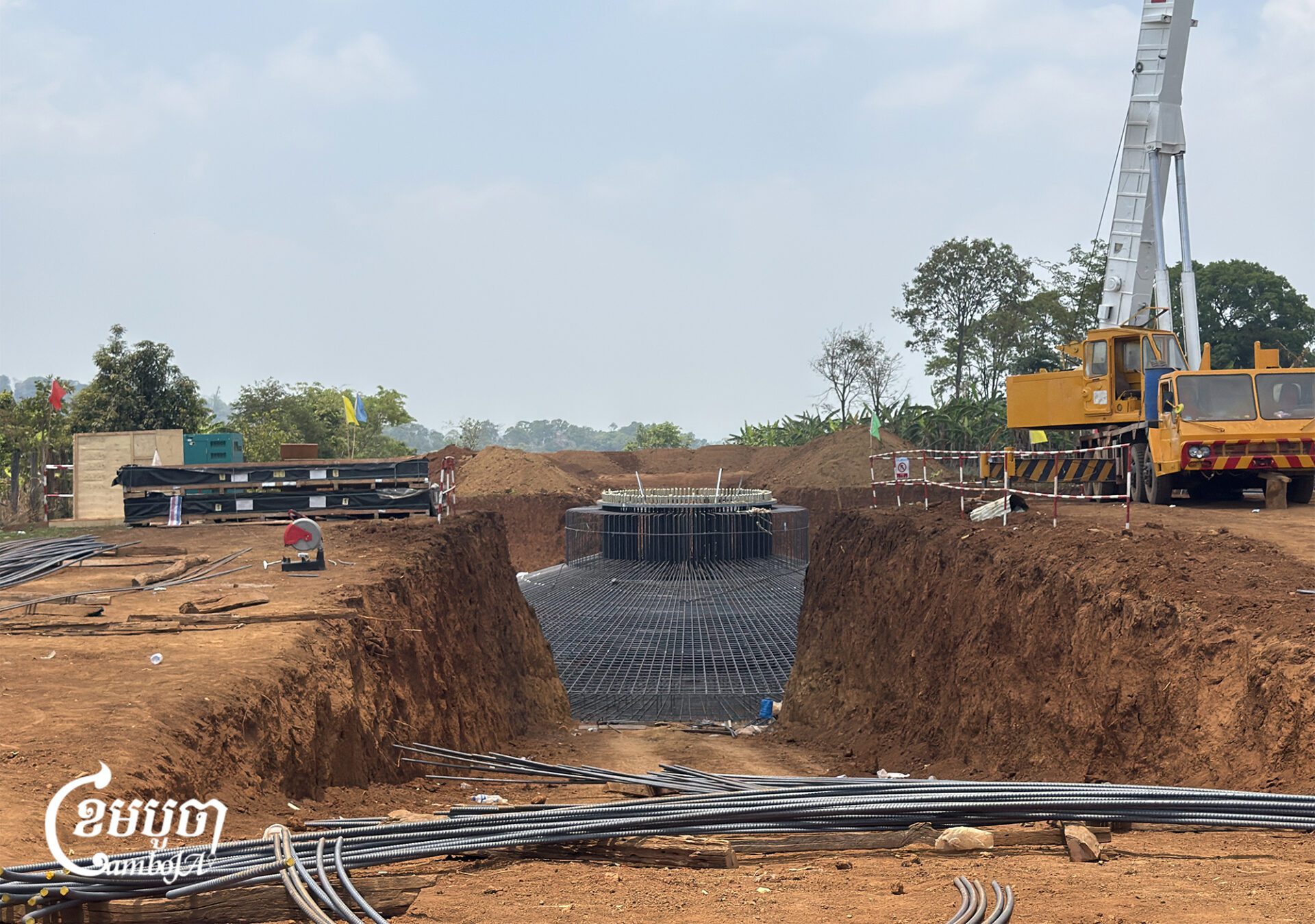
Cambodia’s first wind power project is moving ahead, with turbine construction progressing despite tensions with Indigenous communities in the northeastern province of Mondulkiri, residents and local authorities said on Friday.
At least two companies, SchneiTec Energy and Indochina Wind Power, are installing turbines as part of a 900-megawatt project involving hundreds of turbines and several other firms, said Neth Chhaiya, chief of Sokdom commune in Mondulkiri. Cambodia’s state electricity utility has also begun building a transmission line to connect the project to the national grid, she said.
The flagship project, central to the government’s plans to expand renewable energy, has disrupted Indigenous Bunong communities, who say land clearing and construction began with limited consultation, raising concerns about access to ancestral land and livelihoods.
Chhaiya acknowledged the project could affect residents and the environment, but said the benefits outweighed the costs. She said disputes in Laoka village, where residents are at the heart of tensions, were difficult to resolve because residents’ claims differed from those of authorities.
Yet she also said residents had not been affected.
“Rather, it is some residents who are causing problems for the company. When the company starts a project, people then claim the land is ancestral land. That makes it very difficult for me to comment,” she said.
Last month, Bunong residents and local officials attended a ceremony in Laoka village to “seek forgiveness from ancestral spirits” after a sacred forest in the area was cleared by developers, according to resident Ploek Phyrom.
She said no company representatives attended the ceremony or discussed compensation for the ancestral site or banana plantations cleared for an access road.
Residents have previously reported receiving compensation after shrines and farmland were cleared.
Eang Sary, from Putrum village, another community involved in the dispute, said authorities criticized him after he spoke to the media about the issue. He said Electricity of Cambodia (EDC) later met with residents and provided about $3,600 to support a similar ceremony.
“The issue was resolved at the commune office about a week after the news was published. They provided $3,600 for the traditional ceremony and as compensation for the affected land,” he said.
Sary said EDC later acknowledged shortcomings in consultation and promised not to further affect the land.
Chhal Lounh, Sary’s relative, said the family’s burial grounds were affected by electricity poles erected by EDC as part of the grid connection. He said despite the compensation, the family remained dissatisfied that the project had proceeded without prior notification or consultation, although he acknowledged it could bring benefits.
Many residents impacted from the project said they have also been unable to obtain collective land titles, a process that is complex and often stalls, according to Indigenous rights groups.
EDC did not respond to a request for comment. A staff member who answered the phone at its Mondulkiri office said he was unfamiliar with the matter.
SchneiTec said in promotional material that its development of a 150-megawatt wind farm in Mondulkiri aims to boost clean energy production and create jobs while maintaining environmental safeguards.
Sin Ousa, who is listed as a director of SchneiTec Energy in the government’s corporate records database, said he no longer holds the position and would provide contact details for another representative. He did not do so before publication.
Neither Indochina Wind Power nor its partner, China Huadian, immediately responded to requests for comment.
Ty Sophal, director of the Mondulkiri Provincial Department of Mines and Energy, confirmed progress on two sections of the wind project and said four others were still resolving impact and compensation issues.
Khvay Atitya, spokesperson for the Ministry of Environment, said all large-scale projects are required to undergo environmental and social impact assessments to help ensure safe and environmentally sustainable development. Based on the findings, the ministry reviews potential impacts and determines whether projects should be approved.
He said the ministry seeks to maximize benefits while minimizing environmental costs and adverse impacts.
Some developers linked to the project have previously been involved in energy infrastructure projects that drew criticism over community displacement and environmental damage.