
The availability of professional and quality healthcare services at home is limited for Cambodians, especially for patients with non-communicable diseases (NCDs) who require long-term treatment, including medical care, lifestyle adjustments, and preventive strategies.
All this makes securing affordable home healthcare service to manage NCDs a critical challenge for the average Cambodian.
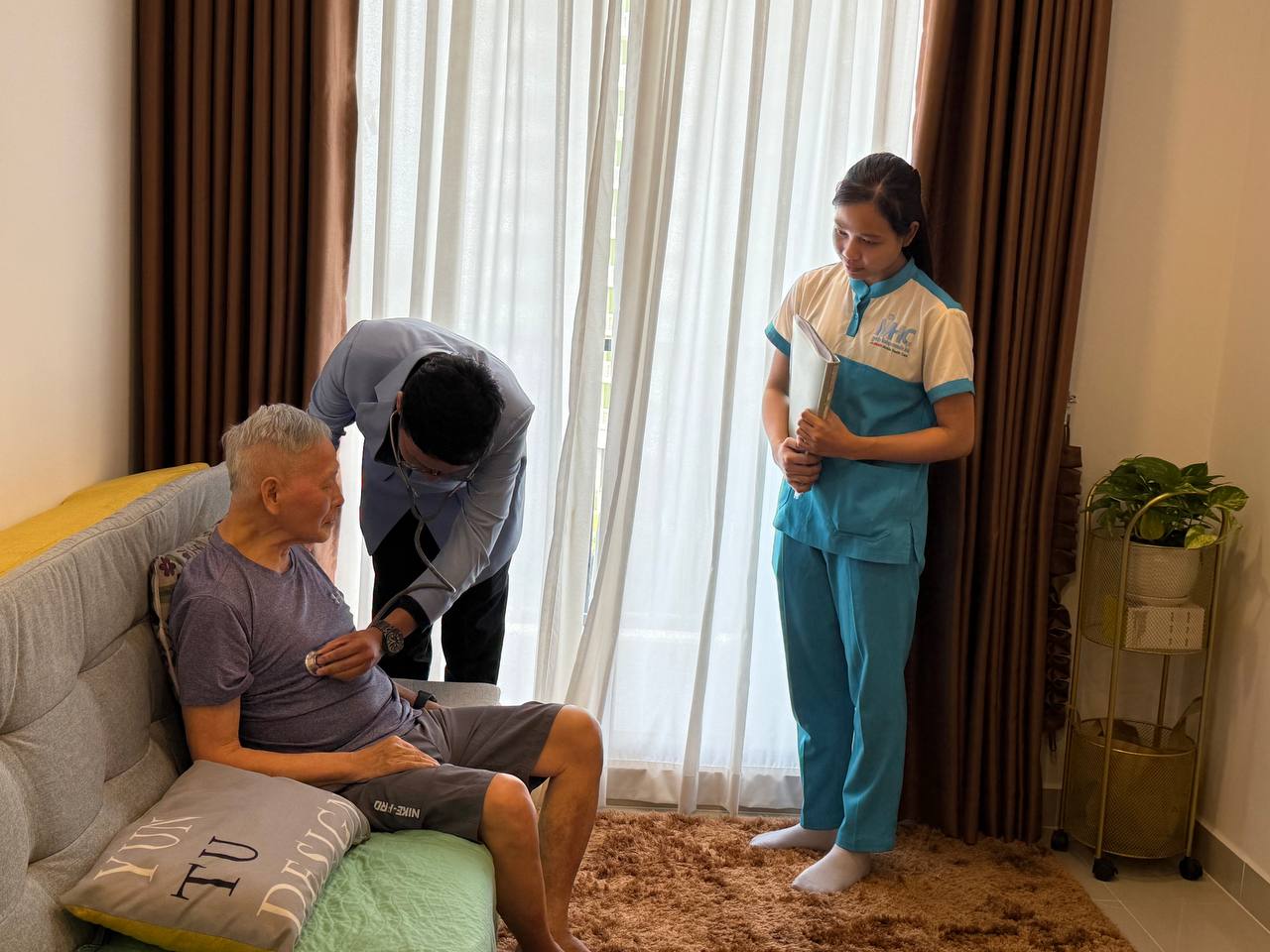
Much Mobile Health Care (MUCH) is recognized as a pioneer in providing home healthcare services to support patients’ quality of life by allowing them to stay in familiar surroundings and feel secure, while also relieving the burden on their families.
The service is comprehensive, including health monitoring, medical guidance, assisted living, blood sampling, wound dressing, physician visits at home, and emergency medical care available 24/7 in Khmer, English, and French. They also provide overseas healthcare support for patients needing medical attention or hospitalization in other countries, including medical escort.
Dyphan Phirum, founder of MUCH, was a nurse who also served at an NGO. She explained that she wanted to bring these services to Cambodians in 2007, but was faced with operational constraints.
She began operating in 2015 after attending a business workshop where she became passionate about the plight of cancer patients—issues that resonated with her. It reminded her of her late father, a cancer patient who suffered silently.
“My father had cancer when I was young, and the workshop reminded me of the severe pain he endured but hid from the family,” said Phirum.
MUCH was first market-tested in 2015 and officially launched in 2016, focusing on senior citizens aged 65 and above.
She faced challenges in the beginning—struggled to form a stable team that would commit to it, while many members gave up on MUCH.
“Another challenge is my family. The startup requires a significant amount of time and focus, so I found it difficult to balance my time. They also did not believe in it, as I didn’t know how to present solid results to convince them,” said Phirum.
It took four years for MUCH to gain recognition, and Phirum to train new staff in caregiving. The team, including doctors, nurses, and caregivers, is carefully tailored to meet the specific needs of each patient.
She said MUCH also ensures comfort, and is adaptable to the family’s needs. “We are flexible and cognizant of the needs of the patient’s family. Our staff provide care with integrity and sensitivity, and they are willing to assist with all patient needs, even intimate or challenging tasks,” she said. “We aim to become the leading healthcare provider in Asia, as MUCH has been recognized by many Asian countries.”
Tum Vira, executive director of HelpAge Cambodia, said that MUCH plays a crucial role in providing services that respond to senior citizens’ demands in Cambodia, noting that entities that provide this type of healthcare service are limited.
He added that as more people get older, the country will face the same challenge as other Asian countries—an increase in age-related health problems such as NCDs and chronic diseases, which will require this service.
“I was impressed by the story and the endeavor of the founder in building the company from a startup, although the service was only accessible for the mid-to-high-income population [in the beginning],” said Vira. “I see she [Phirum] has adjusted the price to make it accessible for low-income people as well.”
He added that he would support any initiatives that provide healthcare centers and services to senior citizens, especially for low-income citizens. He also suggested that MUCH consider providing training or services to low-income senior citizens. The training would create job opportunities for people.
Suy Sokha, managing partner of HRINC Cambodia, has a 71-year-old mother who suffered from a stroke, paralyzing the right side of her body. Sokha used to employ another physiotherapy service, but she found it difficult to transport her mother to the hospital. She did not have the strength, and the cost was unbearable for her in the long term.
After stumbling upon MUCH from a general internet search and meeting Phirun in 2024, she was impressed by her passion and commitment, and the clinic’s standard of hygiene.
Sokha expressed her appreciation for MUCH’s affordable treatment, convenience, time flexibility and the results.
“The service and pricing are good and acceptable. I find it convenient to communicate with both the clinic and the therapist for any adjustments to the schedule and consultation about my mother’s progress. They have a record where I can read and monitor,” Sokha said, adding that the quality of their service is good.
“After 20 sessions, the response [improvement] on my mother’s right leg is 30% and 10% on the right arm and fingers. Given her age and severity of her stroke, I’m happy with this progress. I chose the elderly home care program while we do physio by ourselves for my mother.”
Meanwhile, Vira observed that there are no formal geriatric programs or services for the elderly offered by the government.
“Several years ago, an elderly care center was established in Phnom Penh, but it primarily functioned as a training facility for private organizations and NGOs seeking skills in elderly care. Unfortunately, it doesn’t appear to be effective in addressing the broader needs of the elderly population,” he added.
Cambodia’s population aged 65 and above accounts for six percent of the total population, and is projected to exceed 14% by 2032, according to Minister of Health Chheang Ra.
Both Toch Channy, spokesperson for the Social Affairs, Veterans and Youth Rehabilitation Ministry, and Health Ministry Secretary of State Or Vandine did not respond to CamboJA News at the time of publication.