Listen to the audio version of this article (generated by AI).
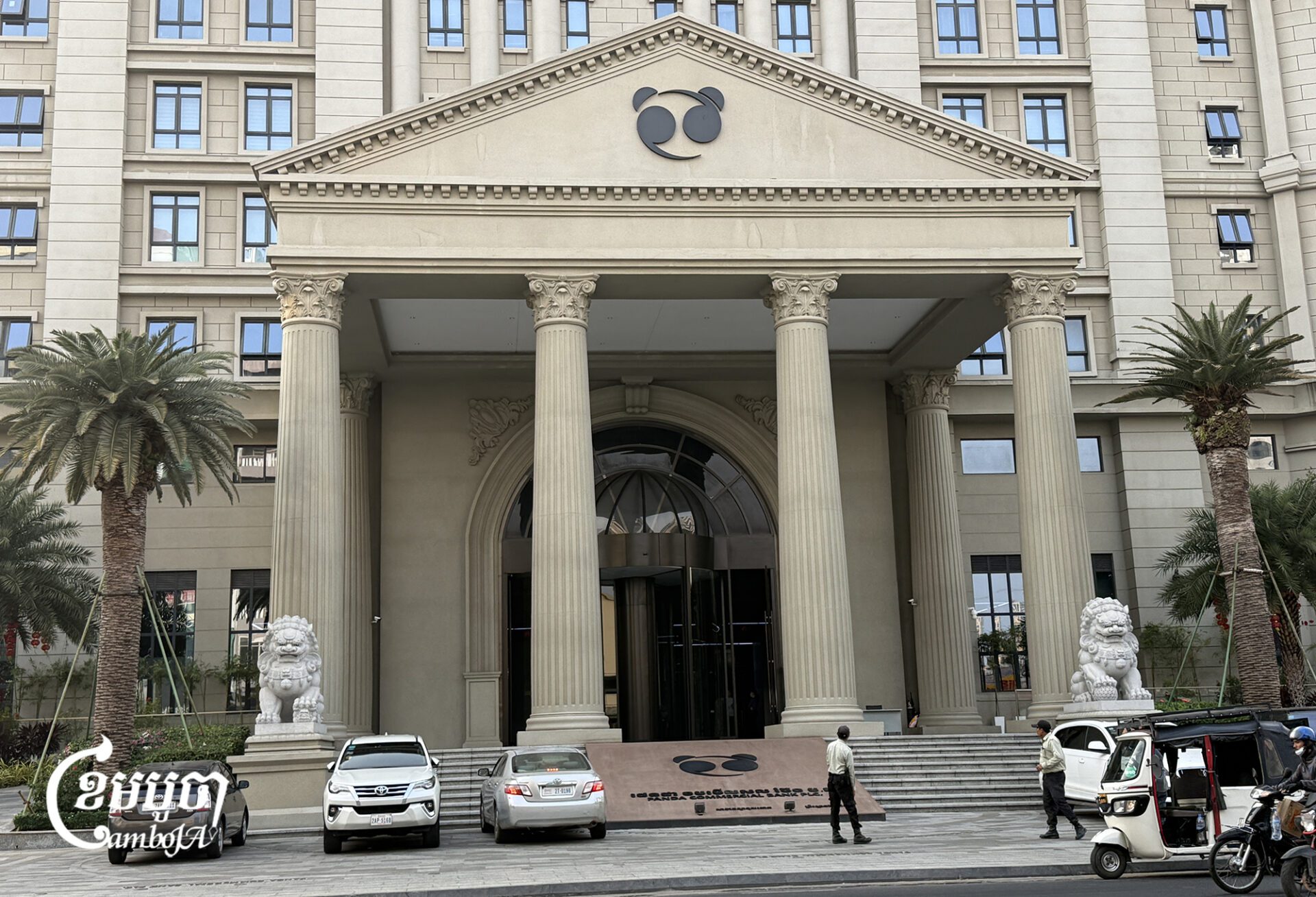
Cambodia’s central bank has revoked the license of Panda Commercial Bank, it said on Monday. The lender has reported links to a sanctioned firm accused of laundering billions of dollars for scam networks.
The National Bank (NBC) said the revocation and forced liquidation were approved last Friday, citing the bank’s deteriorating financial condition and saying it was no longer capable of providing banking services.
A CamboJA News report last year found overlap in senior leadership and directors between Panda Bank and Huione Pay, the former online banking arm of Huione Group. The United States sanctioned Huione last year, alleging it laundered billions of dollars from cryptocurrency scams and North Korean hackers.
Huione Pay later had its license revoked in September 2024 and rebranded as H-Pay before a nationwide run on accounts.
Panda Bank’s executive ties extend to Prince Bank, which has been blacklisted by the U.S., Britain and several Asian countries over alleged roles in scam operations.
Its current chief executive, Cheong Kim Soon, served as Prince Bank’s chief operating officer in 2019. He is not named in sanctions reports and has not been accused of wrongdoing during his tenure at Prince Bank. He was at the bank when the U.S. alleged that its parent company Prince Group established “profitable cyberfraud operations across Southeast Asia, particularly in Cambodia.”
Hun To, a cousin of Prime Minister Hun Manet, was listed as a Panda director until 2024 and was also listed as a director of Huione Pay. He has denied that his businesses have any connections to online scams.
In early January, the NBC suspended new banking services at Prince Bank and placed it into liquidation shortly after its parent company chairman, Chen Zhi, who American authorities have described as a scam network kingpin, was arrested and extradited to China.
The NBC has not said whether its decision to liquidate Panda Bank was linked to suspected illicit finance or its ties to sanctioned payment firms and declined to respond to questions from CamboJA News.
As with Prince Bank, the NBC placed Panda under temporary administration for liquidation and appointed Morrisonkak Audit-Accounting to oversee the winding-up process.
“During this period, Panda Commercial Bank is suspended from providing any new banking services, including accepting deposits and granting loans,” the NBC said.
The central bank said customers must prepare the necessary documents to withdraw their deposits, while borrowers are required to continue repaying loans as usual. It added that it would closely monitor the interim administration to “protect the interests of depositors and customers.”

Panda received its commercial banking license in 2019, according to the NBC. As of the end of 2025, it reported total assets of about $776 million, outstanding loans of roughly $536 million and deposits of $502 million, giving it a 0.77% share of Cambodia’s banking system.
A Panda staff member, who spoke on condition of anonymity due to security concerns, said Monday that employees continued to work as normal and have not yet received further instructions.
Panda did not respond to requests for comment about the central bank’s assessment of its financial decline.
Some depositors said they were concerned, citing parallels with Huione users after the payment platform suspended withdrawals in December amid liquidity problems.
“I want the National Bank to help solve this issue more clearly,” said a Panda account holder, who asked not to be named due to privacy concerns. “Right now, I do not know what to do.”
She said she had been using the bank for savings because it offered interest rates of up to 10%. Panda advertises itself as having the “highest interest rate in Cambodia.”
The bank is the latest to fall amid growing international pressure on Cambodia to crack down on scam networks. The U.S. Institute of Peace says such operations in the country swindle more than $12.5 billion from victims worldwide and rely on an estimated 100,000 people subjected to forced or coerced labor after being trafficked from dozens of countries.