Listen to the audio version of this article (generated by AI).
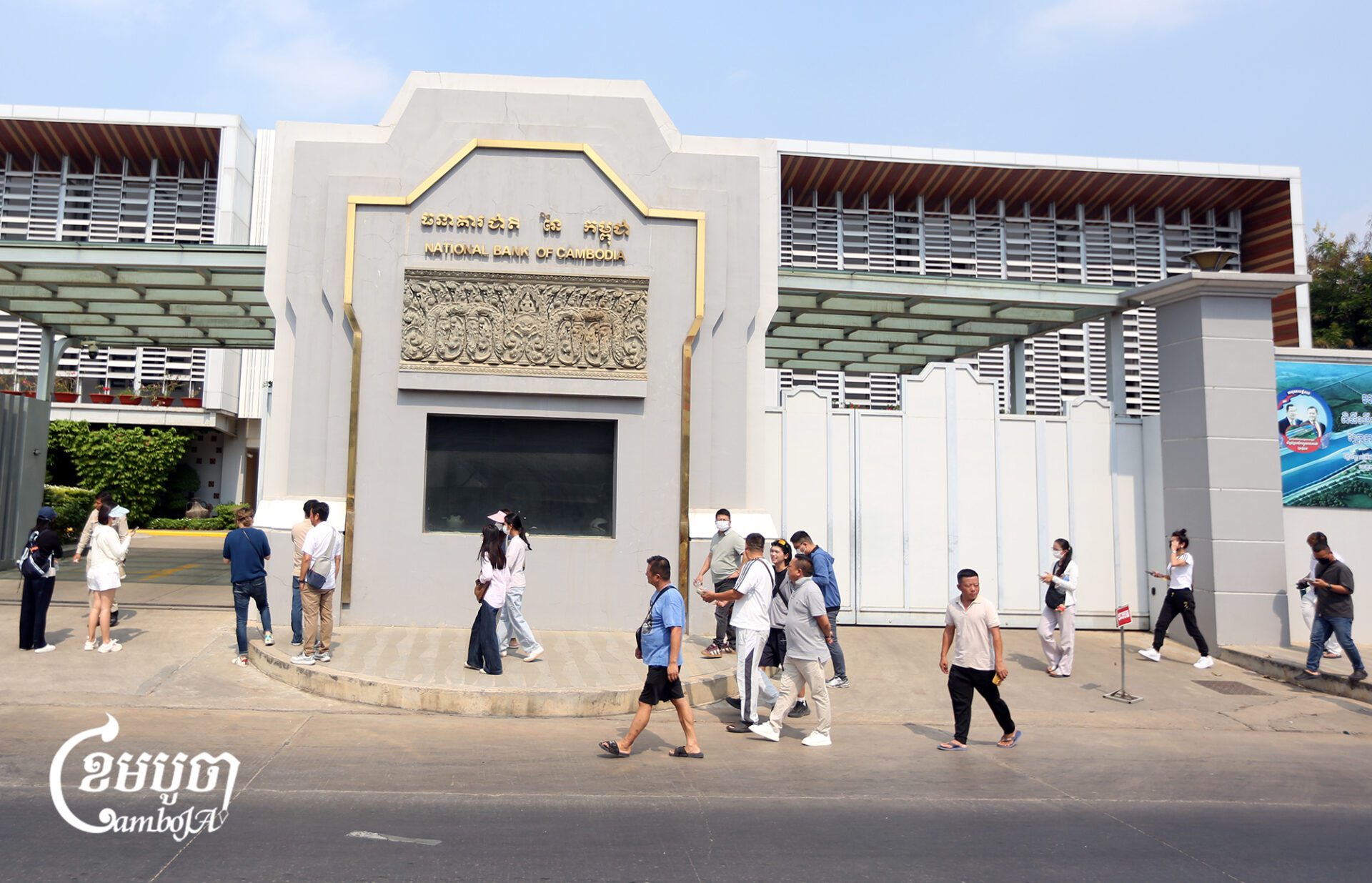
In the same week a director of blacklisted payment firm Huione Pay was extradited to China on fraud charges, dozens of its customers gathered at the national bank on Friday, urging faster action to release funds frozen for months.
Several told CamboJA News the bank had indicated they were unlikely to recover their money and advised dissatisfied clients to pursue legal action.
Huione Pay and related firms were sanctioned by the United States last year for allegedly laundering billions of dollars for scam operations in Cambodia and tens of millions for North Korean hackers. The National Bank of Cambodia (NBC) said it revoked Huione’s license in September 2024 and ordered its liquidation nine months later.
A CamboJA News investigation found the firm appeared to rebrand as H-Pay during that time under new directors before facing a nationwide run on deposits after suspending withdrawals. The company has denied involvement in criminal activity.
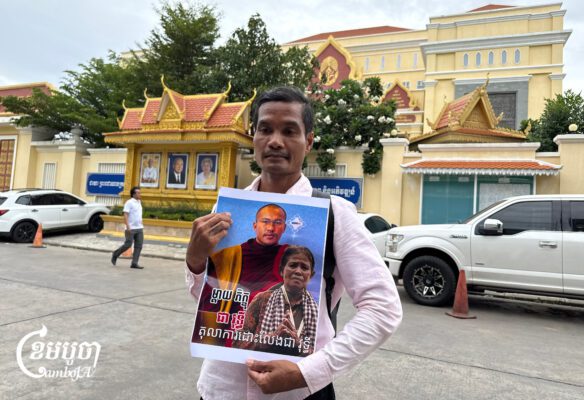
Unable to access their funds since December, about 80 mostly Chinese and Cambodian customers gathered at the NBC after receiving a letter saying the bank had no measures to resolve their case, several said. They plan to gather again on Monday.
“This document means NBC is not responsible,” said a businesswoman from Sihanoukville who has more than $15,000 deposited with Huione and asked not to be named for privacy concerns. She questioned why the service had been allowed to operate if it was illegal, adding it was widely used, especially in Sihanoukville.
She said she began using Huione Pay in 2021 because many of her customers were Chinese and preferred the platform. When withdrawals were suspended in December, staff instructed her to download the H-Pay app, she said. After registering, her account details were automatically transferred.
A notice to customers reviewed by CamboJA News said the NBC, after consulting multiple ministries and the commission for combating online scams, found no legal basis to recognize customers as creditors of Huione Pay.
The NBC cited the revocation of Huione’s license and its liquidation, and said electronic wallet transactions involving USDT, a cryptocurrency stablecoin, are prohibited, with responsibility resting on the operator.
In January, H-Pay – to which many Huione customers were referred and where Huione offices were rebranded – said customers could withdraw up to $500, but only after being contacted. The businesswoman said she was never contacted and still cannot access her funds.
She said she has been submitting documents to the NBC since December but has received no response. While she understands Huione Pay has ceased operations, she questioned why she cannot access her funds in H-Pay, which is still a licensed payment platform.
During the gathering, NBC officials allowed customers into a meeting hall, where they were asked to register their names and were split into two groups for Huione Pay and H-Pay, saying the entities are distinct.
According to the NBC notice, the bank has received 1,297 claims from Huione Pay customers. For H-Pay users, the NBC urged them to wait for a public announcement but did not provide a timeline. The meeting then concluded.
The NBC did not immediately respond to a request for comment.
Several Chinese customers, who declined to be named, said they were unaware of allegations that Huione Pay was involved in money laundering and described themselves as small-scale users handling transactions of $20 to $50.
They said depositors at other recently liquidated banks linked to scam allegations, including Prince Bank, have begun recovering funds. At Panda Bank, whose former chairman Li Xiong, also Huione’s board chairman and now imprisoned in China, customers began receiving partial payouts this week after the bank entered liquidation.
The Sihanoukville businesswoman said she has little hope of recovering her money but will continue pursuing legal action.