Listen to the audio version of this article (generated by AI).
Banteay Meanchey, Svay Chek district – Thousands of Cambodian families displaced by fighting along the Thai border have moved from tarpaulin camps into government-built housing sites, but many say the new settlements have done little to improve their prospects.
Months after fleeing bombardments and clashes that forced them from their homes, residents say they face scarce job opportunities, limited schooling for their children and challenging living conditions, leaving many unsure whether they will ever return.
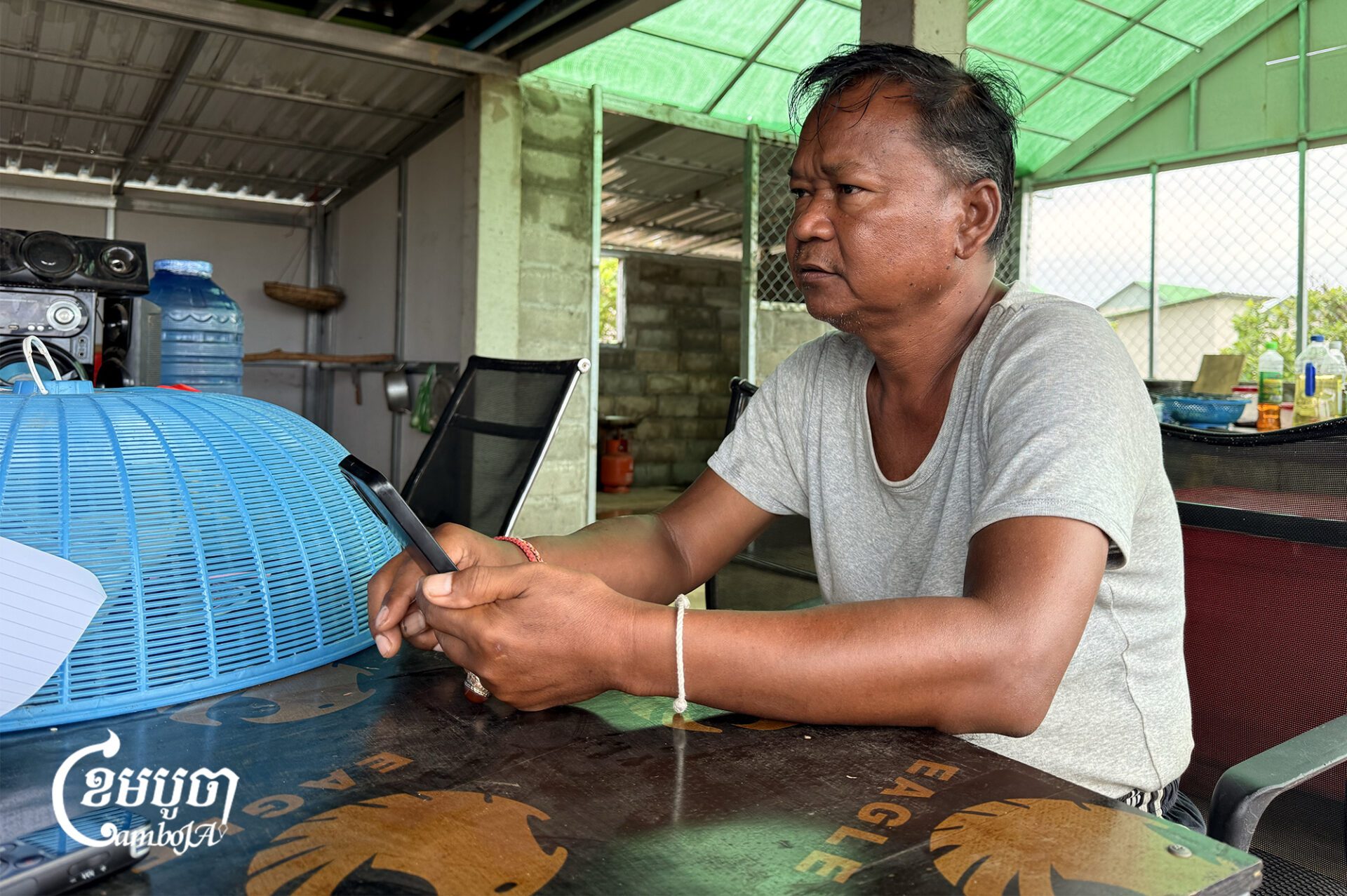
“When it rains, I miss home,” said Sok Horn, 62, whose house now lies behind Thai military barricades along the border of Banteay Meanchey province after border clashes in December.
Horn is among more than 11,600 displaced people living in housing units constructed by the Cambodian government earlier this year, according to official figures.
The temporary housing was finished in March, months after a ceasefire with Thailand ended fighting that erupted in July and again in December along the neighboring countries’ 817-km (508-mile) frontier. The fighting killed nearly 100 people and displaced almost a million on both sides.

Thousands of Cambodian families, mostly from Banteay Meanchey and Preah Vihear provinces, spent months in makeshift camps after Thai forces occupied border areas inhabited by Cambodians following the December ceasefire, in what Phnom Penh says was a seizure of its territory, a claim Bangkok denies.
In Preah Vihear, over 600 families have moved into temporary housing, according to the province’s deputy governor Kim Chanpanha. Around 700 families remain in makeshift camps due to “unsafe conditions,” he said.
Horn and her husband moved from a camp at a pagoda to a 20 by 30 meter plot and stilt home in March, among thousands of others in Banteay Meanchey’s Svay Chek district.
“It does not look like our previous home. Since coming here, it is very quiet,” she said. “They are all displaced people, and there is not much money for them to buy our clothes.” Horn once owned a clothing shop in Boeung Trakuon.

Though the tents are gone and the new housing units have electricity and piped water, many displaced families who spoke to CamboJA News in May said poverty and uncertainty continue to shape their lives.
Of the nearly 30,000 people the government says remain displaced, more than 15,300 are women and more than 10,000 are children, according to Interior Ministry figures released on May 30.
Horn’s son, Hour Kimhak, moved into his mother’s temporary home with his six-year old son after fleeing the border area. He said he has struggled to find work.
Before the conflict, Kimhak ran a mobile phone shop and earned about $700 a month. He said his home was destroyed during the fighting.
“It will take a long time for life to become better here,” he said. “The main problem is that we do not have money to start a business. Even if we sell something, there are very few customers. It is not like Boeung Trakuon, where many people gathered.”
Other residents at the relocation site, which contains about 2,800 housing units provided free of charge in Svay Chek district, described similar challenges.
Chhay Seavlang, from the disputed village Cambodia calls Prey Chan, said conditions were better than at the pagoda where her family sheltered for months. But problems remain.
“Sometimes the water only flows at night, and I’ve had to wake up at 3 a.m. to store enough for daily use because so many people were using it, and the system did not work properly,” she said.
Power cuts lasting several hours are common during storms, she added.
“It is very hot, but we just endure it because we do not know what else to do,” Seavlang said, adding that strong winds and monsoons during the wet season have left her worried about the stability of the steel-framed modular homes.

Donations have also become less frequent since families moved into the settlement, she said.
The last aid package Seavlang said she received – rice, instant noodles and soy sauce – arrived in late April.
“It is difficult because we do not have any income now,” she said.
Seavlang stays home without work while her husband takes occasional construction and repair jobs in nearby provinces for modest wages.
Aid agencies assisting displaced families echoed their concerns.
“At this stage, most families remain in a survival phase, relying on humanitarian assistance to meet their daily needs. While early efforts are underway, the overall situation remains fragile and uncertain,” said Chhum Sivuthin, senior technical specialist for climate change and disaster management at World Vision Cambodia.
The most pressing concerns are the loss of livelihoods and income, and limited access to food beyond basic rice supplies, which affects families’ ability to meet their daily needs, he said.

UNICEF representative to Cambodia Will Parks said more than $2.1 million was needed to restore essential services and support affected children and families.
Authorities said further development and additional resources for the relocation site were planned.
Banteay Meanchey Deputy Governor Klork Nuoy said the government is preparing livelihood programs for relocated families.
“We are currently preparing job opportunities for them, including modern agriculture and livestock projects to support their livelihoods,” he said.
Chhoeuy Choeum, deputy governor of Thmar Pouk district, where many residents have been displaced, said challenges remained, particularly flooding on dirt roads within the settlement and a lack of jobs.
He said relevant ministries, including the Agriculture Ministry, planned to support families through livestock programs, including the distribution of 150 hens per household. He did not specify when the program would begin.
Beginning in May, displaced families started receiving an additional 200,000 riel ($50) per month for one year, according to Choeum, bringing total monthly support to 300,000 riel ($75).
Other support includes one water storage tank for each family, Choeum said. The government will cover electricity costs of up to 30 kilowatt-hours per month, as well as water costs, while 50 hectares have been reserved for collective farming.
The Cambodian Red Cross has also supported well-digging efforts, along with several NGOs, he added.
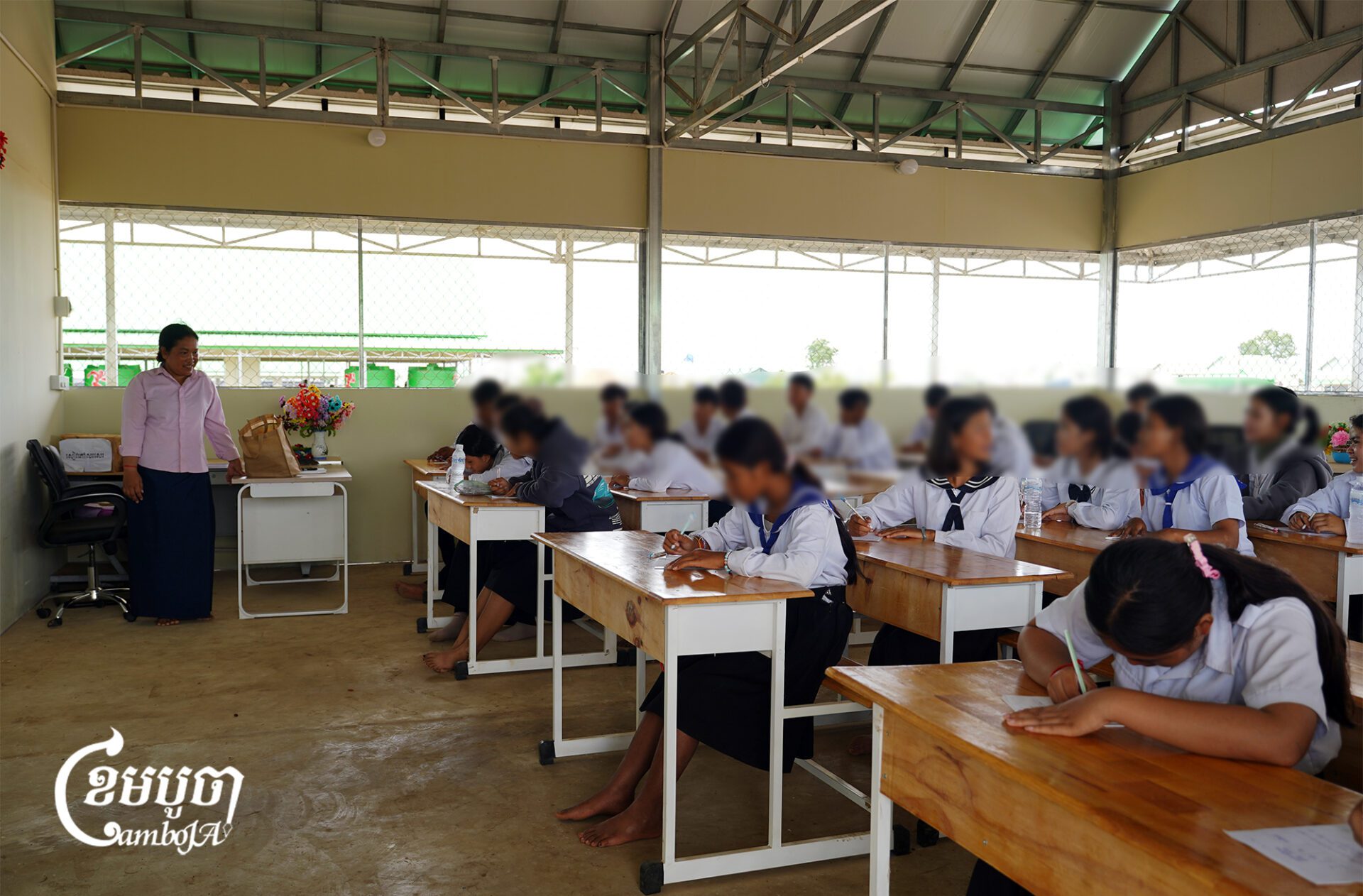
Nuoy said 1,735 students were enrolled in newly established primary and secondary schools at the settlement. He added that education was “operating smoothly” and that authorities planned to upgrade the secondary school into a high school.
Twelve schools remained closed in Banteay Meanchey and Preah Vihear provinces, the Interior Ministry said on Thursday. In Oddar Meanchey, where border clashes also raged last year, eight schools and five hospitals also remained closed.
Thai Sakheng, a teacher at the new secondary school in the settlement, said they have limited teaching materials, inadequate facilities and students must face muddy and flood prone roads to attend.
She said sports and arts activities had been reduced because of shortages of equipment, space and teachers.
“We are always concerned, but under the current situation we have to adapt,” said Sakheng.
Another circumstance those that have relocated have had to adapt is waiting for hundreds of more homes to be constructed.
At least 277 displaced families in Banteay Meanchey have yet to receive housing, with many staying with relatives while waiting for additional units to be completed, according to Chouem.
For Horn, life at the settlement remains a waiting game.
“We are sorrowful, but we don’t know what to do. We only hope the government can resolve the issue so we can return home and live there again,” she said.