Listen to the audio version of this article (generated by AI).
Banteay Meanchey – Around 10,000 people displaced from villages that were among several flashpoints in border clashes with Thailand in December say they remain in the dark about when they can move to a temporary housing site the government has proposed.
Those villages along the Banteay Meanchey–Sa Kaeo border have become one of the most contentious border zones since a ceasefire reached late last year, with Cambodia accusing Thai forces of seizing its territory.
Another 115,000 border residents also remain displaced, according to the government, though it is unclear how many remain in makeshift camps.
Most of the more than half a million Cambodians displaced across several provinces, largely women and children, have returned since the ceasefire halted a second round of hostilities between the neighbors in 2025, which killed over 100 people and uprooted close to a million on both sides after several weeks of fighting.
The National Committee for Disaster Management and the Ministry of Land Management said last week the government was identifying locations for temporary housing to ensure the safety and security of communities across five provinces affected by the conflict.
But among the thousands in Banteay Meanchey who are the main target of the plan, several displaced families say they have received few details on when, where or what to expect from the temporary housing. Local authorities overseeing the camps also say they have little information about the construction timeline for what would be a large housing site announced only on Jan. 27.
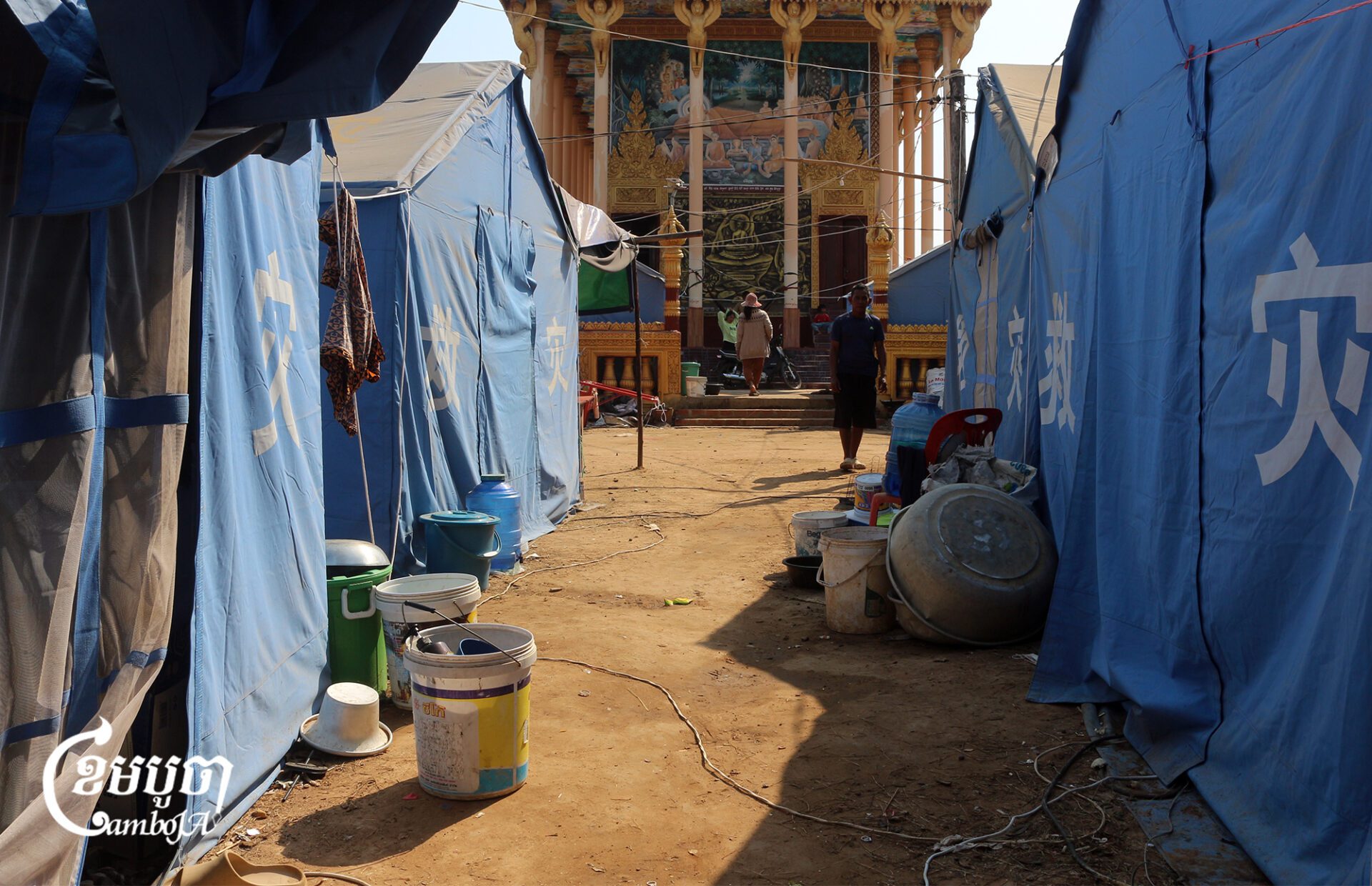
“They told us they would arrange a temporary site for us because they cannot allow us to stay long at the pagoda,” said Koum Oeurb, a lifelong resident of Chouk Chey village, which Thailand says lies on its side of the border. He recounted what he was told by local authorities overseeing the shelter.
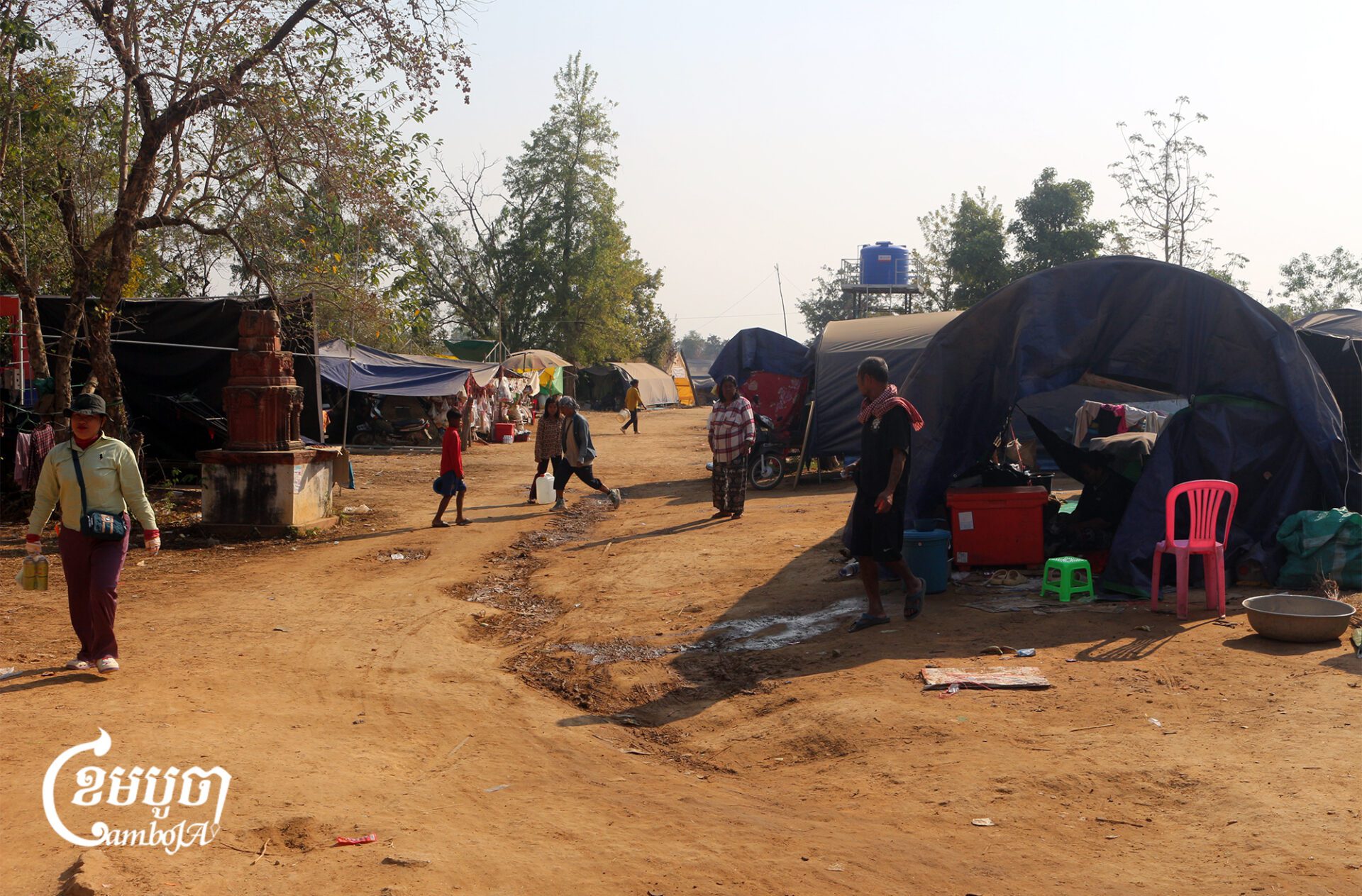
Oeurb has been staying there with his family and about 4,600 other people from the disputed Chouk Chey and Prey Chan villages for nearly two months, enduring crowded conditions, the loss of livelihoods and homes, and relying largely on aid packages.
He showed reporters images circulating on social media that he said depict Thai excavators razing his home. He added that an unnamed authority told him it could be up to six months before residents receive temporary housing and that he still does not know where the site will be.
“We left with empty hands and do not have enough money. We want to go back and live on our land,” Oeurb said. His family of four receives adequate food through donations, he mentioned, though many larger families struggle.
Other displaced families in Banteay Meanchey described similar uncertainty.
“They said they will build houses, but we have no details,” said Soeung Savy, 42, whose family numbers eight. She said her home, now behind Thai barricades, was also demolished. “I urge the government not to move us too far away, as it will be difficult to find income.”
The Thai Defense Ministry did not immediately respond to requests for comment on the disputed villages.
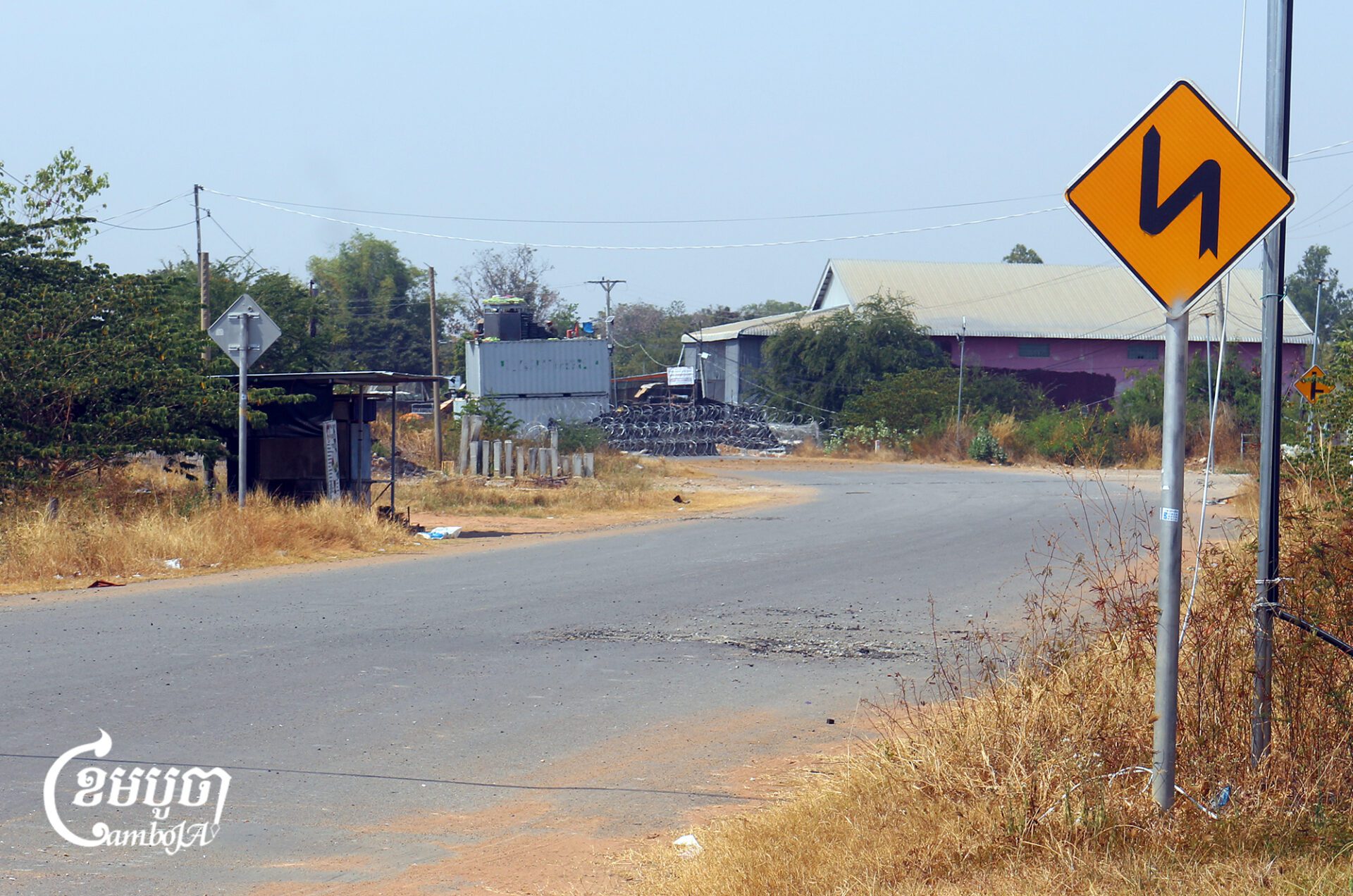
Nearly 70 km north, at another pagoda sheltering thousands from the disputed village Cambodia calls Beoeng Trakoun that is now enclosed by concertina wire and shipping containers placed by Thai forces, Bo Chanthou said information about new homes has been limited and she is not sure if they will be allowed to live at the site permanently or without paying.
She also urged Cambodian and Thai officials to negotiate access to their homes and farms.
“I have lived there since I was born and want to live in our home and reunite with my family members,” she said.
Phnom Penh has faced increased pressure after many disputed areas along the border were seized in December by Thai forces, who outgun the Cambodian military in size, firepower and air capability.
During a visit to a displacement camp in Preah Vihear province on Saturday, Prime Minister Hun Manet said the government is arranging temporary shelters with improved conditions, with construction expected to finish before the wet season, typically May to October. He stressed the settlements do not signal a concession on territory claims.
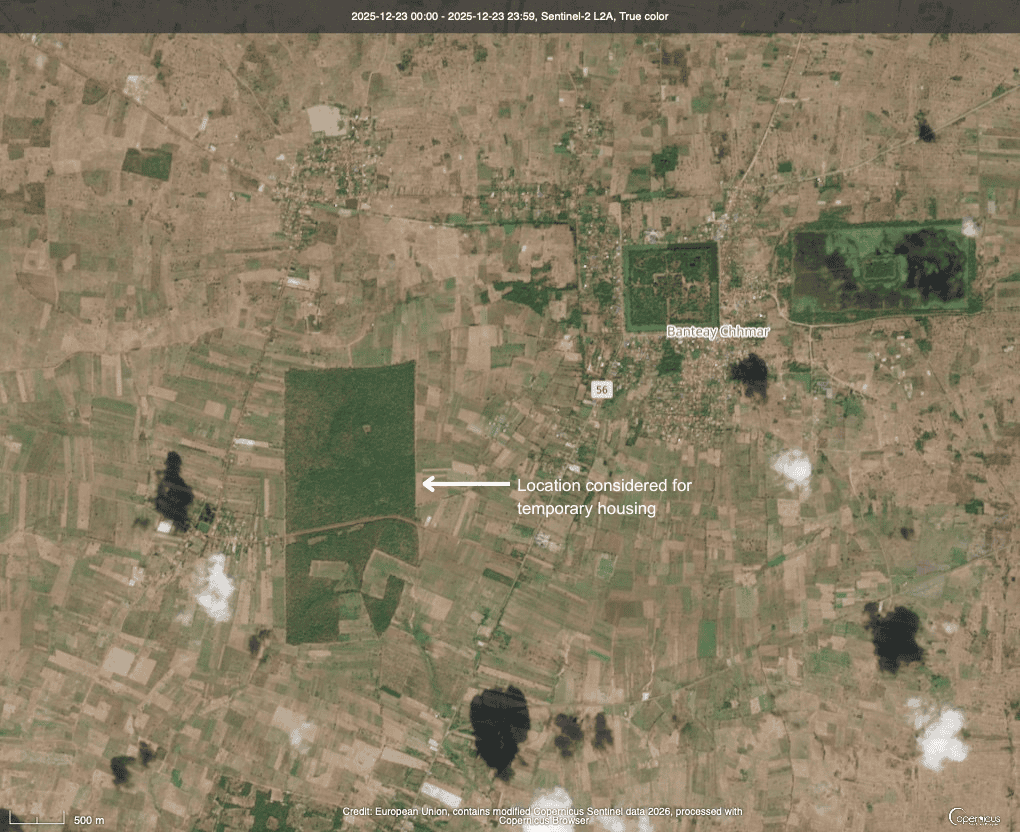
The few details on the provisional housing location have come from Em Sokha, governor of Thmar Puok district, where Cambodia says Beoeng Trakoun lies. He said plans remain subject to change.
One site being considered for temporary relocation, visited last week by a working group from the National Committee for Disaster Management, is a 300 hectare plot of forested land in Banteay Chhmar commune, according to Sokha.
“All those families from Beoeng Trakoun will be moved to live there,” he said, referring to nearly 5,000 displaced people. He added that the site is community forest under state control and that housing will be provided free of charge.
National Committee for Disaster Management spokesperson Soth Kimkolmony did not immediately respond to a request for comment. Ministry of Land Management spokesperson Seng Loth referred questions back to the committee.
Sokha said he could not provide further details because the project is still in the planning stage, but each family would receive a temporary house and the government is considering providing agricultural land as well.
How long displaced residents will remain in makeshift camps and reliant on aid, or whether they will be able to return to homes and farmland that the government says are contaminated with unexploded ordnance, remains unclear as planning for relocation sites continues.