A coalition of civil society groups urged the government on Tuesday to step up efforts on gender equality in a report citing persistent violence, discrimination, mounting debt and limits on fundamental rights.
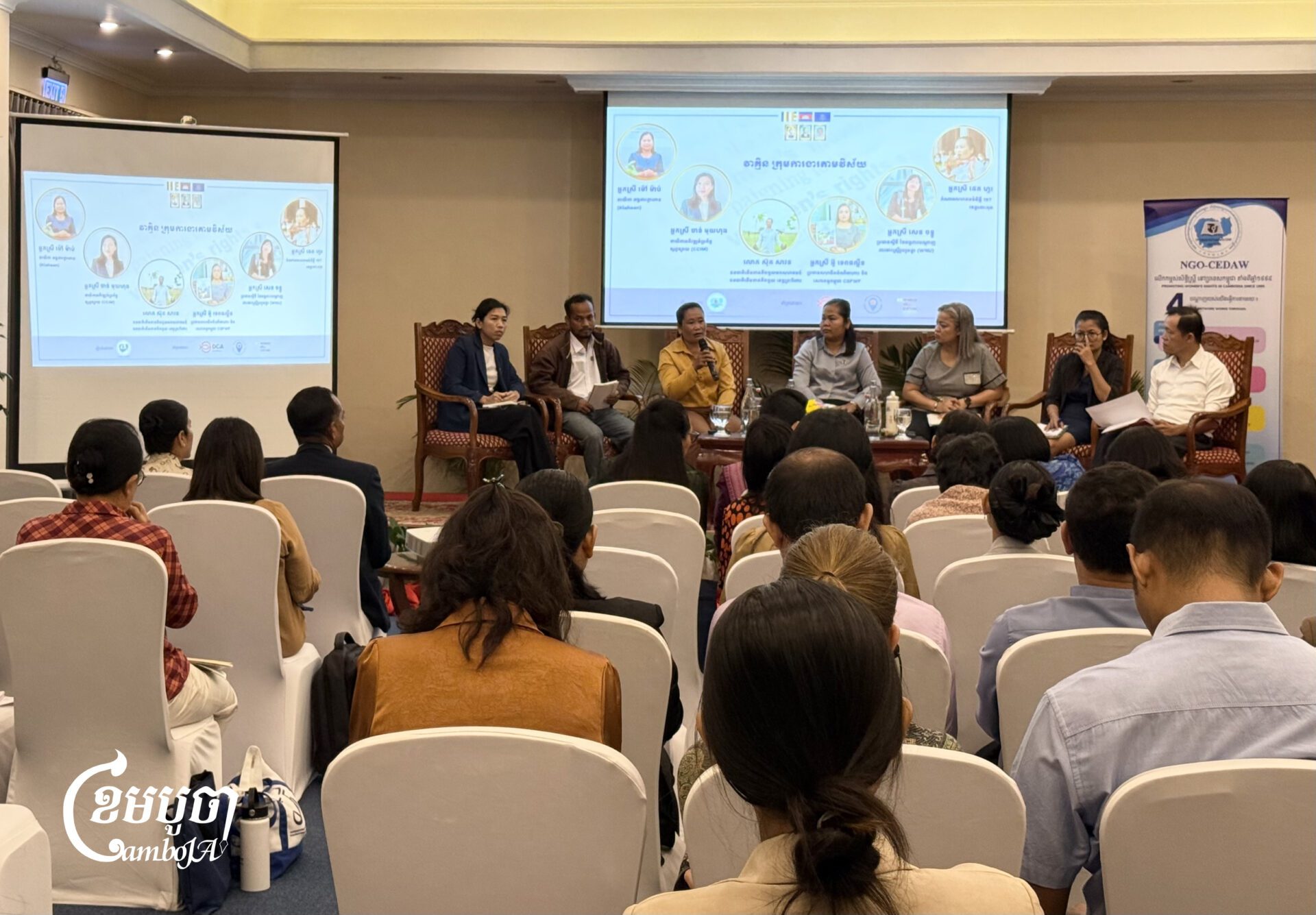
The Cambodian NGO Committee on the Convention on the Elimination of All Forms of Discrimination Against Women (NGO-CEDAW), which includes dozens of rights groups, said in its new report that many long-standing gender inequalities remain unresolved, including women’s underrepresentation in political office.
Cambodian women hold less than 13% of National Assembly seats, about 17% of Senate seats, and under one-fifth of sub-national positions.
The report said women are also disproportionately affected by land disputes and forced evictions – a long-documented issue in rural Cambodia – with nearly 10,000 families impacted in 2024.
Gender-based violence remains widespread, NGO-CEDAW said, citing slow reforms to the Domestic Violence Law.
Local rights group Licadho reported at least 146 people killed in domestic and sexual violence cases since 2020, including 96 women and 46 children.
“Fundamental freedoms of expression, assembly, and association also remain restricted, with women political opponents, activists, and journalists facing intimidation, imprisonment, and gender-based harassment,” the report said, adding that access to sexual and reproductive health and education services also remains limited.
The report, which reviews last year’s trends, also called for limiting criminalization of sex work and women acting as surrogates, and for recognizing marriage equality.
“The failure to implement the recommendations that we passed to the government will cause the country to continue falling short of its commitments under the CEDAW treaty,” said Chhim Channeang, general secretary of NGO-CEDAW.
Cambodia, which ratified the UN CEDAW treaty in 1992, is expected to meet with its committee and submit a progress report in the coming weeks.
Rights groups say the country has gender equality policies in place, but implementation remains weak due to insufficient funding and resources.
The Ministry of Women’s Affairs has consistently been among the lowest-funded ministries over the past two years.
Bunchhith Veasna, secretary general of the Cambodian National Council for Women, part of the ministry, did not immediately respond to a request for comment.
NGO-CEDAW also called for tighter regulation of microfinance institutions to prevent Indigenous lands from being used as collateral, aiming to protect marginalized women and their communities.

Soth Savorn, a representative of the Kuy Indigenous community in Preah Vihear province, said indebtedness has made women and girls more vulnerable to violence, forced to leave school early, and to migrate in search of work.
Indebtedness from microloans, often taken to cover basic costs and sometimes tied to predatory lending practices, remains widespread. More than half of Cambodian adults are in debt, with women making up about two-thirds of the country’s two million microloan borrowers, collectively carrying over $18 billion in debt.
Government spokesperson Pen Bona claimed that gender equality in Cambodia is at its highest level in history. “In the last 500 years, has there ever been a time when Cambodian women have the same freedom as today?” he said, asserting that the government promotes gender equality.
But for activists such as Sen Chanthou, acting director of Women’s Network for Unity, the most stigmatized women, including sex workers, continue to face discrimination, criminalization, and lack of labor protections.
When asked about ratification of gender-based labor reforms, Sun Mesa, spokesperson for the Ministry of Labor, said the ministry is a subordinate agency and only the government can state its position on the issue. He added that the ministry “protects and complies with the law for both employers and employees.”