Listen to the audio version of this article (generated by AI).
Sixteen people, who took out microfinance loans that resulted in negative impacts on their lives and livelihoods in Cambodia, have refused to take part in an informal resolution offered by the World Bank’s International Finance Corporation (IFC), citing safety concerns and lack of trust. In the meantime, the World Bank has said that the IFC is reviewing appropriate steps for those who rejected the offer and hopes they will reconsider.
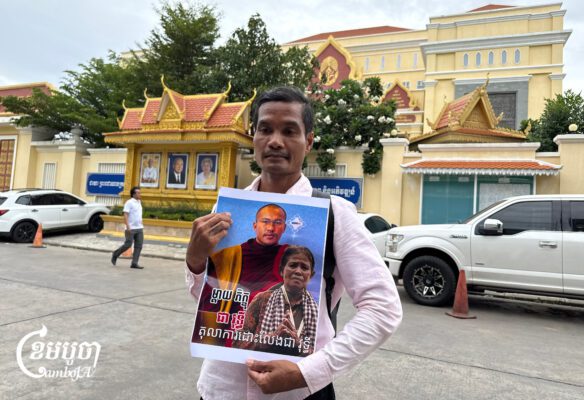
A joint statement released on August 26, 2026, stated that complainants, including the wife of a deceased complainant, declined the offer, fearing their safety and doubted the effectiveness of the IFC’s proposed mechanism. The distrust arose when the World Bank rejected an independent report by its own accountability body following a four-year complaint process and a two-year investigation.
Civil society groups Licadho and Equitable Cambodia, which represented the affected citizens, some of whom are indigenous people, also decided to step back from the new mechanism. Instead, they handed over the contact details of two other complainants to the IFC.
In 2022, both the organizations helped the people file a complaint with the office of the Compliance Advisor Ombudsman (CAO), the independent accountability mechanism for two private-sector arms of the World Bank Group—the IFC and the Multilateral Investment Guarantee Agency (MIGA).
An investigation by CAO ensued, leading to a 188-page report in October 2025 detailing the IFC’s failure to follow its own compliance, resulting in system-wide harm to Cambodia’s microfinance sector, including the loss of livelihoods, food insecurity, health problems, family breakups, impacts on indigenous communities, threats, and intimidation.
However, CAO’s findings were rejected by the World Bank Board of Directors last June. In one of its findings regarding non-compliance, CAO outlined that IFC policy stipulates that it (IFC) is required to develop a “management action plan” (MAP) to “address and compensate for the impacts caused by its projects”. The IFC has refused to do so in this case.
Following the board of directors’ decision, the CAO president resigned from her post, drawing concern and strong condemnation from human rights groups, NGOs, and microfinance researchers of more than 100 institutions.
Shortly after this incident, the IFC asked the affected citizens to “accept” an informal resolution instead.
Responding to the criticism over the board’s decision to reject the CAO findings and offer an informal path, a World Bank Group spokesperson said that the IFC Board has “already explained its position in a public statement”.
In the statement, the board claimed that the IFC “did not breach” its own Environmental and Social Sustainability policies, but approved a management report and a “Special Management Action Plan” as an informal resolution to address the 18 complainants’ issues, with the CAO monitoring the process.
However, the joint statement by the affected parties mentioned that many complainants had previously used similar mechanisms without obtaining any relief or solution; many were also forced to sell their land or assets to clear their debt.
The statement added that the IFC’s plan offers no financial compensation or other solutions apart from “existing and ineffective grievance mechanisms” despite requests to the IFC to include the option.
When asked why the plan focuses on debt relief and mediation rather than direct financial compensation, the World Bank group spokesperson explained that the IFC is “committed” to providing concrete measures to resolve issues arising from its microfinance portfolio in Cambodia.
The spokesperson added that the plan directs resources toward mechanisms which are most likely to reach people who continue to experience financial difficulty, or are using independent facilitators to restructure packages, on a case-by-case basis.
Meanwhile, Am Sam Ath, operations director of Licadho, asked why an informal resolution was pushed after the World Bank rejected the findings of its own independent watchdog.
Expressing disappointment that the World Bank failed to deliver real justice or solutions to the complainants, he urged it to show “courage and integrity” by reversing its decision, accepting the CAO report, and resolving the case based on established principles.
“They should review it, resolve the issue, and set up a mechanism to prevent these problems from happening again in their investments.”
For safety reasons, CamboJA News did not directly interview the complainants who rejected the IFC offer, but included their quotes from the joint statement.
One of them said: “I’m afraid that the solution outside the system is not fair because the IFC has blamed us before and I’m afraid that they will do it again.”
Another asked why IFC did not continue with the “old process”. “Why are they doing a new process? I don’t understand and I don’t trust the new process at all.”
One more person was quoted as saying: “I’ve lost confidence in the IFC that it hasn’t implemented what it found and the policies it already has.”
The World Bank Group spokesperson said the IFC respects the 16 complainants’ refusal to accept their offer, but added that their doors remain open for dialogue and support. An independent facilitator is ready to assist the complainants if they change their mind.
“We will not force a process on people— but we hope complainants will re-consider their decision as we are committed to help address each and every complainant’s concerns while paying utmost attention to confidentiality and risks of reprisals. We are also looking carefully at what additional steps are appropriate given the specific circumstances of those who have declined.”
The spokesperson, however, expressed disappointment over Licadho and Equitable Cambodia ending their participation, adding that civil society remains a “critical part of accountability”.
IFC and World Bank would continue engaging communities through other channels, support responsible lending among MFIs, monitor outcomes, report on the Special MAP’s implementation, and hope to reopen dialogue with all stakeholders, including those who have stepped back.
Naly Pilorge, Director of External Affairs of Licadho, said the people’s decision to reject the resolution is “disappointing, but not surprising” given how they no longer trust the IFC to resolve their issues.
“The institution has already publicly demonstrated that it has disregarded its independent oversight and accountability mechanisms.”
“This decision, which will have serious negative consequences for the IFC, means that almost all complainants will not receive any form of redress, which is a sad end to the World Bank’s disgraceful work,” she added.
Rochom Sang, an indigenous Kachok from Ratanakiri province, shared his experience borrowing $20,000 from a local bank for farming, building a house, and buying a motorcycle. However, poor crop yields made it hard for him to make payments.
He said bank staff “pressured” him to take loans from private lenders and sell his land to repay the bank debt. As a result, he was forced to make his son drop out of eighth grade to work and help pay the family’s debt.
Rochom previously filed a complaint to the World Bank and IFC because they funded the bank he borrowed from. He asked for compensation for his losses, but his request was rejected. He noted that this situation remains a threat to local people, especially indigenous communities.
“I feel that as indigenous people, we continue to suffer and live at risk, first, the risk of losing land; second, our culture and traditions are impacted; third, we are forced to migrate; and lastly, our children have to drop out of school,” Rochom said.
Update: This article was updated at 10:40 a.m on August 31, 2026 following a clarification by Licadho regarding the identity of the complainants. They stated that not all 16 complaints were indigenous people who refused to take part in an informal resolution offered by the World Bank’s International Finance Corporation (IFC).