Listen to the audio version of this article (generated by AI).
Cambodia’s minimum wage negotiations for 2027 began Tuesday, with workers and unions calling for a larger increase as rising food, fuel and living costs continue to put pressure on garment workers earning a monthly minimum wage of $210.
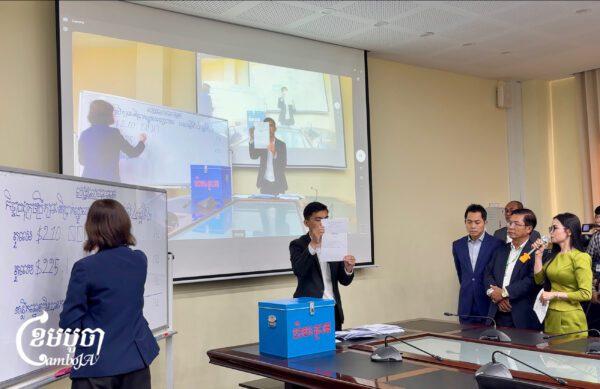
The National Minimum Wage Council held its first meeting to discuss setting the minimum wage for workers in Cambodia’s garment, textile, footwear, travel goods and bag sectors for 2027.
Labor Minister Heng Sour said the first wage meeting allowed all parties’ views to be heard and to review data, changes and every criteria compiled by the ministry as a basis for internal discussions.
He hoped further discussions would produce results during tripartite meetings scheduled for September 14, 18, 28 and 30, 2026, noting that rising inflation would be taken into account, he said, along with Cambodia’s competitiveness and overall conditions in global markets.
“During these tripartite meetings, each party can also hold bilateral discussions,” he said. “We therefore hope this period will provide sufficient time for each party to conduct its internal discussions.”
The minimum wage increased from $40 in 1997 to $145 in 2015, gradually rising to $200 in 2023 and $204 in 2024.
In September 2025, the government decided to raise the minimum wage for garment workers by $4, bringing the monthly minimum wage to $210 for 2026. Workers and independent unions expressed dissatisfaction with the increase, saying the amount was insufficient to meet their living costs.
The seven criteria used to determine the minimum wage are based on social and economic factors, including family circumstances, inflation, living costs, productivity, national competitiveness, labor market conditions and the profitability of the sector, according to the ministry.
Sour said the factors for a few of the criteria remained stable, while others had either dropped or risen. All the parties involved in the discussion are required to analyze the data, particularly regarding competitiveness and productivity, before proposing specific figures.
“It is still too early to say what the quantum of the amount should be or how much should be given to workers,” said Sour.
Wage negotiations are not intended to cause “negative consequences” for any party or sector, rather it should ensure that the sector continues developing and all stakeholders benefit from it.

In August, Cambodia’s levy on exports to the U.S. market was cut to 19%, after previously facing tariffs of 49% and later 36%, which fueled uncertainty until negotiations brought down rates which aligned with regional competitors.
Previously, employer representatives asked unions to determine their proposed wage increase based on scientific and technical criteria and to avoid proposing excessively high figures.
Yang Sophorn, president of Cambodian Alliance of Trade Unions, said the first meeting is for participants to listen to the Labor Ministry’s presentation on the changes in economic and social factors and compare the data with their own findings during internal discussions.
Specific wage proposals would be discussed during subsequent meetings based on research conducted by both sides, she said.
However, she mentioned that workers’ living costs should be a key consideration, along with inflation and other factors included among the seven criteria.
“We cannot yet disclose the figure that we plan to propose because we still need to discuss it,” she said. “But we have to ask whether workers can survive when inflation continues to rise while the minimum wage is only $210.”
Many independent garment, footwear and travel goods unions had hoped for a minimum wage of $232 a month in 2026, which they and rights groups said was the “minimum adjustment” needed despite falling short of the real cost of living.
Koeut Sokny, 33, a sewer in a garment factory in the capital’s Stung Meanchey district, said she hoped the government and unions would push factory owners to raise the minimum wage to around $220 for 2027.
She said rising prices for goods and fuel had made the current $210 monthly minimum wage insufficient to cover daily expenses.
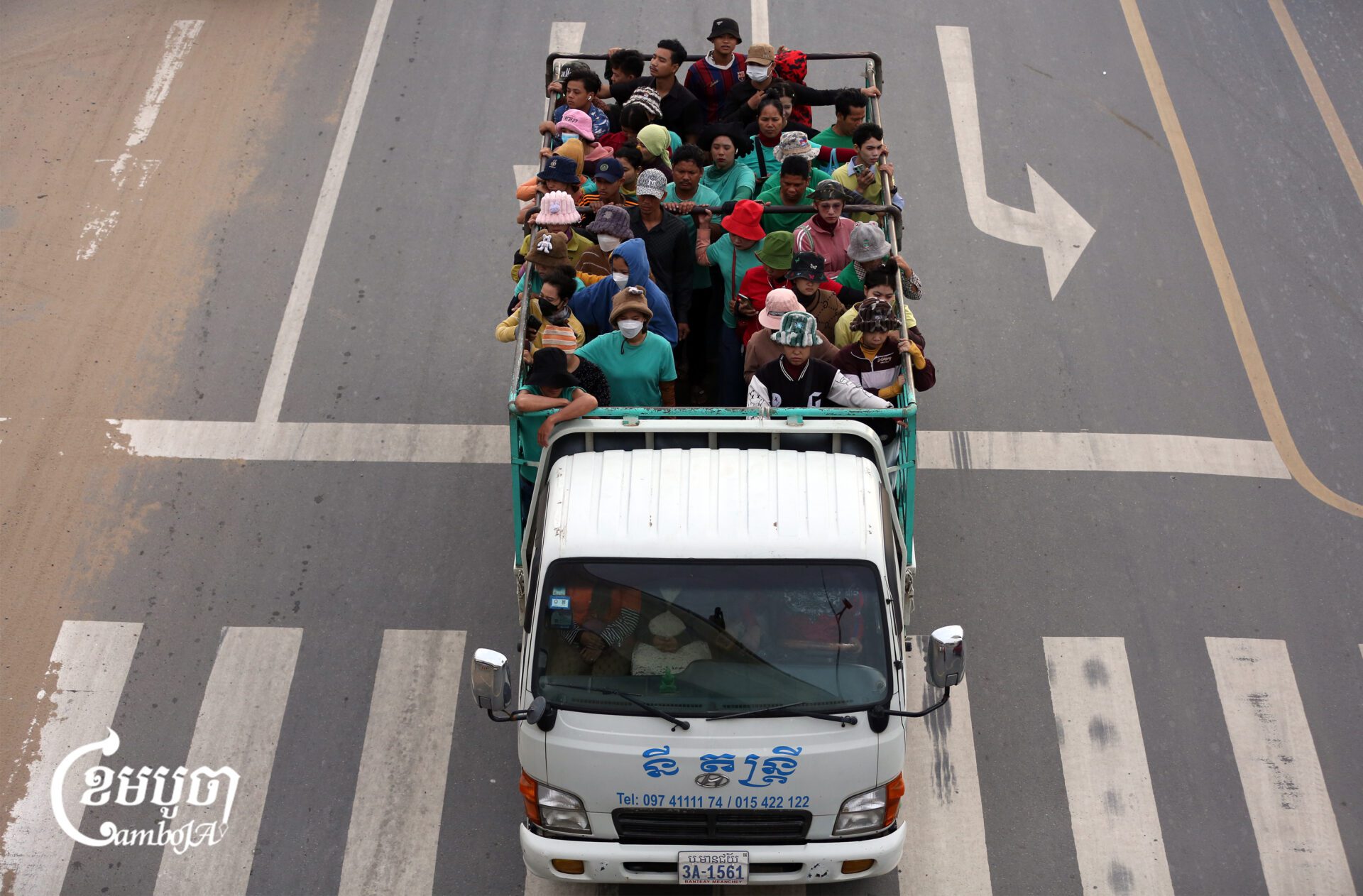
“I would ask for at least a $10 increase because prices keep rising and fuel remains expensive,” she said. “It takes me about 30 minutes to travel to work. Our wages are low, prices are increasing, while factory owners continue exporting their products.”
Minimum wage rules apply only to Cambodia’s garment, footwear and travel goods sector, which employs nearly one million people — mostly women — and forms the backbone of the country’s formal workforce, while more than 88% of workers remain in informal jobs.
Another worker, Khuon Sokha, 44, who works at General Enterprises Garment (Cambodia) Co., Ltd., said she does not expect factory owners to agree to a significant wage increase for 2027.
However, she said workers continue hoping that wages would rise in line with rising food and goods prices. Even with overtime work, workers’ income does not meet the cost of living in Phnom Penh.
“I cannot predict what will happen,” she said. “In the past, wages were too low, so I do not dare say what amount is sufficient. But I know that if wages remain low, workers will fall into debt as the cost of goods continue to rise. Our daily lives are becoming very difficult.”
Apart from low wages, Sokha said her factory has strictly enforced workplace rules, but workers benefit from having National Social Security Fund (NSSF) cards which helped reduce some expenses.
Union leader Ath Thorn said the wage negotiations are proceeding similarly to previous years and it is difficult to predict how strongly unions could push for a bigger wage because only a few independent unions remained.
“Overall, workers are facing greater difficulties than before because their incomes remain the same while the cost of living has increased,” he said. “Automatically, this makes life more difficult.”
Thorn proposed two measures to address the situation. First, the minimum wage should be raised to around $250 per month to address the challenges workers currently face. If an increase to that level was not possible, he said, the government should work to keep market prices low to reduce the burden on workers.