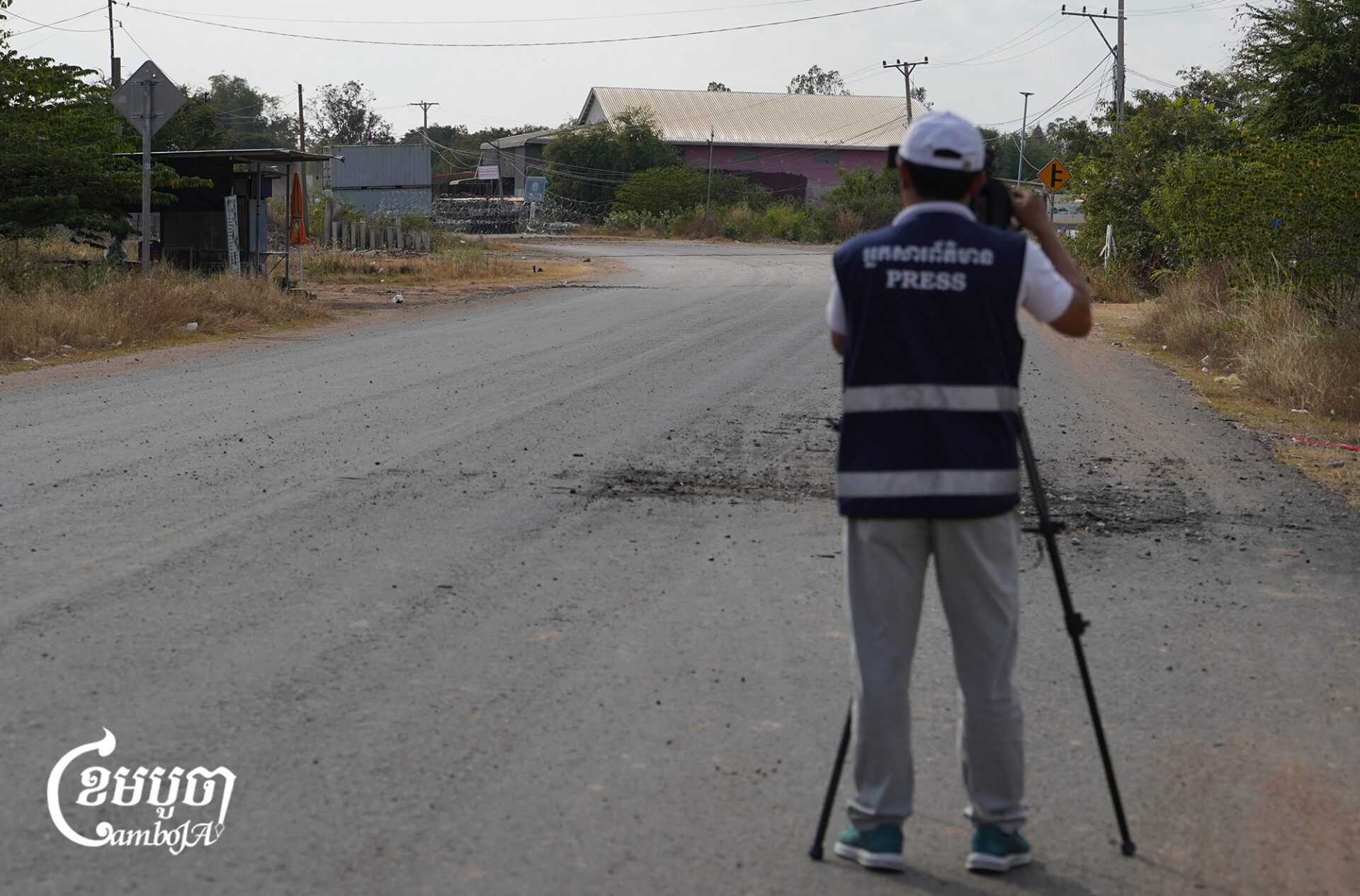
At a critical juncture in Cambodia–Thailand border tensions, Cambodia faces not only a security challenge but also a strategic test of leadership, transparency, and institutional credibility.
The recent border shooting between Cambodia and Thailand is more than a security incident—it is a defining moment for Cambodia’s diplomacy and national confidence. As concerns grow over possible encroachment on Cambodian territory, Cambodia’s response must go beyond military preparedness or domestic messaging. It must be strategic, lawful, and transparent.
In this context, engaging international media to shed light on the border situation is the right move. In today’s interconnected world, territorial disputes are shaped not only by developments on the ground but also by global perception, diplomatic influence, and credibility. If Cambodia does not proactively present its position, others will define the narrative. Silence—or purely reactive communication—risks allowing facts to be overshadowed by speculation or competing political claims.
Cambodia’s strongest position is not emotional rhetoric, but evidence-based diplomacy grounded in international law. The government should clearly present maps, documentation, and verified information, framing the issue through the principles of sovereignty and territorial integrity. Where appropriate, Cambodia should also consider utilizing ASEAN dialogue mechanisms and established international legal frameworks to reinforce its commitment to peaceful dispute resolution. By communicating calmly and consistently in international languages, Cambodia strengthens the message that it seeks stability through lawful and diplomatic channels. In modern geopolitics, strategic communication is not optional—it is part of national defense.
Yet this situation should also serve as a deeper wake-up call. Cambodia’s commitment to media openness cannot be limited to the current dispute with Thailand. Genuine press freedom is a foundational pillar of institutional accountability, transparency, and national credibility. A professional and independent media environment strengthens governance by exposing weaknesses before they become crises, encouraging responsible leadership, and building public trust.
Media freedom also carries significant economic implications. International investors and business partners assess not only market potential but also governance standards and transparency. A country where journalists can report freely, investigate wrongdoing, and question authority signals a rules-based environment. In contrast, restrictions on the press raise concerns about accountability and institutional reliability. Press freedom, therefore, is not merely a democratic principle—it is essential for business integrity and sustainable development.
As Prime Minister Hun Manet has articulated ambitions for modernization and stronger institutions, this moment presents an opportunity to demonstrate that transparency is integral to that vision. If credible reports suggest that local journalists have faced legal pressure while reporting on sensitive national issues—including border developments—such actions deserve careful and principled review to ensure consistency with constitutional protections and Cambodia’s international commitments.
Responsible journalism, whether highlighting positive developments or raising concerns, plays a crucial role in informing the public and shedding light on the realities faced by communities living along the border. Reporting on local hardships, security fears, or administrative shortcomings should not be viewed as disloyalty, but as part of a functioning society.
Restricting or detaining journalists risks undermining Cambodia’s credibility at the very moment it seeks international understanding and support. It may also discourage international media from covering Cambodian issues in a professional and balanced manner. Foreign correspondents often rely on local journalists for context, access, and insight. When domestic reporters face uncertainty for carrying out their professional duties, it sends a troubling signal to the international press community. A nation that seeks global credibility must demonstrate confidence in transparency.
Prime Minister Hun Manet should therefore not only cultivate effective media relations abroad, but also take the lead at home as a central advocate for press freedom.
Cambodia cannot credibly promote transparency on the world stage while limiting independent journalism domestically. If the government seeks lasting international trust, it must show that media freedom is not a message crafted for foreign audiences, but a genuine national commitment. Protecting and promoting press freedom should become a cornerstone of Cambodia’s institutional development and long-term stability.
Ultimately, the border dispute with Thailand is not only about territory. It is also about how Cambodia positions itself in the international community. Sovereignty is defended not only by soldiers at the frontier, but also by the strength of institutions, the credibility of governance, and the openness of public discourse. Strong leadership does not fear scrutiny; it recognizes that transparency strengthens the nation.
Cambodia now faces a strategic choice. It can treat media as a risk to be controlled, or as a national asset to be strengthened. In today’s world, sovereignty is not secured by silence—it is secured by credibility.
Note: This Op-Ed was written by Long Panhavuth, a Cambodian lawyer and legal commentator based in Phnom Penh.