Listen to the audio version of this article (generated by AI).
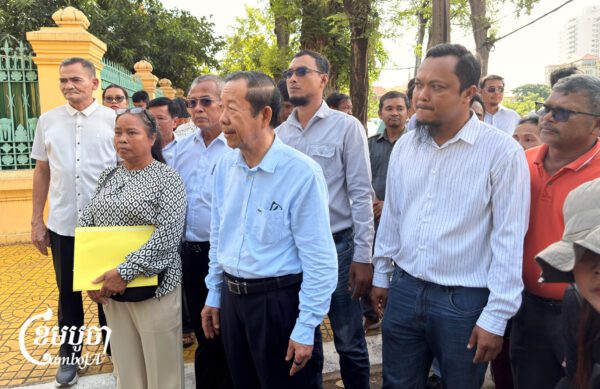
Former opposition Nation Power Party (NPP) leader Sun Chanthy walked free on Tuesday after receiving a royal pardon for a conviction of inciting social disorder late in 2024, in a rare reprieve for a jailed government critic.
General Prison Department spokesperson Kheang Sonadin confirmed Chanthy’s release from a correctional center in Pursat province, where he had served more than a year of a two-year sentence. Sonadin did not say why Chanthy was pardoned, a process that requires approval by the prime minister before submission to Cambodia’s king.
Chanthy’s wife later acknowledged the pardon in a Facebook post on Wednesday, sharing a photo with him and their son.
The pardon should also lift Chanthy’s lifetime ban from running for office and restore his voting rights, both imposed as part of his sentence.
He was arrested in May 2024 at Phnom Penh International Airport upon returning from a trip to Japan, where he had met Cambodian migrant workers. The charges stemmed from social media posts critical of the ruling Cambodian People’s Party, including its policy on issuing IDPoor cards, which allow low-income citizens to access free medical care and other welfare benefits.
The NPP at the time called his arrest politically motivated, an allegation authorities denied.
NPP adviser Rong Chhun welcomed Chanthy’s release and called for the freedom of other jailed activists and opposition figures, including another opposition leader, Kem Sokha, who is serving a lengthy term of house arrest, prominent human rights advocate Seng Theary and five environmental activists from Mother Nature Cambodia.
“To free all conscience detainees, the government will gain more support from international diplomats, especially in addressing the Cambodia–Thailand border dispute,” Chhun said.
Am Sam Ath, operations director at local rights group Licadho, called Chanthy’s release a “positive sign” for opposition politicians.
“In the current situation, Cambodia needs solidarity, reconciliation and unity among Khmer people, so all politicians must uphold the national interest and return to negotiations,” he said.
He added that the international community has criticized Cambodia over shrinking civic space, human rights and political freedoms. Cambodia ranks low on several international measures of civic space and the rule of law.
Incitement charges in Cambodia have also been criticized by rights groups as vague and overly broad, and for being used to stifle dissent.Licadho has documented 97 “prisoners of interest” in Cambodia, including politicians, environmentalists, activists, unionists and journalists who remain jailed on what it says are unfounded charges that criminalize their activism or speech.