Listen to the audio version of this article (generated by AI).
Cambodia should secure sustainable climate finance as it prepares to graduate from least developed country (LDC) status, civil society groups said at a national consultation ahead of the 31st Conference of the Parties to the United Nations Framework Convention on Climate Change (COP31).
According to NGO Forum on Cambodia and Oxfam, reduced concessional support could leave vulnerable communities with fewer resources to adapt to worsening droughts and other climate impacts.
At their co-organized national consultation on Wednesday to identify Cambodia’s priorities for COP31 and call for climate finance that is accessible, predictable and sustainable, they said the funds would strengthen support for climate adaptation and resilience. It would also promote a just transition that leaves no one behind.
COP31 will be held in Antalya, Türkiye, from November 9 to 20, 2026.
Soung Saroeun, executive director of the NGO Forum on Cambodia, told CamboJA News that development will always involve change, but civil society is working to reduce the impacts of that change. Climate financing would appear in “different forms” in the future and might not entirely be in grant form.
“That’s why we are advocating for investment packages that allocate a significant share to communities so they can access and use the funding in the form of grants and funds,” he said.
“If that is very difficult, some funding packages could be provided as loans, but should have very low interest rates and not involve complicated conditions for accessing the assistance or loans.”
He said three key priorities were identified: first, Cambodia needs climate-resilient infrastructure, and that infrastructure covers all forms. Second, there needs to be stronger support for climate-smart agriculture so Cambodia can improve agricultural production and make it more resilient to climate change. Third, there needs to be good governance and an enabling environment for multiple stakeholders — civil society, the government, the private sector and communities to respond to climate change together.
“All this requires a climate-finance framework that supports the priorities identified by civil society,” he said. “It includes loans to the government, investment projects for the private sector, and funding for civil society and communities. This is what we want to see.”
Oxfam Cambodia country director Phean Sophoan said Cambodia has made “ambitious” commitments on climate action, including reducing greenhouse gas emissions by 55% by 2035 and achieving carbon neutrality by 2050.
However, a fair global climate response should not require vulnerable countries such as Cambodia to increase their ambition while concessional support is reduced after graduating from least developed country status.
“COP31 must provide predictable grant-based financing that does not increase debt burdens, to ensure that graduation from least developed country status is a milestone for sustainable development, rather than a factor that increases vulnerability to climate change,” Sophoan said in the statement.
Yem Channy, a community representative from Stung Treng province, shared how climate change is affecting rural livelihoods and food systems.
She said that people in her community rely heavily on rainfall, crops and fish resources from rivers to sustain their daily livelihood. But climate change and increasingly unpredictable weather have severely affected crop yields, leaving many families and communities facing growing debt.
“As affected communities, we need greater support to strengthen climate adaptation at the local level, protect natural resources and ensure climate finance can support communities that are directly facing the impacts of the climate crisis,” Channy said.
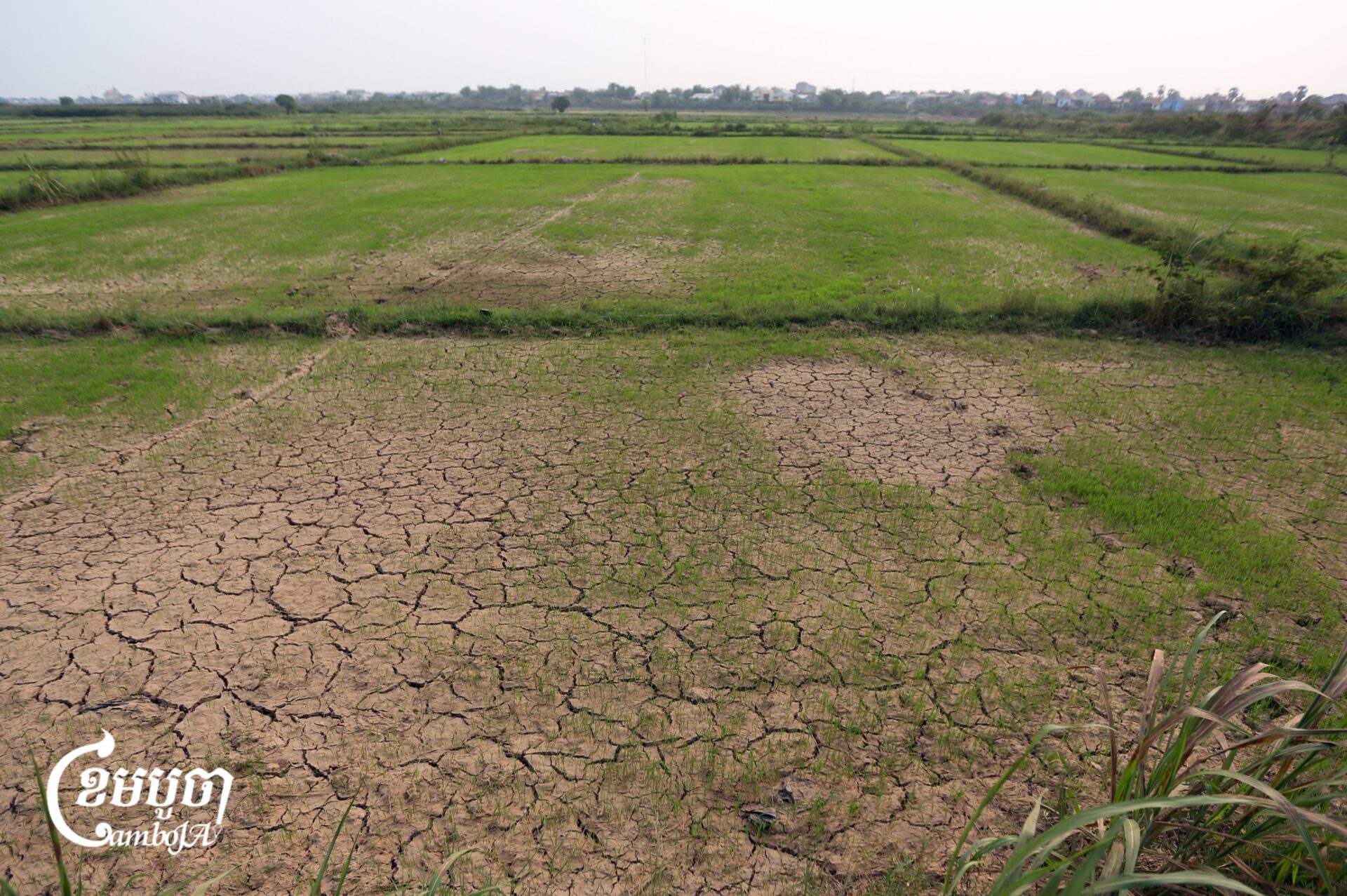
Similarly, Khev Saron, a member of the Romeas Hek Solidarity Community Committee in Romeas Hek district, Svay Rieng province, said drought has prevented her from growing cucumbers and other vegetables because there was insufficient water.
Even when it rained, rice crops could not survive because of the prolonged drought, she said, adding that the farmers depend on rainfall as irrigation systems were limited.
Climate change has had a major impact on her livelihood. Her annual crop income, which previously ranged between seven and eight million riel ($1,750 to $2,000), has shrunk to about 500,000 riel ($125) due to insufficient water, shortage of seeds and lack of support from relevant parties. She struggles to make a living and repay bank debt.
“There is no irrigation system where I live. I also barely find seeds to plant again. The crops didn’t survive one [season], and again later, causing me to lose my initial investment and fall into debt because repeated planting produced no yields,” she said.
“Now there is rain, but when it rains heavily, everything is damaged.”
She said she hoped the ministry and relevant parties could resolve immediate problems facing farmers who need assistance to restore their livelihoods and adapt to climate change.
According to NGO Forum and Oxfam, national consultation participants discussed other climate priorities, including loss and damage, Cambodia’s third Nationally Determined Contribution, ecosystem-based solutions, carbon markets, climate-resilient agriculture and food systems, just energy transition, green investment, and gender-responsive climate action.
They recommended continued access to climate finance for countries graduating from LDC status, increasing grant-based adaptation finance for vulnerable countries, improving direct access to funding for loss and damage, their joint press release read.
Participants also urged that the global adaptation framework reflected the protection of key freshwater ecosystems, such as the Mekong and Tonle Sap basins.
Kvay Atitya, spokesperson from the Ministry of Environment, did not respond to questions by CamboJA News via Telegram.