Listen to the audio version of this article (generated by AI).
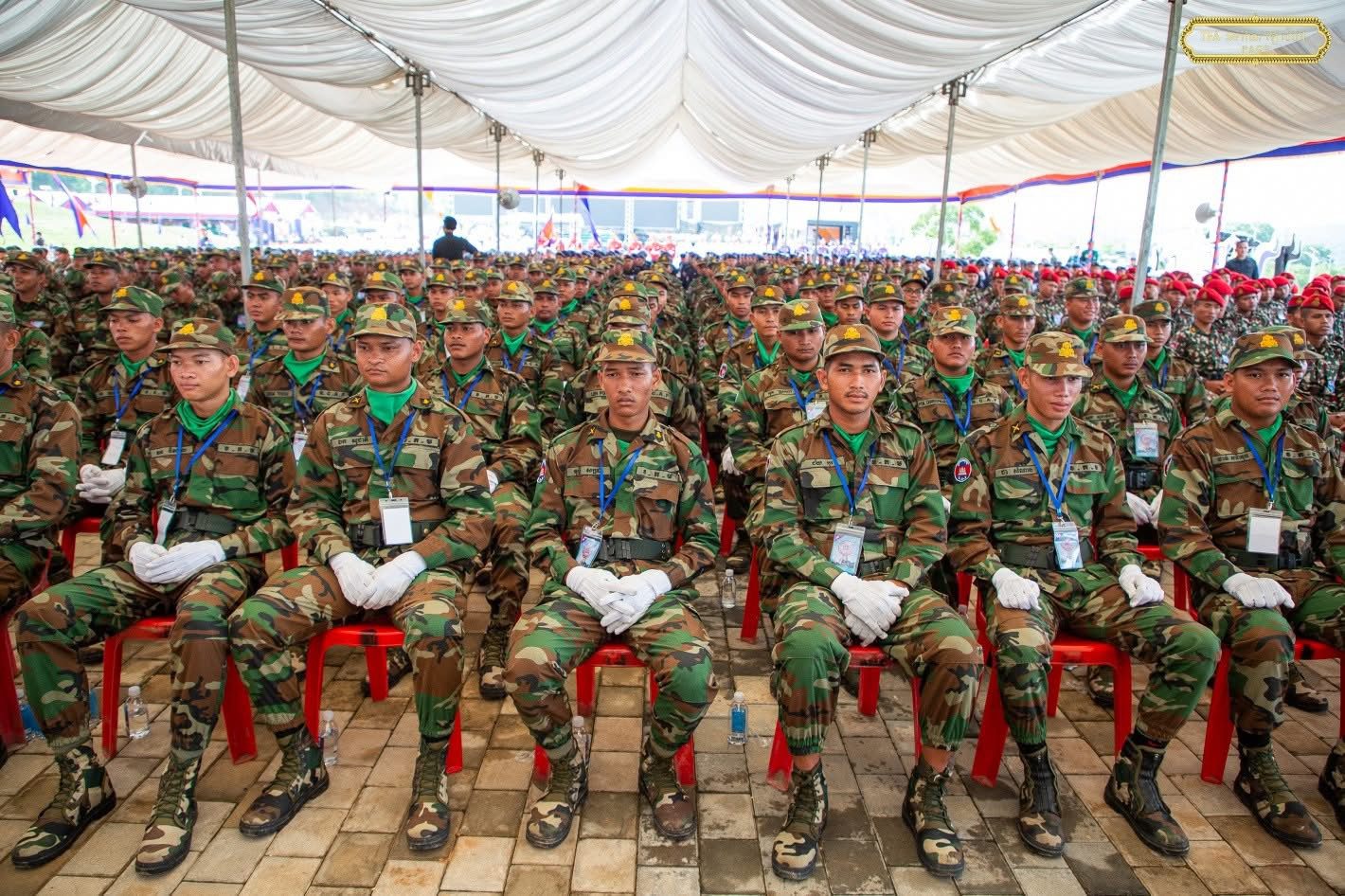
The Ministry of National Defense will start military payroll through the banking system in late June 2027 after military personnel have set up bank accounts. The pay roll reform aims to strengthen transparency and security, and modernize the military sector.
In a letter dated August 13, Minister Tea Seiha said that all military institutions and units must finalize their bank accounts for their soldiers by July 30, 2027. The reform follows the government’s decision and the need to ensure efficiency, transparency, and security for payroll management and improving digitalization in the military sector.
To ensure the plan goes smoothly, Seiha instructed military units leaders to have an action plan to make sure that at least 10% of soldiers set up their bank account every month beginning September 2026, and by June 2027, 100% would have bank accounts.
“When [all soldiers] have bank accounts, we will use the banking system to set up the military payroll. All bank accounts will be sent to the National Defense Ministry and then the ministry will work with banks to start the payroll. It will be quick, we will speed up the process.”
However, he said, if the bank account openings are completed before the timeline, the ministry would consider starting the payroll process ahead of the schedule.
Seiha advised military institutions and units to select any of the eight commercial banks — ABA Bank, ACLEDA Bank, Canadia Bank, Chip Mong Bank, FTB Bank, J Trust Royal Bank, Vattanac Bank and Wing Bank — which signed a Memorandum of Understanding with the Ministry of Economics and Finance (MEF). He also instructed the ministry’s General Department of Logistics to follow up, facilitate and disseminate information to soldiers.
The ministry directive comes after the Council of Ministers on May 23, 2026 assigned the National Defense Ministry, MEF, and the National Bank of Cambodia Governor to work together to arrange salary payments for military personnel through the banking system, instead of paying them directly.
At the time, Senate President Hun Sen said the payment of salaries to military personnel and police officers through the banking system would eliminate corruption within the military or police forces, and also demonstrated state reform.
Pech Chhorm, a Cambodian soldier stationed along the border, said although he has not received the directive yet, he welcomed the decision to receive their salary via the bank as it would make things more convenient.
For the moment, he has to travel down from the mountain to pass the salary he received in cash to his family in Choam Ksan district, Preah Vihear province. The round trip takes about two hours.
“It [salary paid through the bank] is more convenient than getting it at the unit […] as we are on the mountain, it is difficult for us to send the money home. Once we get our salary, I have to ask for permission to take one or two days off to send the money to my wife and return,” he said.
If the salary is paid through the bank, he would be able to transfer via the bank faster, as it is safer and he does not have to worry about losing money.
A soldier’s wife in Thalaborivat, Stung Treng province, Ros Phan, lauded the move, saying that her husband would not need to travel home to pass her the money or ask someone to help transfer the money to her so that she can pay her loan. She said her husband faces difficulties traveling during the rainy season.
“Paying salaries via the bank is convenient because we do not need to travel to get the salary. There is money in the bank, so it’s easier for me to pay the bank loan,” she said.
Political analyst Meas Nee welcomed the decision as a good reform, which would reduce corruption in the military sector and eliminate improper pay cuts. This move also ensures that the ministry can manage data, knows the actual number of soldiers, and ensure transparency for soldiers.
“Payment of salary through the bank is a starting point for the Ministry of National Defense to control the real number of soldiers […] it will help reduce exploitations […] helps the ministry keep their military information secure and provide justice to our soldiers,” he said.
Sin Putheary, executive director of Transparency International Cambodia, expressed hope that the government would apply the same standard of salary payment to all government officers via the banking system to military personnel.
“We want this system to be implemented on an equal basis, the same as it is with other public services, in order to ensure more convenience, efficiency, effectiveness, and transparency. We support the implementation of this system in our country,” she added.