Listen to the audio version of this article (generated by AI).
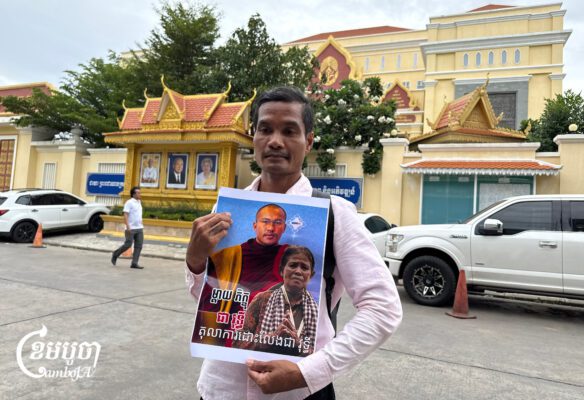
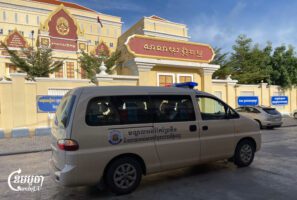
The Supreme Court on Friday upheld the conviction of prominent human rights activist Koet Saray, who is serving a four-year prison sentence for incitement in a case condemned by U.N. experts and rights groups.
Saray’s lawyer, Em Chantha, said he was disappointed by the ruling.
“I regret that the court did not consider the legal basis for the incitement charge because what he did was carry out the legitimate work of a civil society organization by seeking a resolution from the authorities and providing them with information,” he said.
Saray was convicted in 2024 of incitement to commit a felony, incitement to cause serious social disorder and committing a misdemeanor after a previous misdemeanor conviction under Cambodia’s Criminal Code.
The 31-year-old president of the youth-led Khmer Student Intelligent League Association (KSILA) was prosecuted over his advocacy for residents involved in a long-running land dispute with rubber company Seladamex in Preah Vihear province.
The U.N. Working Group on Arbitrary Detention has found Saray’s detention arbitrary, while rights groups have described the prosecution as politically motivated and called for his immediate and unconditional release. Cambodian authorities have defended prosecutions they say are carried out in accordance with the law.
Saray was previously sentenced to 20 months in prison in 2021 for taking part in a protest supporting then-imprisoned union leader Rong Chhun.
Cambodia’s incitement law, under which Saray was convicted, has increasingly drawn criticism from rights groups and observers who say it is used to prosecute activists, opposition figures and journalists.
Am Sam Ath, operations director at rights group Licadho, said Friday’s ruling reinforced international concerns that civic space is shrinking in Cambodia.
“The Khmer Student Intelligent League Association went to meet villagers involved in a land dispute to establish the facts and call on the authorities to resolve the issue,” he said. “[Saray] should not be imprisoned or convicted because this is the legitimate work of an association.”
The case is the latest involving a prominent activist to reach Cambodia’s highest court following a series of rulings last month upholding convictions against opposition figures and journalists, drawing renewed criticism over judicial independence.